

Quick Answer
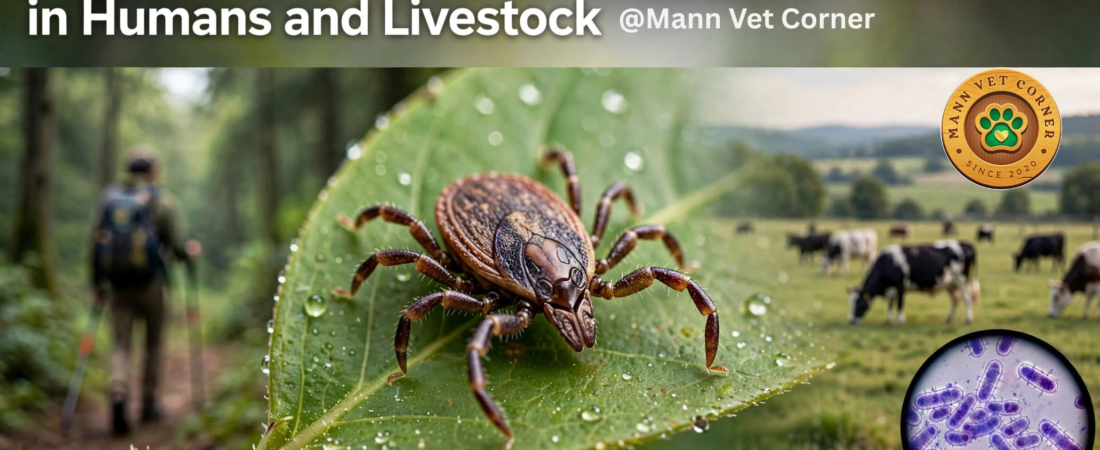
Anaplasmosis is a tick-borne bacterial disease caused by Anaplasma species that infects white blood cells in humans and red blood cells in ruminants. In humans, symptoms (high fever, headache, muscle aches) typically appear 1-2 weeks after an infected tick bite. Cattle and ruminants develop progressive anemia, high fever, and jaundice, with older animals experiencing more severe illness. The condition is effectively treated with doxycycline (humans) or tetracyclines (livestock) and prevented through tick avoidance, DEET repellent, and protective clothing.
1. What is Anaplasmosis? Definition & Overview
Anaplasmosis is an emerging tick-borne zoonotic disease caused by bacteria belonging to the genus Anaplasma. These obligate intracellular gram-negative pathogens specifically target and infect different cell types: white blood cells (monocytes and neutrophils) in humans and red blood cells (erythrocytes) in ruminants, particularly cattle. The disease has gained significant attention in veterinary and human medicine due to its increasing geographic range and expanding tick vector populations.
Primary Anaplasmosis Pathogens:
• Anaplasma phagocytophilum (HGA) infects neutrophils in humans.
• Anaplasma marginale causes cattle red blood cell infection; economically most important in livestock
• Anaplasma centrale milder form in cattle; typically asymptomatic in adult animals
2. How is Anaplasmosis Transmitted? Tick Vectors & Epidemiology
Anaplasmosis transmission occurs exclusively through infected hard tick (Ixodidae family) bites. Ixodes scapularis (blacklegged tick) transmits Anaplasma phagocytophilum in North America and Europe, causing human granulocytic anaplasmosis. Multiple tick species transmit Anaplasma marginale to cattle, including Rhipicephalus microplus and Amblyomma americanum.
Transmission Mechanism: Infected ticks must be attached for 24-48 hours to effectively transmit the pathogen. Anaplasma bacteria are located in tick salivary glands and transferred during blood meals. Once in the bloodstream, they target and invade specific cells, multiplying within the cytoplasm and causing cellular dysfunction.
3. Anaplasmosis Symptoms in Humans: Acute & Severe Forms
Early-Stage Symptoms (1-2 Weeks Post-Infection)
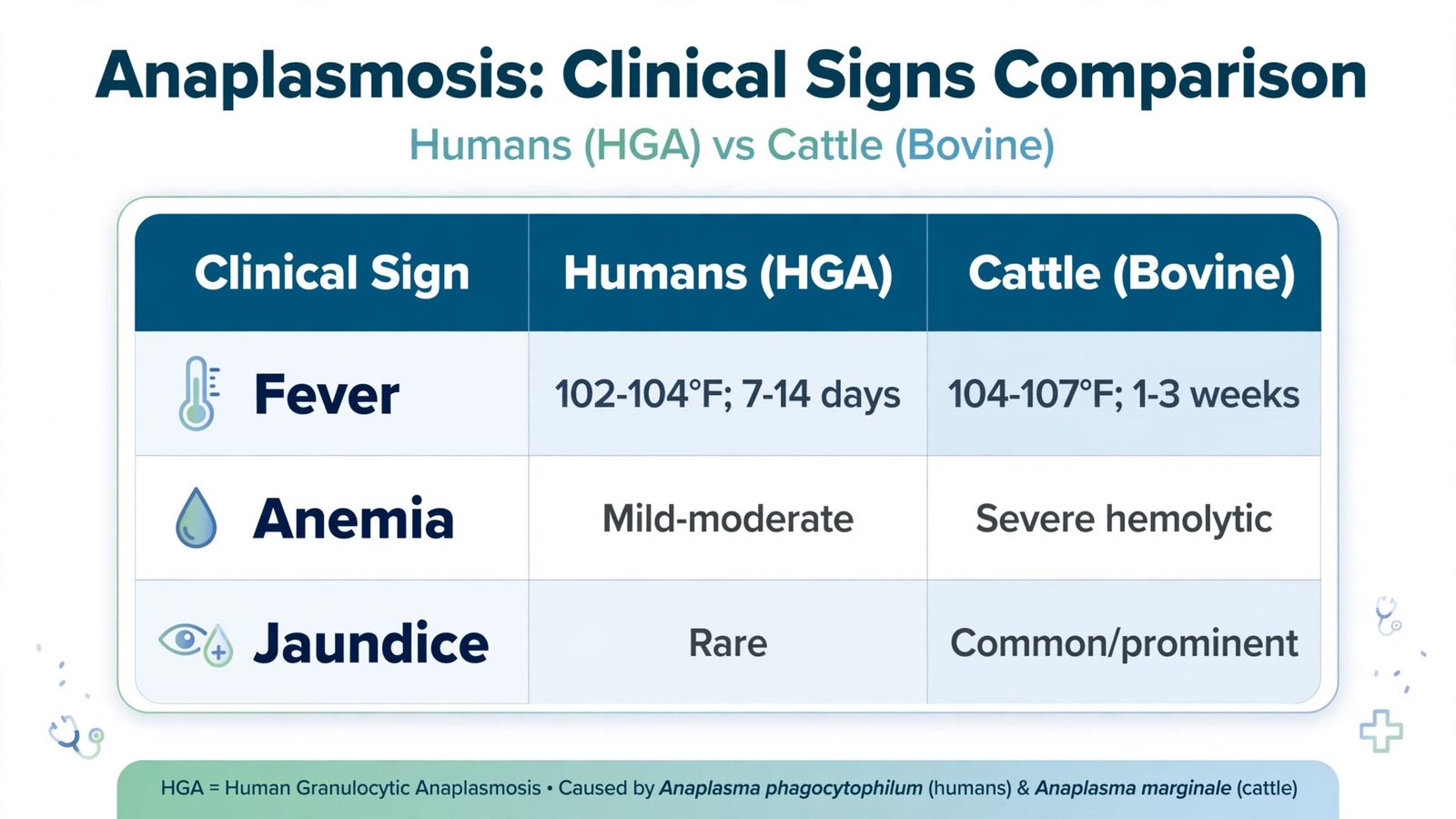
Human anaplasmosis has an incubation period of 5-21 days after an infected tick bite, with most symptomatic individuals developing signs within 7-14 days. Classic early symptoms include high fever (102-104°F), severe frontal headache, myalgia (muscle pain), chills, profound fatigue, malaise, nausea, and loss of appetite. These manifestations often mimic influenza, leading to potential diagnostic delays.
Severe & Complicated Forms
Approximately 5-10% of infected individuals develop severe complications, particularly those with advanced age (≥65 years), immunocompromised status, or chronic underlying conditions. Severe complications include acute respiratory distress syndrome (ARDS), disseminated intravascular coagulation (DIC), acute kidney injury, thrombocytopenia with hemorrhagic manifestations, multi-organ failure, and opportunistic infections.
Laboratory Findings: Thrombocytopenia (platelet < 150,000/μL in 80%), elevated transaminases (ALT/AST), leukopenia or left shift, anemia in severe cases, and morulae visible in neutrophils on blood smear.
4. Anaplasmosis Symptoms in Cattle & Ruminants
Bovine anaplasmosis represents a significant economic concern in livestock production, causing hemolytic anemia and production losses. Clinical presentation varies dramatically by age: young calves (< 6 months) often remain asymptomatic or show mild signs; adolescent/adult cattle (6 months to 4 years) show moderate to severe clinical signs; mature cattle (> 4 years) develop the most severe disease, with mortality reaching 5-10% if untreated.
Cardinal Clinical Signs: Progressive hemolytic anemia (pale mucous membranes), high fever (104-107°F lasting 1-3 weeks), icterus/jaundice (yellow sclera/skin), anorexia and depression, rapid weight loss and decreased milk production, weakness and reduced exercise tolerance, tachycardia, tachypnea, peripheral edema, constipation followed by diarrhea.
5. Diagnosis & Clinical Management
Humans: PCR (polymerase chain reaction) is the gold standard—it detects Anaplasma DNA within the first 2 weeks. Serology (immunofluorescence assay) detects IgG/IgM antibodies by the second week. Peripheral blood smear observation of morulae in neutrophils requires high-quality microscopy.
Cattle: Blood smear examination identifies Anaplasma marginale in erythrocytes (field-practical). Serology (ELISA) detects antibodies. PCR detects organisms (most sensitive). Diagnosis combines clinical signs, herd history, and geographic risk factors.
6. Treatment Options: Humans vs. Livestock
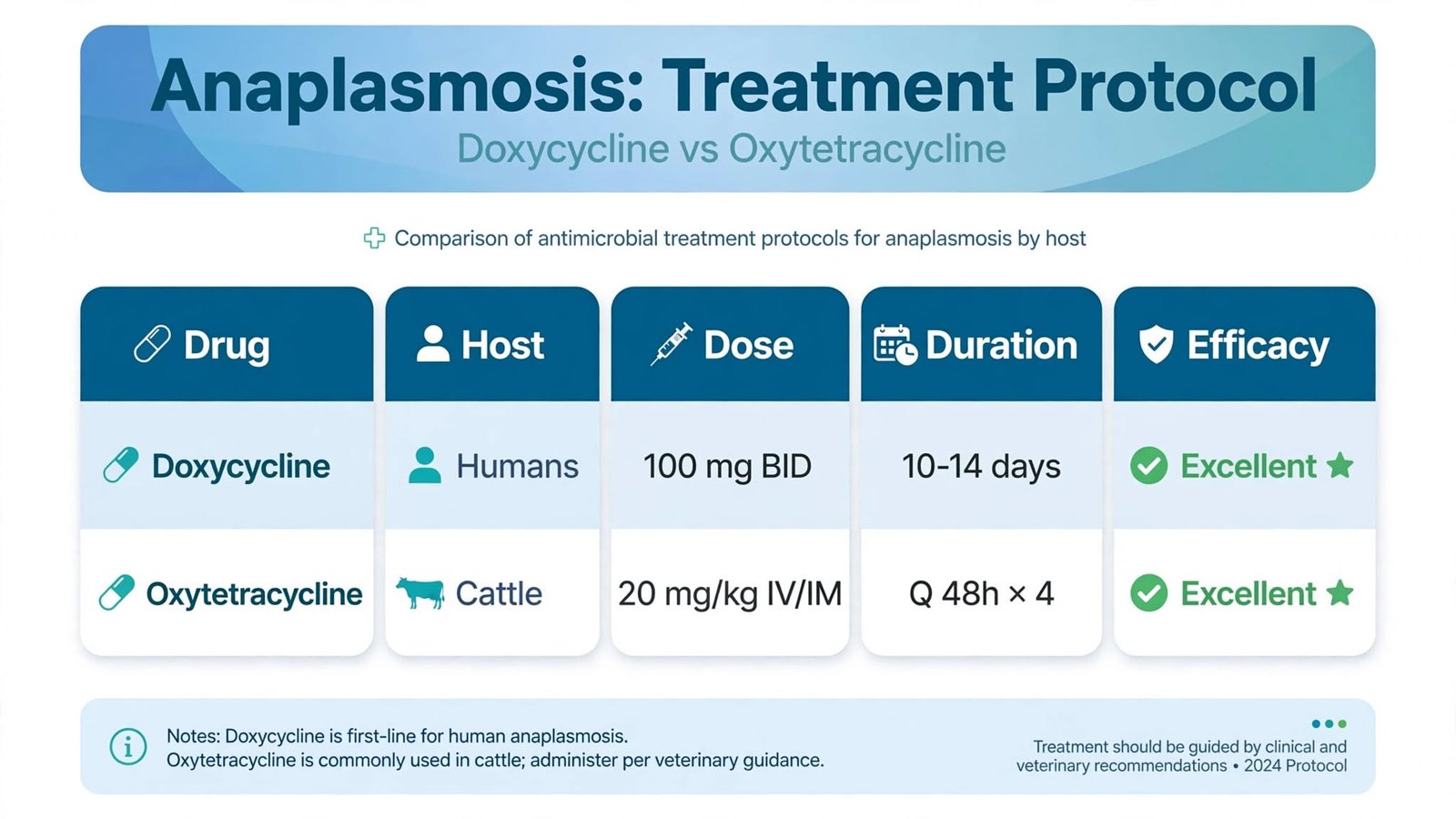
Doxycycline is first-line therapy for human anaplasmosis—100 mg PO twice daily for 10-14 days, or 2-4 mg/kg/day for pediatric patients >8 years. Rifampin (600 mg PO BID × 14 days) is an alternative when doxycycline is contraindicated.
Livestock Treatment: Oxytetracycline (20 mg/kg IM/IV every 48 hours × 3-4 doses), tetracycline oral (10-20 mg/kg daily × 7-10 days), doxycycline oral (10 mg/kg daily × 7-10 days), or chlortetracycline feed additive (350-500 mg/head/day × 30 days for chronic infections).
Supportive Therapy: Fluid therapy (IV or oral rehydration), blood transfusions in severe anemia (PCV < 15%), nutritional support and rest, monitoring for secondary infections, electrolyte correction.
7. Prevention Strategies: Tick Avoidance & Control
Personal Prevention: Apply DEET (20-30%) to exposed skin for 4-6 hours of protection. Spray permethrin on clothing (remains effective through launderings). Wear long-sleeved shirts and long pants (light-colored), tuck pants into socks, and wear hats. Perform thorough tick checks after outdoor activity, focusing on warm areas (armpits, groin, scalp). Remove ticks with fine-tipped tweezers, grasping close to skin.
Environmental Modification: Clear brush, leaf litter, and tall grass (tick habitat). Maintain lawn edges; remove deer-accessible vegetation. Create 3-foot buffer zones of wood chips or gravel. Reduce wildlife populations (deer, rodents) that transport ticks.
Livestock Prevention: Chemical control using pyrethroid/organophosphate dips, pour-on products (2-4 weeks protection), or injectable antiparasiticides. Rotational grazing reduces tick exposure. Remove coinfected wildlife. Practice integrated pest management. Genetic selection for anaplasmosis resistance. Carrier identification and segregation.
8. Frequently Asked Questions
Q1: How long after tick bite do symptoms appear?
Most develop symptoms within 5-21 days (typically 7-14 days). Early presentations include fever, headache, and muscle aches.
Q2: Can anaplasmosis spread person-to-person?
No. Transmission is exclusively through infected tick bites. No person-to-person transmission occurs.
Q3: How does anaplasmosis differ from Lyme disease?
Different pathogens: Anaplasma bacteria vs. Borrelia spirochetes. Anaplasmosis features high fever/thrombocytopenia. Lyme presents with erythema migrans rash and joint pain. Both respond to doxycycline.
Q4: How is bovine anaplasmosis diagnosed in herds?
Combines clinical observation, blood smear for morulae, ELISA serology, and PCR confirmation (gold standard).
Q5: What percentage of infected ticks transmit disease?
Transmission rate 5-20% per infected tick, depending on attachment duration (24-48 hours minimum), tick species, and host factors.
Q6: Is anaplasmosis endemic in my area?
Highest in northeastern/midwest US where Ixodes scapularis established. Consult local veterinarian or extension office for regional data. CDC maintains distribution maps.
Q7: Can animals recover without treatment?
Mild infections may resolve with supportive care. Severe cases require prompt antibiotics to prevent mortality. Early treatment significantly improves outcomes.
Q8: Are there long-term complications after recovery?
Most recover completely with treatment. Animals may develop chronic carrier states (reactivate if immunosuppressed). Protective immunity develops after infection.
9. Conclusion: Integrated Prevention & Management
Anaplasmosis represents significant public health concern for humans and substantial economic challenge for livestock producers. Understanding transmission, clinical presentation, and management strategies is essential for healthcare and veterinary professionals.
Key Takeaways: Anaplasmosis is tick-borne only; no person-to-person transmission. Early diagnosis (within 7-10 days) significantly improves outcomes. Doxycycline highly effective for humans; tetracyclines work well for livestock. Prevention more effective/economical than treatment. Older individuals/animals face elevated severe disease risk. Geographic tick range expansion suggests increasing risk in new regions.
As tick populations expand with climate change, anaplasmosis prevention and surveillance become increasingly important. Collaboration between human medicine, veterinary medicine, and public health remains essential for disease control.

