
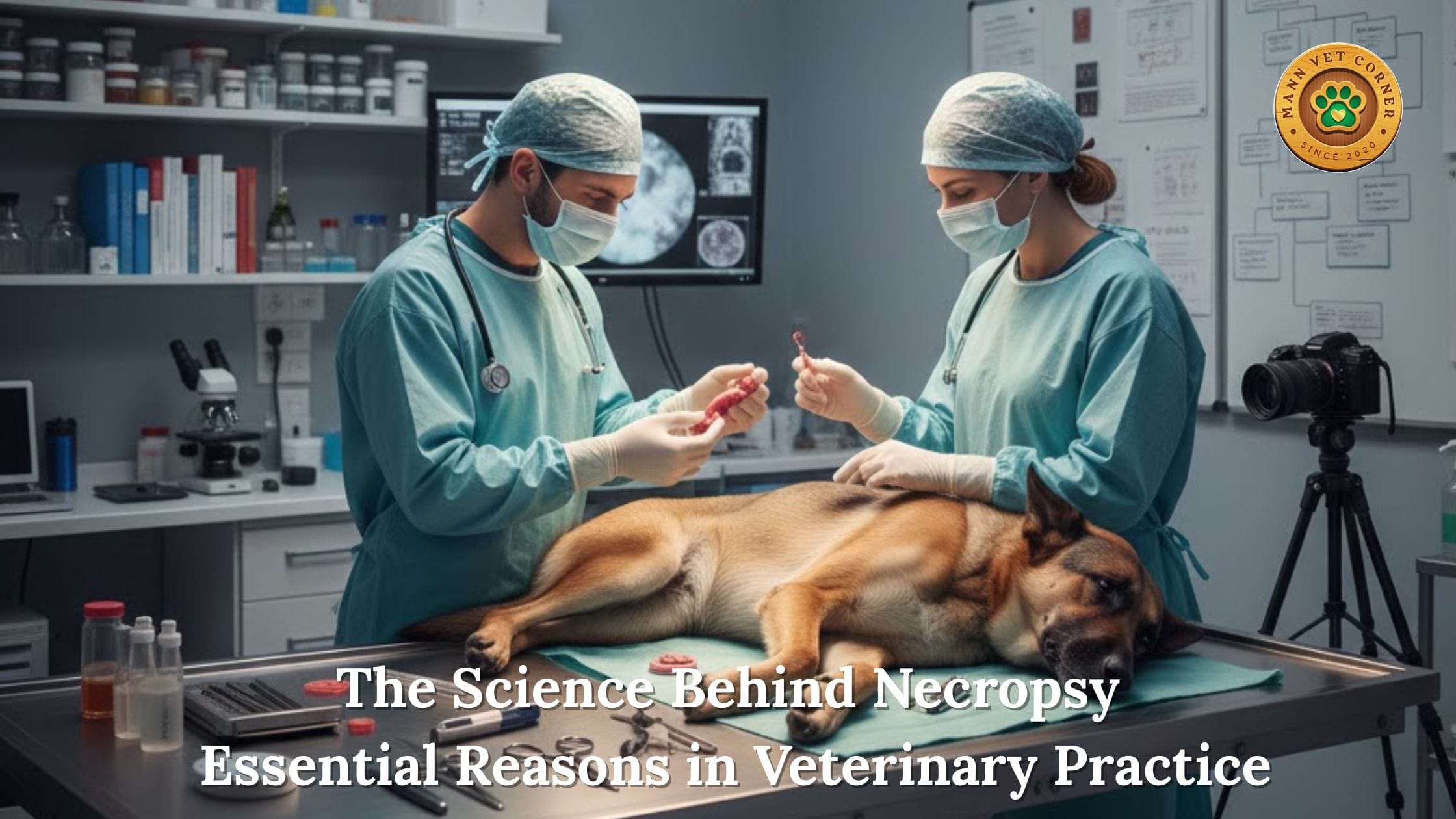
What Is a Necropsy? Understanding the Basics
A necropsy — often called an animal post-mortem examination or animal autopsy — is a systematic, thorough examination of an animal’s body after death. A trained veterinary pathologist performs the procedure to identify the cause of death, detect disease, gather forensic evidence, or confirm clinical diagnoses.
If you have ever wondered, “Is necropsy the same as autopsy?”. The word “autopsy” is reserved for human post-mortem examinations, while “necropsy” is the correct term in veterinary science. Both procedures follow similar principles: open, examine, sample, and report.
Veterinarians never perform necropsies out of curiosity alone. Every necropsy serves a defined purpose, and the requesting party — whether an owner grieving a pet or a government agency investigating animal cruelty — needs specific answers. Understanding those purposes explains why this procedure remains indispensable in modern veterinary medicine.
The Main Reasons a Necropsy Is Requested
Requests for veterinary necropsies come from many different directions. Each group has distinct, legitimate motivations. Below, we walk through each category in detail.
1. Pet and Livestock Owners
Losing an animal is painful, and many owners feel they owe it to themselves — and their remaining animals — to understand why the death occurred. Owners are among the most common requesters of necropsies, and their reasons span emotional, legal, financial, and public health concerns.
Peace of mind after euthanasia is one of the most common driving factors. When an owner makes the difficult decision to euthanize a pet, they may later question whether it was truly necessary. A necropsy can validate that the underlying condition was severe and that euthanasia was the kindest course of action.
Ruling in or out an infectious or toxic cause of death becomes urgent when other animals share the same environment. If one dog dies unexpectedly and five others live in the same household or kennel, knowing whether an infectious agent or toxin caused the death can be lifesaving for the survivors. Rapid necropsy findings allow veterinarians to implement quarantine, treatment, or decontamination without delay.
Suspicion of malicious action also drives owners to seek post-mortem examination. In neighborhoods where animal poisonings occur, or when owners suspect a neighbor may have deliberately harmed their pet, a necropsy provides the forensic documentation needed to support a legal complaint or police investigation.
Veterinary malpractice concerns represent another critical category. When an animal dies during or shortly after a procedure and the owner believes negligence may have played a role, a necropsy provides objective medical evidence about what happened internally — evidence that no other diagnostic tool can replicate after death.
Zoonotic disease concerns — particularly rabies — make necropsy not just important but legally required in certain jurisdictions. If an animal that bit a person later dies, testing brain tissue for rabies through necropsy determines whether post-exposure prophylaxis is necessary for the person who was bitten.
Finally, insurance claims — most frequently for horses — often require a formal necropsy report before a payout is approved. High-value animals represent significant financial investments, and insurance companies need objective documentation of cause of death before honoring a claim.
2. Veterinarians
Veterinarians are skilled clinicians, but even the most experienced practitioner encounters cases that defy explanation. A necropsy transforms uncertainty into knowledge — and that knowledge makes every future patient safer.
When a case is confusing or atypical, a necropsy reveals what imaging, blood panels, and physical examination could not. Animals cannot describe their symptoms verbally, which means many conditions go undetected until post-mortem examination exposes the underlying pathology.
Confirming a suspected diagnosis helps veterinarians close the loop on their clinical reasoning. When a veterinarian suspects a specific condition — say, lymphoma or hepatic failure — a necropsy either validates or corrects that assumption. This feedback loop is fundamental to professional growth and clinical accuracy.
Necropsies also allow veterinarians to examine surgical sites or retrieve implanted devices. If an animal dies after surgery, examining the surgical site reveals whether the surgeon performed the procedure correctly, whether infection set in, or whether the implanted material failed. This information guides improvements in surgical technique and informs future patient care.
Clinicians and academic veterinarians also use necropsies to collect data about conditions of interest. Studying how a specific disease presents internally adds to the collective understanding of veterinary medicine and may lead to better diagnostic protocols or treatments.
3. Drug and Vaccine Companies
The pharmaceutical and veterinary biologics industry relies on necropsy findings to protect animal health and ensure regulatory compliance. When an animal dies or becomes seriously ill during or after receiving an experimental or newly approved drug or vaccine, the company responsible must determine whether their product caused the adverse event.
A necropsy answers the central question: did the drug or vaccine cause the illness or death? Regulatory bodies such as the FDA’s Center for Veterinary Medicine require this data before approving products and continue to monitor safety signals post-approval. Necropsy reports from these investigations contribute directly to product labeling, dosage recommendations, and contraindications.
4. Biomedical Researchers
In biomedical research, animals serve as subjects in studies that advance human and animal medicine alike. Necropsy is not an afterthought in research — it is a planned, critical component of the scientific process.
When an animal dies unexpectedly during a study, a necropsy determines whether the experimental treatment caused the death, an unrelated disease triggered it, or some other factor played a role. This determination affects the integrity of the study data and may trigger protocol amendments or regulatory review.
At the end of a study, necropsies allow researchers to compare control and experimental animals systematically. Examining tissues, organs, and systems across both groups reveals the biological effects of the intervention — information that forms the foundation of the research findings and any resulting publications or regulatory submissions.
5. Law Enforcement and Government Agencies
Courts and lawmakers increasingly recognize animals as victims under the law, and veterinary forensic pathology plays a growing role in criminal investigations and regulatory enforcement.
When police harm or kill an animal during an operation — such as when officers shoot a dog during a law enforcement response — a necropsy provides an objective, documented account of the injuries, their severity, and their cause. This information protects both the public and law enforcement officers from false or incomplete narratives.
Criminal cruelty and neglect investigations depend on necropsy findings to establish that abuse occurred and to quantify its severity. In animal cruelty prosecutions, veterinary pathology reports carry significant weight in court, providing scientific evidence of injuries, malnutrition, disease, or deliberate harm that lay testimony alone cannot establish.
Pet food-related toxicity investigations represent a third area where government agencies rely on necropsy. When multiple animals across a region die after eating the same food product, post-mortem examinations identify the pathological changes caused by the toxic ingredient, supporting product recalls and regulatory action that protects millions of animals nationwide.
Summary Table: Who Requests Necropsies and Why
| Requesting Party | Primary Reasons |
|---|---|
| Owner | Peace of mind; infectious/toxic risk to other animals; suspected poisoning; malpractice; rabies/zoonotic concern; insurance documentation |
| Veterinarian | Clarify atypical cases; confirm diagnosis; examine surgical sites; collect research data |
| Drug/Vaccine Company | Determine if product caused illness or death |
| Biomedical Researcher | Investigate unexpected study deaths; compare control vs. experimental groups |
| Law Enforcement / Government | Police-related animal deaths; cruelty/neglect evidence; pet food toxicity investigations |
Necropsy vs. Biopsy vs. Autopsy: Clearing Up the Confusion
These three terms appear frequently in medical and veterinary contexts, and they are worth distinguishing clearly. A biopsy is the sampling of tissue from a living animal for diagnostic purposes specially for tumour or cancerous samples — the animal survives the procedure. Medical pathologists perform an autopsy on human beings after death. A vet practionnaire perform a necropsy on dead animals. All three involve examining tissue to gain diagnostic information, but each serves a different clinical context.
When Should You Request a Necropsy for Your Pet?
Many pet owners do not know they have the right to request a necropsy, or that it is even an option. In general, consider requesting a necropsy when your pet dies unexpectedly and you have no clear explanation, when the death follows a veterinary procedure you have concerns about, when other animals in the household could be at risk from the same cause, when you suspect intentional poisoning or harm, or when an insurance policy on your animal requires documented cause of death.
Timing matters. Necropsy findings are most reliable when the veterinarian performs the examination promptly after death — ideally within 24 hours. Refrigeration (not freezing) helps preserve tissue integrity if there is a short delay. Freezing the body before necropsy can significantly compromise tissue quality and diagnostic accuracy.
The Broader Value of Necropsy in Veterinary Medicine
Beyond individual cases, necropsies contribute to something much larger: the ongoing improvement of veterinary care. Every post-mortem examination adds data to the collective medical understanding of animal diseases. Historically, necropsy findings have helped veterinary scientists identify emerging infectious diseases, recognize toxic environmental hazards, and refine surgical and pharmaceutical practices.
Veterinary schools integrate necropsy training into their curricula precisely because the procedure teaches pathology in a way that no textbook or imaging study can replicate. Students who perform necropsies develop a three-dimensional understanding of anatomy, disease progression, and pathological change that serves them throughout their careers.
In public health terms, necropsies help detect zoonotic diseases — illnesses that can spread from animals to humans — before they cause widespread harm. Rabies testing through necropsy is the most widely known example, but veterinary post-mortem examinations have also been central to monitoring conditions like West Nile virus, avian influenza, and brucellosis in animal populations.
Frequently Asked Questions About Veterinary Necropsy
Q: What is a necropsy in veterinary science?
A necropsy is the post-mortem examination of an animal, performed by a veterinary pathologist to determine cause of death, detect disease, or collect diagnostic evidence. It is the veterinary equivalent of a human autopsy.
Q: How long does a veterinary necropsy take?
A standard necropsy typically takes two to four hours, depending on the species and complexity of the case. Additional time is needed if the pathologist sends tissue samples to a laboratory for histopathology, culture, or toxicological analysis — results from those tests may take days to weeks.
Q: Is necropsy covered by pet insurance?
Some pet insurance policies cover necropsy costs, particularly when the examination is necessary to complete an insurance claim. Check your policy’s terms or contact your insurer directly. For horses, necropsy is commonly required and usually covered under equine mortality insurance.
Q: Can I request a necropsy if my pet dies at home?
Yes. Contact your veterinarian as soon as possible after your pet’s death. They can either perform the necropsy themselves or refer you to a veterinary diagnostic laboratory. Refrigerate — do not freeze — the body until transport is arranged.
Q: What is the difference between necropsy and autopsy?
“Autopsy” refers to post-mortem examination of a human. “Necropsy” refers to the same procedure performed on animals. The techniques and goals are similar, but the terminology differs based on the species being examined.
Q: Why do biomedical researchers perform necropsies at the end of a study?
End-of-study necropsies allow researchers to compare the internal organs, tissues, and systems of control and experimental animals. This comparison reveals the biological effects of the treatment being studied and forms a core component of the scientific findings.
Final Thoughts: Why Necropsy Matters
Necropsy is one of the most powerful diagnostic tools in veterinary science — and one of the most underutilized by the general public. Whether you are a pet owner seeking closure, a veterinarian chasing an elusive diagnosis, a researcher documenting study outcomes, or a law enforcement officer building a cruelty case, the post-mortem examination provides answers that no other procedure can.
Understanding why veterinarians and researchers perform necropsies empowers owners and professionals alike to make informed decisions when an animal dies — decisions that can protect other animals, advance medical knowledge, support legal accountability, and bring well-deserved peace of mind.
