
Winter brings unique challenges for pet owners. Cold temperatures, ice, and harsh weather conditions affect our furry companions just as much as they affect us. Winter can be a magical time of year, but it comes with unique challenges for pet owners. From icy paws to chilly nights, our furry friends need a little extra care during the colder months. That’s why I’ve put together these essential winter pet care tips to help keep your pets safe, cozy, and healthy all season long. Although I now live in a subtropical area with usually mild winters, over the years, I’ve learned that even small adjustments—like protecting paws from ice or adding a cozy blanket to their favorite spot, can make a big difference in their comfort. This comprehensive guide will help you protect your pets throughout the coldest months of the year.
Do Pets Actually Get Cold in Winter?
Yes, pets feel the cold just like humans do. Dogs, cats, and other household animals are vulnerable to freezing temperatures, hypothermia, and frostbite. Small breeds, senior pets, and animals with thin coats face the greatest risks during winter months.
Many pet owners mistakenly believe that fur alone keeps animals warm. However, domestic pets have adapted to indoor living and lack the natural defenses their wild counterparts possess. Short-haired breeds like Chihuahuas, Greyhounds, and Boxers struggle significantly in cold weather. Even thick-coated breeds like Huskies need extra protection during extreme temperature drops.
How Cold Weather Affects Your Pet’s Health
Winter weather impacts pets in several ways. Cold air dries out their skin, leading to itching and flaking. Icy surfaces cut their paw pads. Freezing temperatures stress their joints, especially in older animals with arthritis.
Pets with chronic health conditions face additional challenges. Diabetes management becomes more complex in winter because cold affects insulin absorption. Heart conditions worsen when pets must work harder to maintain body temperature. Kidney disease patients need extra monitoring since cold weather increases their water intake needs.
Essential Indoor Shelter Requirements for Winter
Your pet needs a warm, dry shelter as their primary protection against winter cold. Indoor living provides the best safety for most household pets during freezing weather.
Creating the Perfect Indoor Winter Space
Set up a dedicated warm area away from drafty windows and doors. Place thick, insulated bedding in this spot. Fleece blankets work excellently because they trap heat while remaining comfortable. Elevated beds keep pets off cold floors, providing additional insulation.
Check for drafts around windows and doors regularly. Cold air seeps through the smallest gaps, creating uncomfortable conditions. Use draft stoppers or weatherstripping to seal these openings. Your pet will rest more comfortably when their space stays consistently warm.
Heating pads designed specifically for pets offer extra warmth. Place them under bedding rather than directly against your pet’s skin. Always choose products with automatic shut-off features to prevent overheating or burns.
Outdoor Pet Shelter: What Winter Animals Need
Some pets spend time outdoors even during winter. Farm animals, outdoor cats, and working dogs need proper shelter to survive cold weather safely.
Building a Winter-Proof Outdoor Shelter
The shelter must block wind, rain, and snow completely. Walls need insulation to trap warmth inside. The entrance should face away from prevailing winds. Add a flap or door to prevent cold air from entering freely.
Size matters significantly. The space should be large enough for your pet to stand, turn around, and lie down comfortably, but small enough that their body heat warms the interior. Oversized shelters waste the animal’s body heat and stay too cold.
Raise the shelter several inches off the ground. This prevents moisture from seeping through the floor and keeps cold ground from drawing heat away. Add thick straw bedding, which insulates better than blankets in outdoor settings. Replace wet bedding immediately since dampness increases heat loss dramatically.
Position water bowls inside heated containers to prevent freezing. Check water supplies multiple times daily during extreme cold snaps.
Protecting Your Pet’s Paws from Winter Hazards
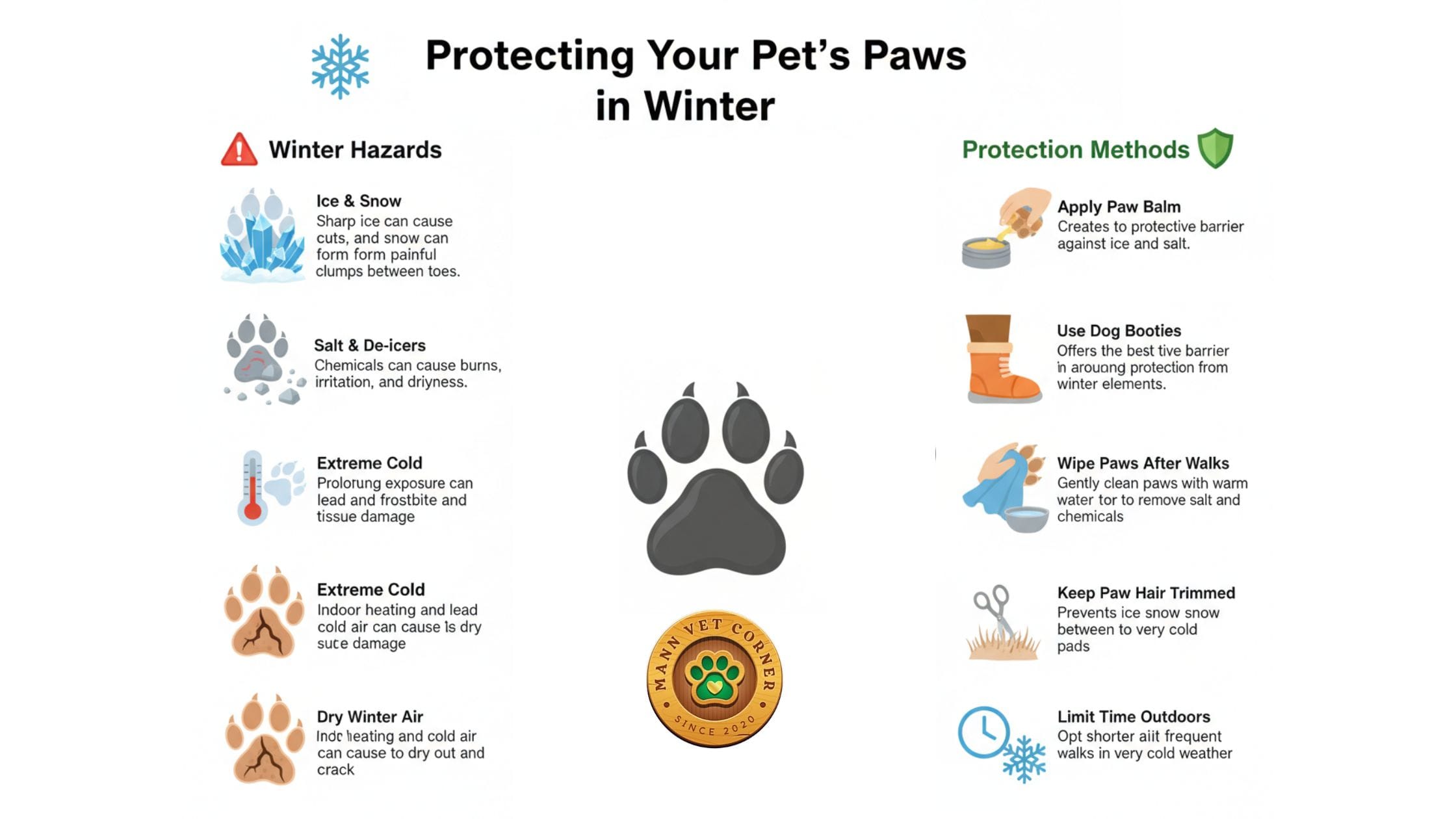
Paw protection ranks among the most overlooked aspects of winter pet care. Your pet’s paws contact ice, snow, and harmful chemicals directly with every outdoor step.
The Hidden Dangers of Ice Melt Products
Traditional rock salt and chemical de-icers cause serious problems for pets. These products burn sensitive paw pads, creating painful cracks and sores. When pets lick their paws afterward, they ingest toxic chemicals that cause vomiting, diarrhea, and more severe poisoning symptoms.
Switch to pet-safe ice melt products immediately. These alternatives use calcium magnesium acetate or urea instead of sodium chloride. They melt ice effectively while protecting your pet’s health. Spread pet-safe products on your own walkways, driveway, and frequently used paths.
Daily Paw Care Routine for Winter
Inspect your pet’s paws before and after every outdoor excursion. Look for cuts, cracks, redness, or ice buildup between toe pads. Remove ice balls gently with warm water rather than pulling, which tears skin.
Trim the fur between paw pads short. Long hair collects ice and snow, forming painful balls that cause limping. Keep nails trimmed properly too, since proper foot mechanics help pets maintain better traction on slippery surfaces.
Apply pet-safe paw balm before walks. These protective waxes create a barrier against salt, chemicals, and cold surfaces. Reapply after washing paws to keep pads moisturized and prevent cracking.
Dog boots provide excellent protection for extended outdoor time. Start acclimating your pet to boots weeks before winter arrives. Choose boots with non-slip soles and secure straps that stay in place during activity.
Wipe all four paws thoroughly after every outdoor trip. Use warm water and pet-safe wipes to remove salt, chemicals, and ice residue. This simple step prevents ingestion when your pet grooms later.
How to Keep Dogs Warm in Winter Weather
Dogs need special attention during cold months. Their exercise requirements don’t disappear just because temperatures drop, but outdoor activities require careful planning.
Winter Walking Safety for Dogs
Shorten walk duration when temperatures fall below freezing. Watch for shivering, lifting paws, or reluctance to move forward. These signs tell you your dog feels too cold and needs to go inside immediately.
Small dogs, puppies, and senior dogs need the shortest outdoor exposure times. Their bodies cannot regulate temperature as efficiently as healthy adult dogs. Consider these pets at high risk for hypothermia.
Dog sweaters and coats provide crucial protection for short-haired and small breeds. Choose waterproof outer layers with warm insulation underneath. The clothing should cover the body from neck to tail while allowing free movement and bathroom activities.
Reflective gear becomes essential during winter’s shorter daylight hours. Attach LED lights or reflective strips to your dog’s collar and leash. Drivers have reduced visibility in snow and dark conditions, making your pet harder to see.
Indoor Exercise Alternatives
Keep your dog mentally and physically stimulated with indoor activities. Play fetch in hallways or up and down stairs. Practice training commands. Set up obstacle courses using household furniture. Food puzzle toys challenge their minds while burning energy.
Winter Care for Outdoor Cats and Small Pets
Outdoor cats face extreme dangers during winter. Many people don’t realize that feral and community cats need human intervention to survive harsh weather.
Supporting Outdoor Cat Colonies Through Winter
Provide insulated shelters for outdoor cats in your area. Plastic storage containers converted into cat houses save lives. Cut a six-inch entrance hole, add straw bedding, and place in protected locations.
Feed outdoor cats more frequently during winter. Their bodies burn extra calories maintaining warmth. Increased food intake helps them survive. Use heavy bowls that won’t tip easily in wind.
Check parked cars before starting the engine. Cats crawl into warm engine compartments for heat. Bang on the hood and honk your horn before starting cold cars to give hidden cats time to escape.
Small Pet Winter Requirements
Rabbits, guinea pigs, hamsters, and other small pets are extremely vulnerable to cold. Never leave these animals in unheated garages, sheds, or outdoor hutches during winter.
Bring outdoor hutches inside when temperatures approach freezing. Basements, enclosed porches, or spare rooms work well. If you absolutely cannot bring hutches indoors, wrap them with tarp and insulation, ensuring proper ventilation remains.
Small pets need extra bedding and hiding spots during winter. Pile hay, paper bedding, or fleece heavily in their enclosures. Add cardboard boxes or wooden houses where they can burrow and nest.
Monitoring Your Pet’s Health Throughout Winter
Winter exacerbates existing health conditions and creates new medical challenges. Stay vigilant about changes in your pet’s behavior, appetite, or energy levels.
Arthritis and Joint Pain Management
Cold weather stiffens arthritic joints significantly. You’ll notice your pet moving more slowly, struggling to stand, or showing reluctance to climb stairs or jump.
Consult your veterinarian before winter arrives. Discuss pain management options including medications, supplements, or therapeutic treatments. Starting intervention early prevents suffering.
Maintain a healthy weight on arthritic pets. Extra pounds stress painful joints further. Work with your vet to adjust feeding amounts if your pet gets less exercise during winter months.
Provide ramps or steps to help arthritic pets access favorite spots without jumping. Keep their bedding area particularly warm since heat soothes aching joints.
Diabetes Care in Cold Weather
Diabetic pets require extra monitoring during temperature changes. Cold affects how their bodies process insulin. Activity levels often decrease too, altering insulin requirements.
Check blood glucose more frequently during winter. Keep detailed records of readings, insulin doses, and any symptoms you observe. Share this information with your veterinarian regularly.
Maintain consistent feeding schedules and meal sizes. Diabetic pets rely on routine to keep blood sugar stable. Store insulin properly, protecting it from freezing if your home temperature drops too low.
Signs Your Pet Needs Immediate Veterinary Care
Recognize emergency symptoms that require immediate professional attention:
Hypothermia signs include violent shivering, lethargy, weakness, and shallow breathing. The pet feels cold to touch. Severe cases progress to unconsciousness.
Frostbite most commonly affects ear tips, tail tips, and paw pads. The tissue appears pale or blue-gray initially. As it rewarms, the area becomes red, swollen, and painful.
Antifreeze poisoning is extremely dangerous. Pets attracted to antifreeze’s sweet taste can ingest lethal amounts. Symptoms include stumbling, vomiting, seizures, and rapid breathing. This requires emergency treatment within hours of ingestion.
Do Pets Get Hungrier in Winter Months?
Yes, many pets experience increased appetite during winter. Their bodies burn extra calories generating heat to maintain normal body temperature. Outdoor pets and those with thin coats face the highest caloric demands.
Indoor pets in heated homes may not need additional food. However, pets spending significant time outdoors, working animals, and those with high activity levels require larger portions.
Monitor your pet’s body condition closely. Run your hands along their ribs and spine. You should feel bones easily without excessive fat covering. If your pet loses weight despite eating normally, increase portions gradually.
Provide fresh, unfrozen water at all times. Hydration remains just as critical in winter as summer. Dehydration happens quickly when water sources freeze. Check outdoor water bowls several times daily.
Emergency Preparedness: Winter Storm Planning for Pets
Severe winter weather sometimes strikes with little warning. Prepare an emergency evacuation plan before storms threaten your area.
Building a Pet Emergency Kit
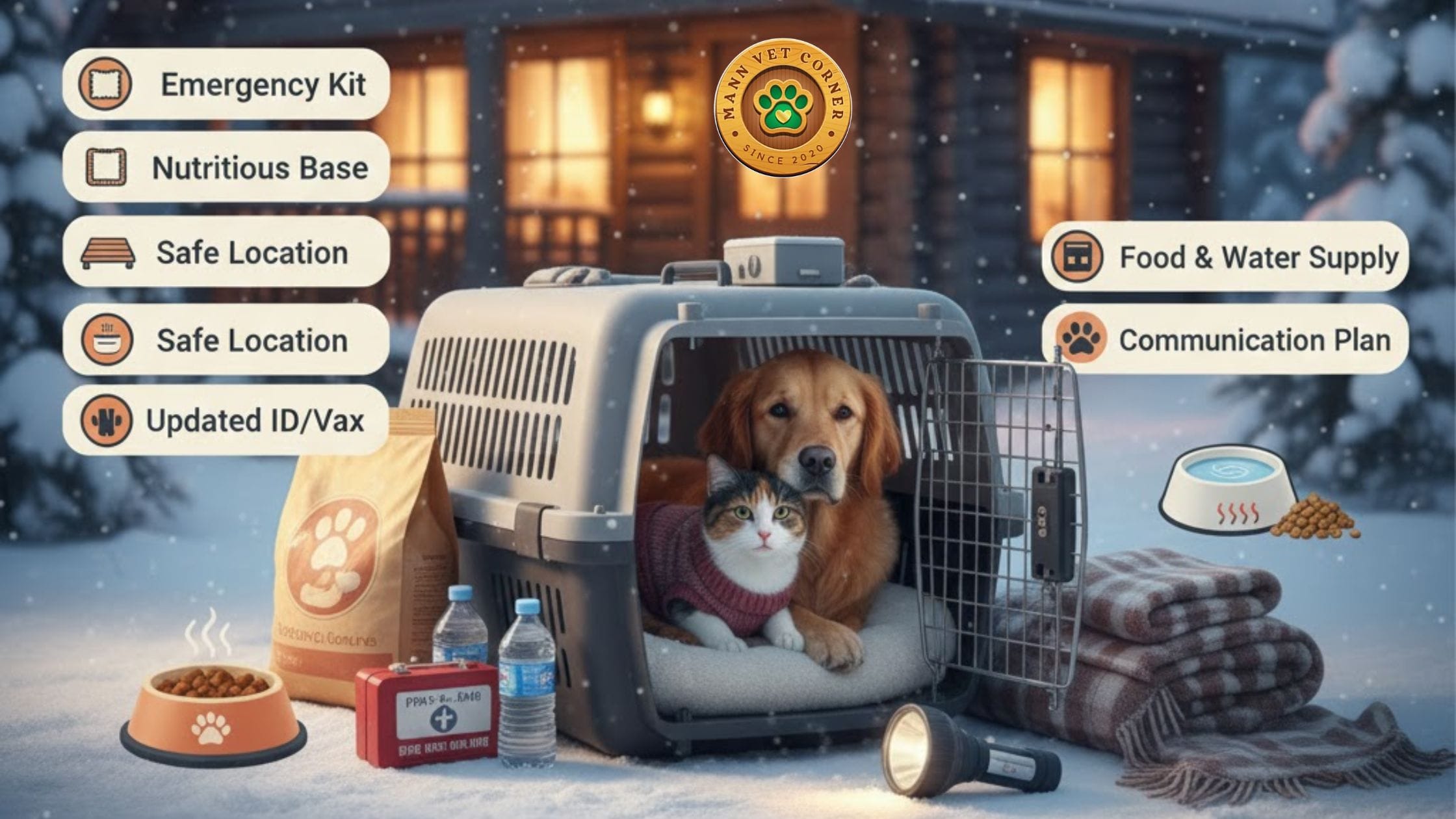
Assemble supplies before winter begins. Store everything in waterproof containers in an easily accessible location. Your kit should include:
One week’s worth of pet food and medications. Rotate stock regularly to prevent expiration. Include a manual can opener if you feed canned food.
Medical records and vaccination certificates in waterproof folders. Include recent photos of your pets for identification purposes if you become separated.
Sturdy leashes, harnesses, and carriers for every pet. Practice using carriers before emergencies occur so pets feel comfortable entering them.
First aid supplies including bandages, antiseptic, and emergency contact numbers for your veterinarian and nearby emergency animal hospitals.
Familiar items like favorite toys and blankets. These comfort stressed pets during emergencies.
Evacuation Planning Steps
Research pet-friendly hotels, shelters, and boarding facilities now. Many emergency shelters don’t accept animals. Know your options before disaster strikes.
Ensure your pet’s collar fits properly and displays current contact information. Microchip your pets and register the chip with updated contact details. These permanent identifications reunite lost pets with owners when collars fall off.
Arrange backup care with friends, family, or neighbors. If you cannot reach your pets during an emergency, someone else needs access to your home and knowledge of your pets’ needs.
Plan your evacuation route ahead of time. Know multiple ways to leave your neighborhood in case roads close. Never leave pets behind during evacuations. Animals left alone in disasters face abandonment, starvation, and death.
Winter Activity and Exercise Guidelines
Regular exercise keeps pets healthy physically and mentally throughout winter. However, you must adjust activities for cold weather safety.
Safe Outdoor Activity in Cold Weather
Schedule outdoor time during the warmest part of the day, typically mid-afternoon. Morning and evening temperatures drop significantly lower.
Watch the wind chill factor, not just air temperature. Wind dramatically increases cold exposure risk. Cancel outdoor plans when wind chill reaches dangerous levels.
Keep exercise sessions shorter but more frequent. Multiple brief outings prove safer than one long exposure to cold. Five or six ten-minute breaks work better than two thirty-minute walks.
Stay on cleared, treated paths when possible. Deep snow forces pets to work harder, tiring them faster. Snowbanks hide dangers like sharp objects or holes.
Never leave pets outdoors unsupervised during winter. Their situations can change rapidly. What seems manageable suddenly becomes dangerous if snow falls, wind picks up, or the pet gets wet.
Creative Indoor Exercise Ideas
Teach new tricks and commands. Training sessions exercise your pet’s brain while burning physical energy. Practice old skills to keep them sharp.
Play interactive games like hide-and-seek. Hide treats around your home for scavenger hunts. Roll balls down hallways for fetch games.
Set up agility courses using household items. Weave between chair legs. Jump over rolled towels. Crawl under tables. These activities challenge coordination and burn energy.
Consider doggy daycare for highly active dogs. Social play with other dogs in climate-controlled facilities provides exercise and mental stimulation.
Grooming and Coat Care for Winter Protection
Proper grooming helps your pet stay warmer and healthier during cold months. However, winter grooming differs significantly from summer care.
Winter Coat Maintenance
Brush your pet daily during winter. Regular brushing removes dead hair and distributes natural oils throughout the coat. These oils provide insulation and water resistance.
Never shave your pet’s coat short during winter. Their fur provides essential insulation against cold. Even breeds that require regular grooming should maintain longer coats until spring.
Bathe pets less frequently in winter. Frequent washing strips protective oils from skin and coat. When baths become necessary, use warm water and dry your pet completely before allowing outdoor access.
Pay special attention to the areas where snow and ice accumulate. Trim fur between paw pads, on the belly, and around sanitary areas. This prevents ice ball formation while maintaining overall coat length.
Skin Health During Dry Winter Months
Indoor heating dries out your pet’s skin dramatically. Watch for excessive scratching, flaking, or redness.
Add omega-3 fatty acid supplements to your pet’s diet. These nutrients support skin health from the inside. Consult your veterinarian about appropriate doses.
Use a humidifier in rooms where your pet spends most time. Moisture in the air prevents skin from drying out excessively.
Special Considerations for Senior Pets in Winter
Older animals face unique winter challenges. Their bodies regulate temperature less efficiently than younger pets. Chronic health conditions worsen in cold weather. They move more stiffly and carefully on slippery surfaces.
Increase the frequency of veterinary checkups for senior pets during winter months. Your vet can adjust medications, recommend supplements, or catch problems early.
Provide extra soft bedding with memory foam or orthopedic support. Older joints appreciate cushioning against hard floors.
Keep senior pets’ living areas particularly warm. They may need heated beds or additional blankets when younger pets feel comfortable.
Limit outdoor exposure significantly for old animals. Their bodies cannot recover from cold stress as quickly. What challenges a young pet might be dangerous for older animals.
Conclusion: Your Winter Pet Care Action Plan
Winter presents real dangers for pets, but preparation and attention keep them safe and comfortable. Start implementing these protection strategies before temperatures drop.
Bring outdoor animals inside or provide properly insulated shelter. Check paws after every outdoor trip and use pet-safe ice melts. Monitor health conditions closely and consult your veterinarian about winter care plans. Create warm, cozy indoor spaces with plenty of bedding. Prepare emergency supplies and evacuation plans before storms arrive.
Your pets depend entirely on you for their safety and comfort. The effort you invest in winter preparation protects their health and potentially saves their lives. Cold weather challenges pass, but the bond you strengthen through attentive care lasts forever.
Take action today. Review your pet’s current winter setup and identify improvements you can make immediately. Your furry family members deserve the same warmth, safety, and comfort you provide for human family members.

 Dr. Bano Talpur