

Choosing the Best Dog Collars
Every dog owner faces the same question when bringing home a new puppy or adopting a rescue: which collar should I choose? Your dog’s collar isn’t just a fashion statement, it’s a safety tool, an identification method, and a reflection of your pet’s personality. This comprehensive guide walks you through everything you need to know about selecting the best dog collar for your furry companion.
Why Your Dog’s Collar Matters More Than You Think
Your dog wears their collar every single day. It holds their identification tags, provides a way to attach a leash during walks, and serves as a safety device if they ever wander off. Choosing the wrong collar can cause discomfort, skin irritation, or even pose safety risks. The right collar, however, becomes an invisible companion that keeps your dog safe without interfering with their daily adventures.
Best Dog Collars: What Makes a Collar Stand Out
When searching for the best dog collars, you’ll encounter countless options. The truly exceptional collars share several key characteristics that set them apart from mediocre alternatives.
Durability That Lasts Years, Not Months
Quality collars withstand daily wear and tear without fraying, cracking, or losing their shape. Your dog pulls on their collar, gets it wet during bath time, and exposes it to dirt and outdoor elements. Collars made from premium materials maintain their integrity through all these challenges.
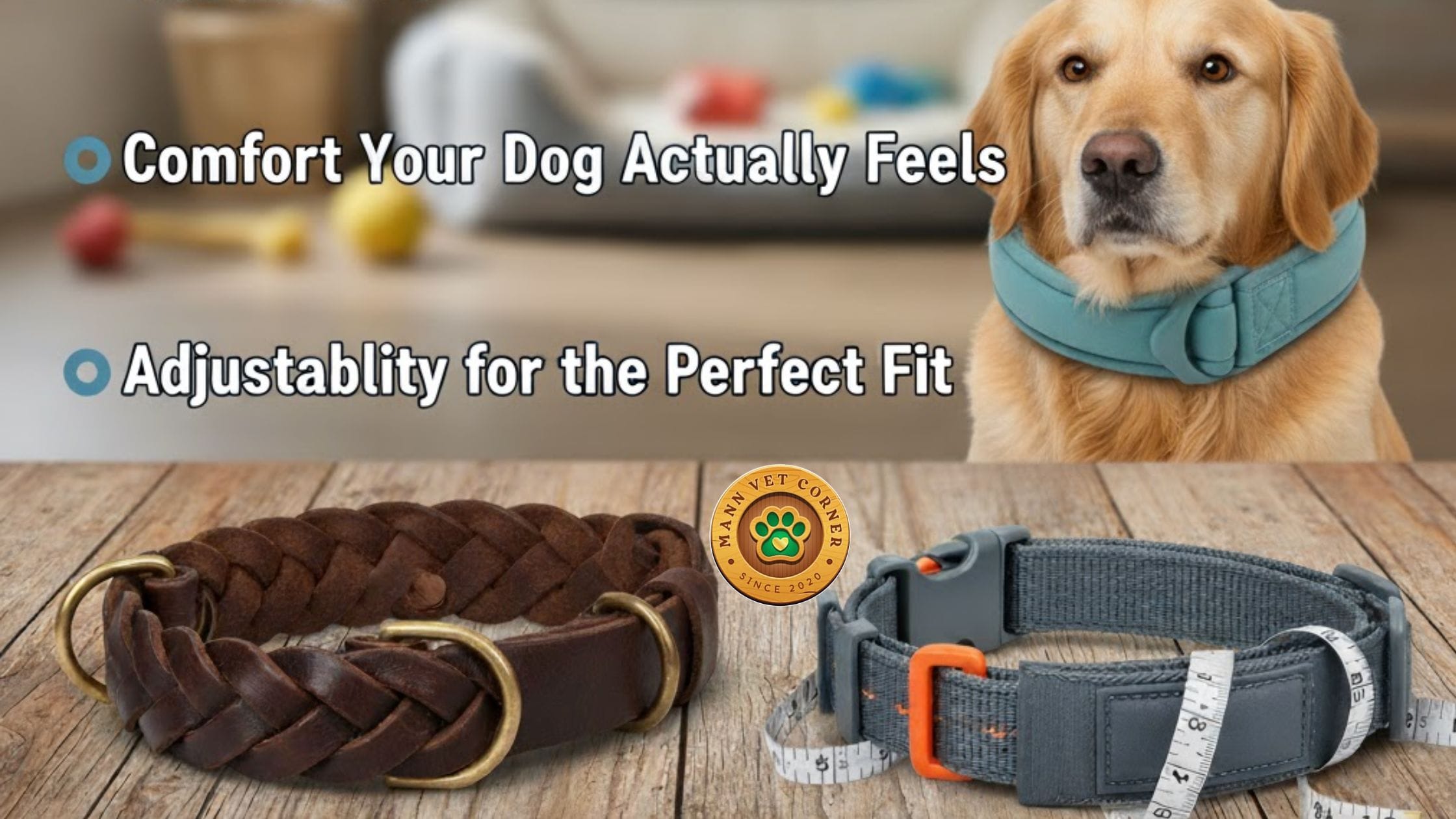
Comfort Your Dog Actually Feels
Dogs can’t tell you when their collar feels uncomfortable. You’ll notice the signs through scratching, trying to remove the collar, or developing bare patches where the collar sits. The best collars distribute pressure evenly, use soft materials against the skin, and include padding in high-contact areas.
Adjustability for the Perfect Fit
Puppies grow rapidly, and adult dogs’ weights fluctuate with seasons and activity levels. Collars with multiple adjustment points ensure you can always achieve the ideal fit—snug enough to stay secure but loose enough to slip two fingers underneath comfortably.
Cute Dog Collars That Turn Heads at the Park
Fashion meets function when you choose cute dog collars that showcase your pet’s personality. These collars prove that safety equipment doesn’t need to look boring.
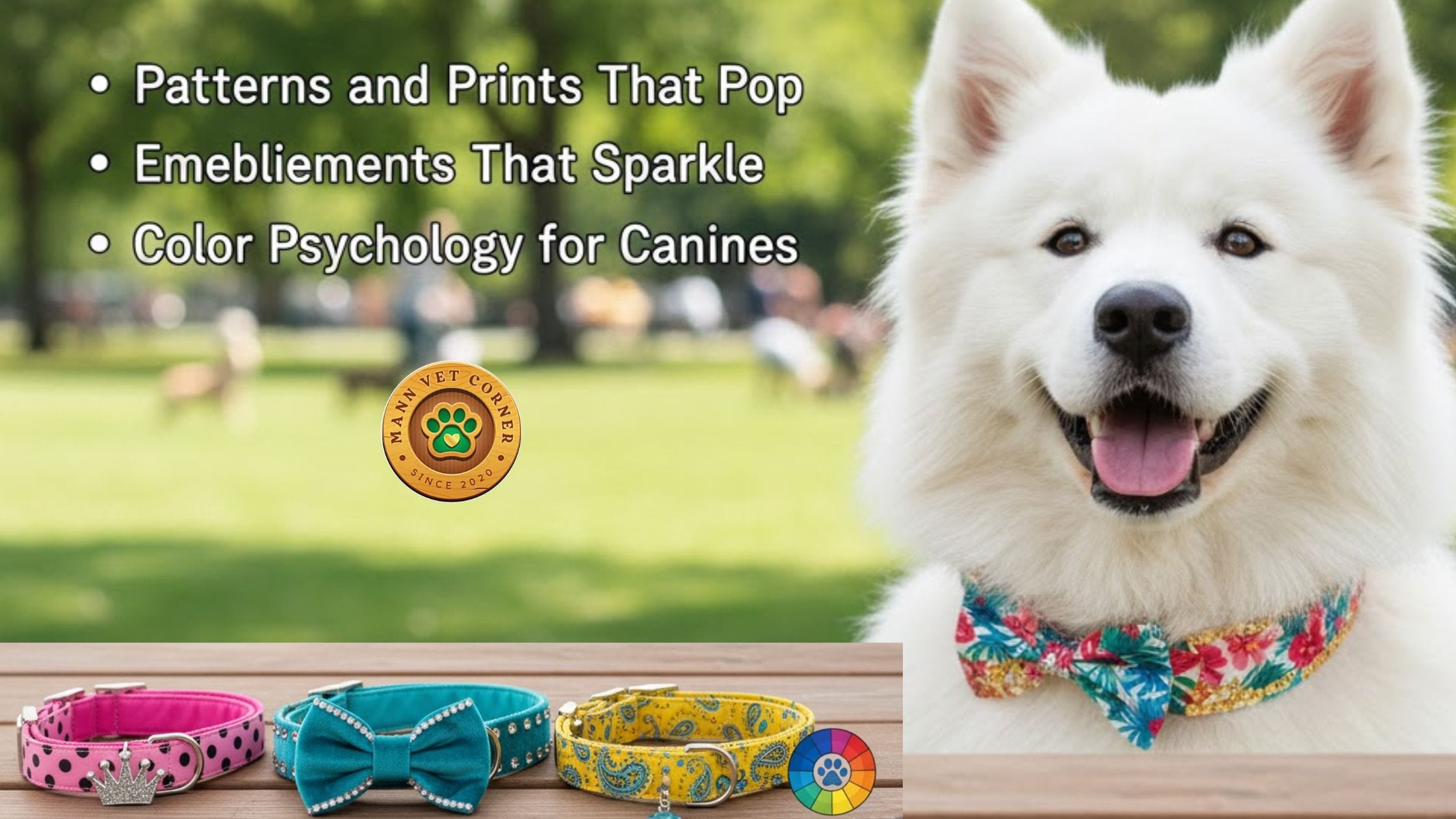
Patterns and Prints That Pop
Floral designs bring spring energy to every walk. Geometric patterns create a modern, sophisticated look. Seasonal themes let you coordinate your dog’s accessories with holidays and celebrations. The variety available today means you’ll find patterns matching any aesthetic preference.
Embellishments That Sparkle
Rhinestones catch sunlight during afternoon walks. Bow ties attach to collar loops for formal occasions. Bandana-style collars combine practical identification with playful style. These decorative elements transform basic collars into statement pieces.
Color Psychology for Canines
Bright colors make your dog more visible during early morning or evening walks, improving safety. Pastels create a soft, gentle appearance perfect for smaller breeds. Bold, saturated colors project confidence and energy ideal for active dogs.
Custom Dog Collars: Personalization That Protects
Custom dog collars offer benefits beyond aesthetics. These personalized accessories provide crucial safety features that standard collars simply cannot match.
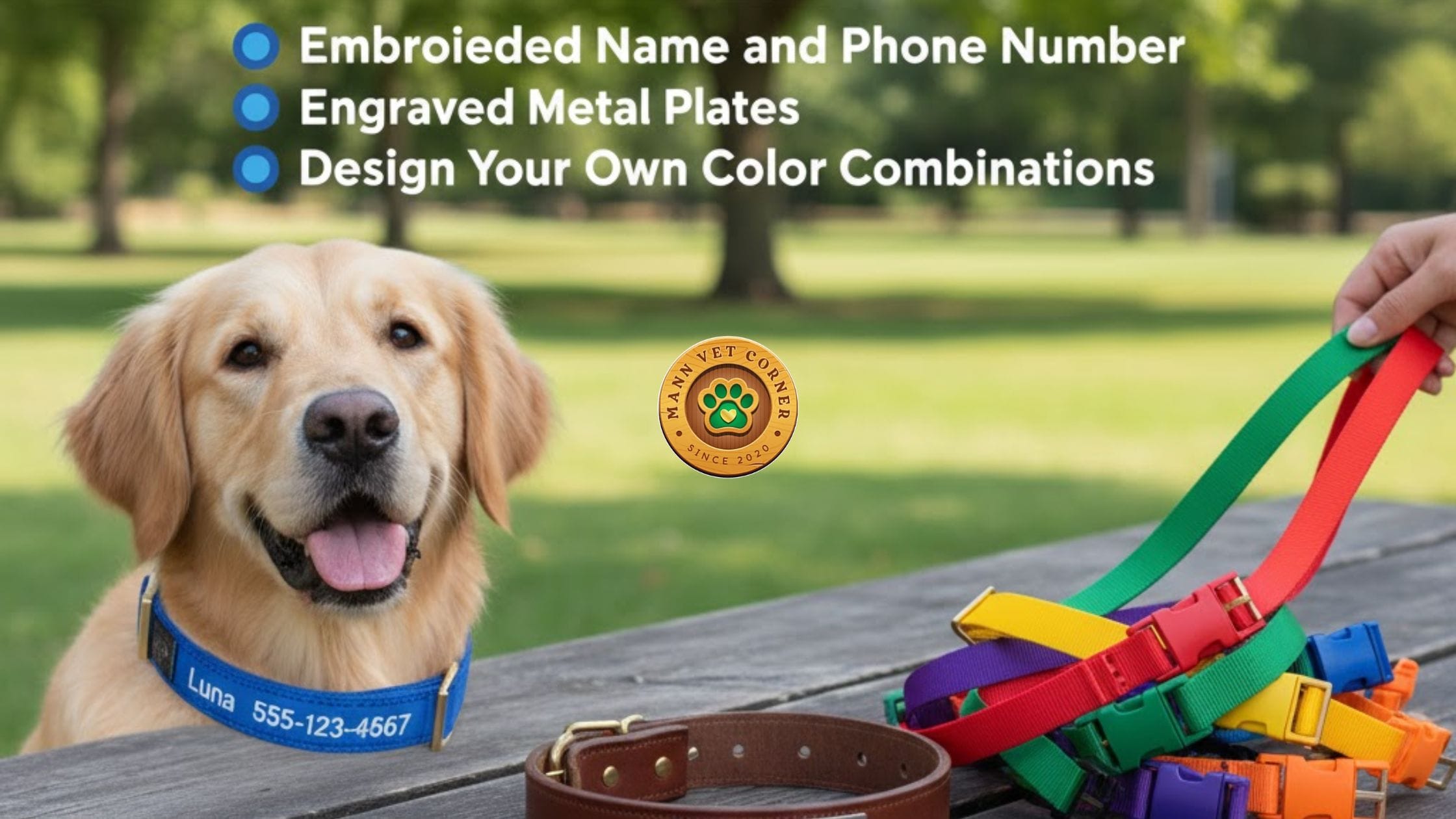
Embroidered Name and Phone Number
Traditional tags jingle constantly, potentially annoying both you and your dog. Tags also fall off or become unreadable over time. Embroidered collars permanently display your contact information directly on the collar material. If your dog slips out the door or breaks free during a walk, anyone who finds them immediately sees how to contact you.
Engraved Metal Plates
Metal nameplates riveted or sewn onto collars create a durable identification method. These plates withstand years of use without fading or wearing away. Many custom collar makers offer various fonts, sizes, and metal finishes to match your preferences.
Design Your Own Color Combinations
Custom doesn’t only mean adding text. Many manufacturers let you select from dozens of fabric colors, create unique patterns, or even upload your own designs. Your dog gets a truly one-of-a-kind collar that nobody else at the dog park will have.

Leather Dog Collars: Classic Style Meets Superior Strength
Leather dog collars represent the traditional choice that has served dogs well for generations. Modern leather collars combine timeless aesthetics with contemporary safety features.
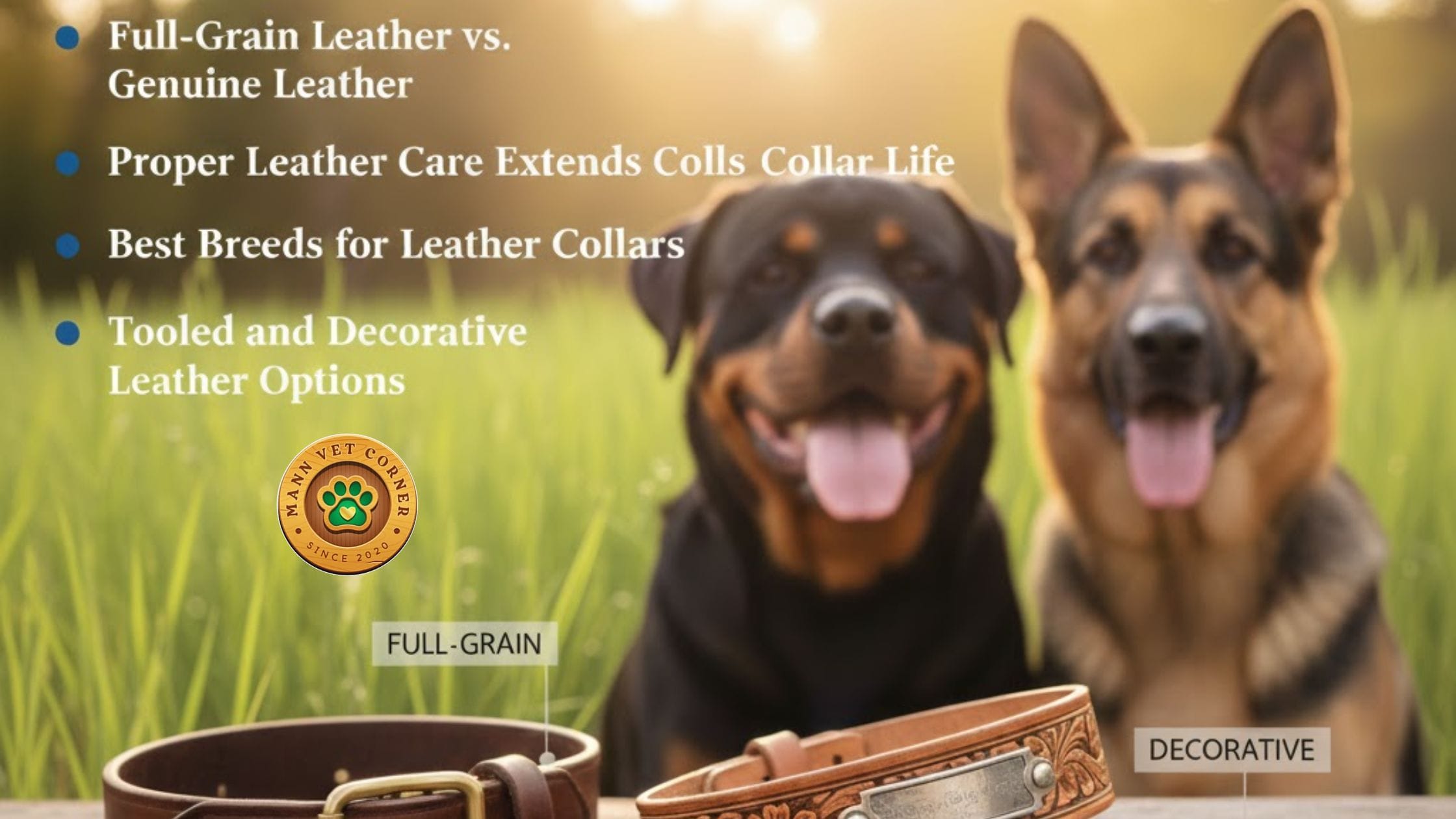
Full-Grain Leather vs. Genuine Leather
Understanding leather quality helps you make informed decisions. Full-grain leather uses the entire hide, creating the most durable and longest-lasting collars. This premium leather develops a beautiful patina over time, looking better with age. Genuine leather, while still real leather, comes from lower-quality cuts that may crack or wear out more quickly.
Proper Leather Care Extends Collar Life
Leather requires minimal maintenance but benefits from occasional conditioning. Wipe your dog’s leather collar with a damp cloth after muddy adventures. Apply leather conditioner every few months to prevent drying and cracking. Store leather collars in cool, dry places when not in use.
Best Breeds for Leather Collars
Larger, strong breeds particularly benefit from leather’s durability. German Shepherds, Labrador Retrievers, Golden Retrievers, and similar-sized dogs wear leather collars that withstand their strength. The substantial feel and look of leather also suits these dogs’ robust builds.
Tooled and Decorative Leather Options
Artisan leather workers create stunning custom designs through tooling, stamping, and carving. Western-style tooled leather collars showcase intricate patterns. Braided leather collars offer unique textures and exceptional strength. These artistic pieces function as wearable art that happens to keep your dog safe.
Dog Collars with Name: Identification That Saves Lives
Dog collars with name plates or embroidery serve a critical purpose beyond convenience. Every year, millions of dogs end up in shelters because good Samaritans couldn’t identify or contact their owners.
Why Name Collars Outperform Hanging Tags
Traditional metal tags create noise with every movement. Dogs learn to hate that constant jingling, which can cause anxiety during walks. Tags also catch on crate wires, fence links, or bushes, potentially trapping your dog. Integrated name collars eliminate these problems while providing permanent, clear identification.
What Information to Include
Your dog’s name helps strangers calm and control your pet if they’re lost and frightened. Your phone number gives finders direct contact information. Including “microchipped” alerts people that your dog has additional identification, encouraging them to take your pet to a vet or shelter for scanning.
Some owners skip their dog’s name on collars, including only phone numbers. This prevents strangers from calling your dog by name and potentially luring them away. Consider your dog’s temperament and your neighborhood’s safety when deciding what information to display.
Design Dog Collars: Where Innovation Meets Canine Needs
Design dog collars push boundaries, incorporating new technologies and materials that previous generations never imagined.
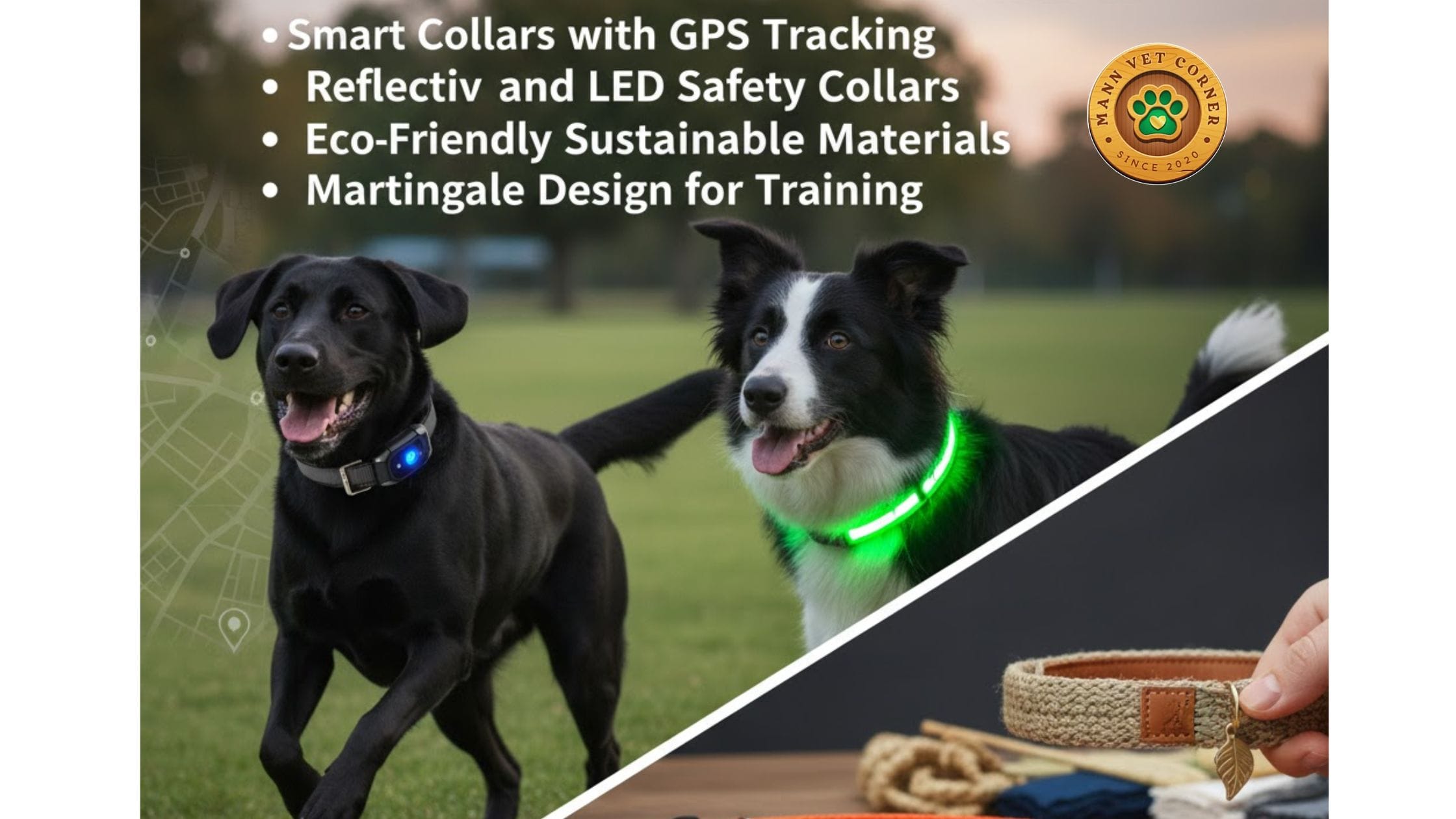
Smart Collars with GPS Tracking
Modern GPS-enabled collars let you track your dog’s location through smartphone apps. These collars define safe zones and alert you immediately if your dog leaves designated areas. Activity tracking features monitor your dog’s exercise levels, helping you ensure they get adequate physical activity.
Reflective and LED Safety Collars
Visibility saves lives during low-light conditions. Reflective stitching catches headlight beams, making your dog visible to drivers. LED collars actively glow in multiple colors, creating visibility from hundreds of feet away. Rechargeable batteries keep these collars illuminated for weeks between charges.
Eco-Friendly Sustainable Materials
Environmentally conscious pet owners choose collars made from recycled materials, hemp, or sustainably harvested cork. These collars perform just as well as traditional options while reducing environmental impact. Many eco-friendly manufacturers also donate portions of proceeds to animal welfare organizations.
Martingale Design for Training
Martingale collars gently tighten when dogs pull, discouraging leash pulling without choking. These collars work exceptionally well for breeds with narrow heads like Greyhounds and Whippets, who easily slip traditional flat collars. The limited-slip design prevents over-tightening, making Martingales safer than choke chains.
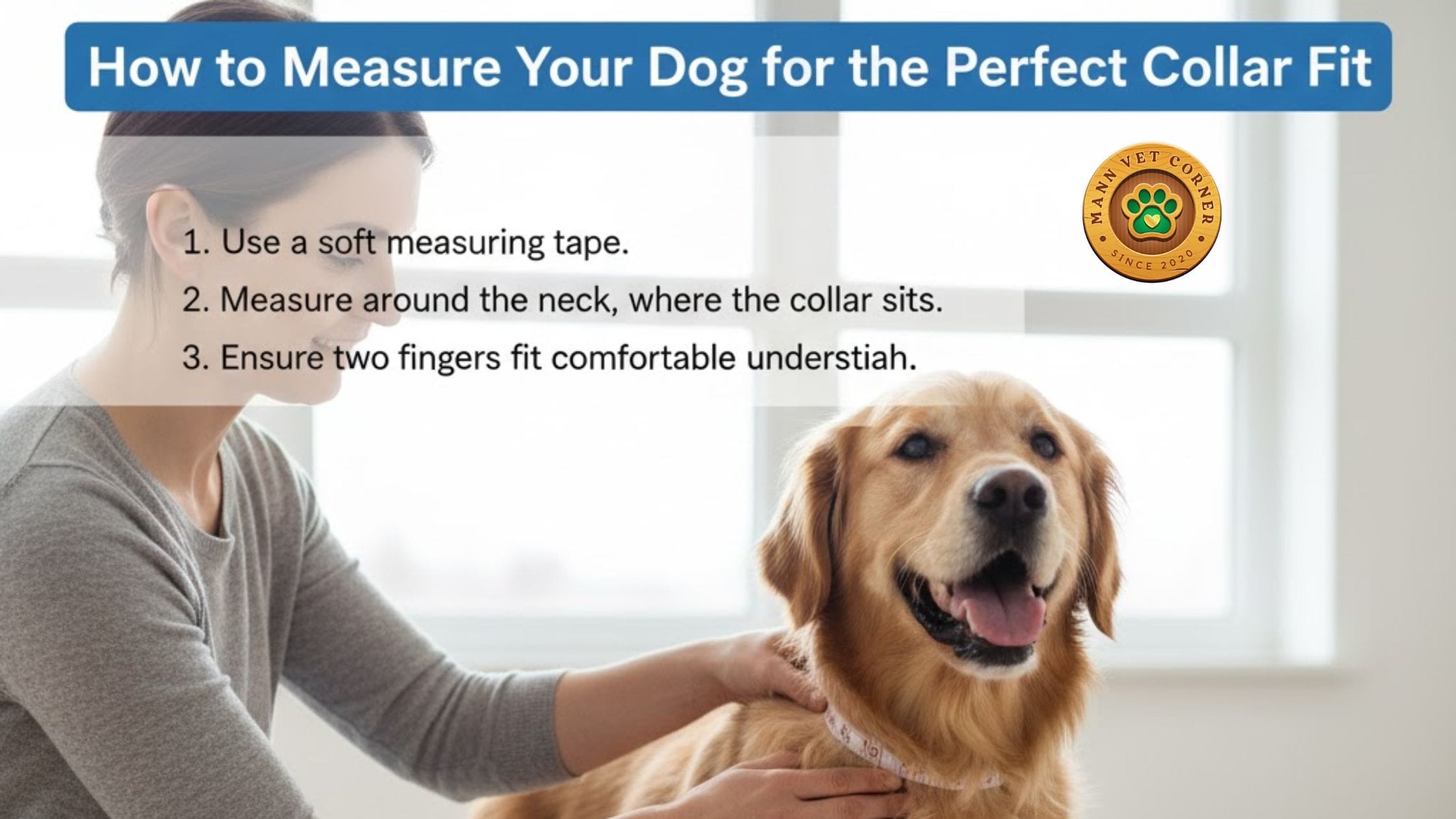
How to Measure Your Dog for the Perfect Collar Fit
Incorrect collar sizing creates discomfort and safety hazards. Following proper measuring techniques ensures your dog’s collar fits perfectly.
The Two-Finger Rule
Measure your dog’s neck circumference at its widest point using a soft measuring tape. Add two inches to this measurement. When you fasten the collar, you should fit two fingers snugly between the collar and your dog’s neck. This spacing prevents choking while keeping the collar secure enough that your dog cannot back out of it.
Adjustments for Different Activities
Your dog’s regular walking collar might differ from their training collar. Some owners use slightly looser collars for around-the-house wear, switching to more secure fits during walks or training sessions. Always prioritize safety over convenience when making these decisions.
Size Charts Vary by Manufacturer
Never assume that a medium collar from one brand fits the same as a medium from another company. Always check specific measurements provided by manufacturers. When shopping online, read customer reviews mentioning whether collars run small, large, or true to size.
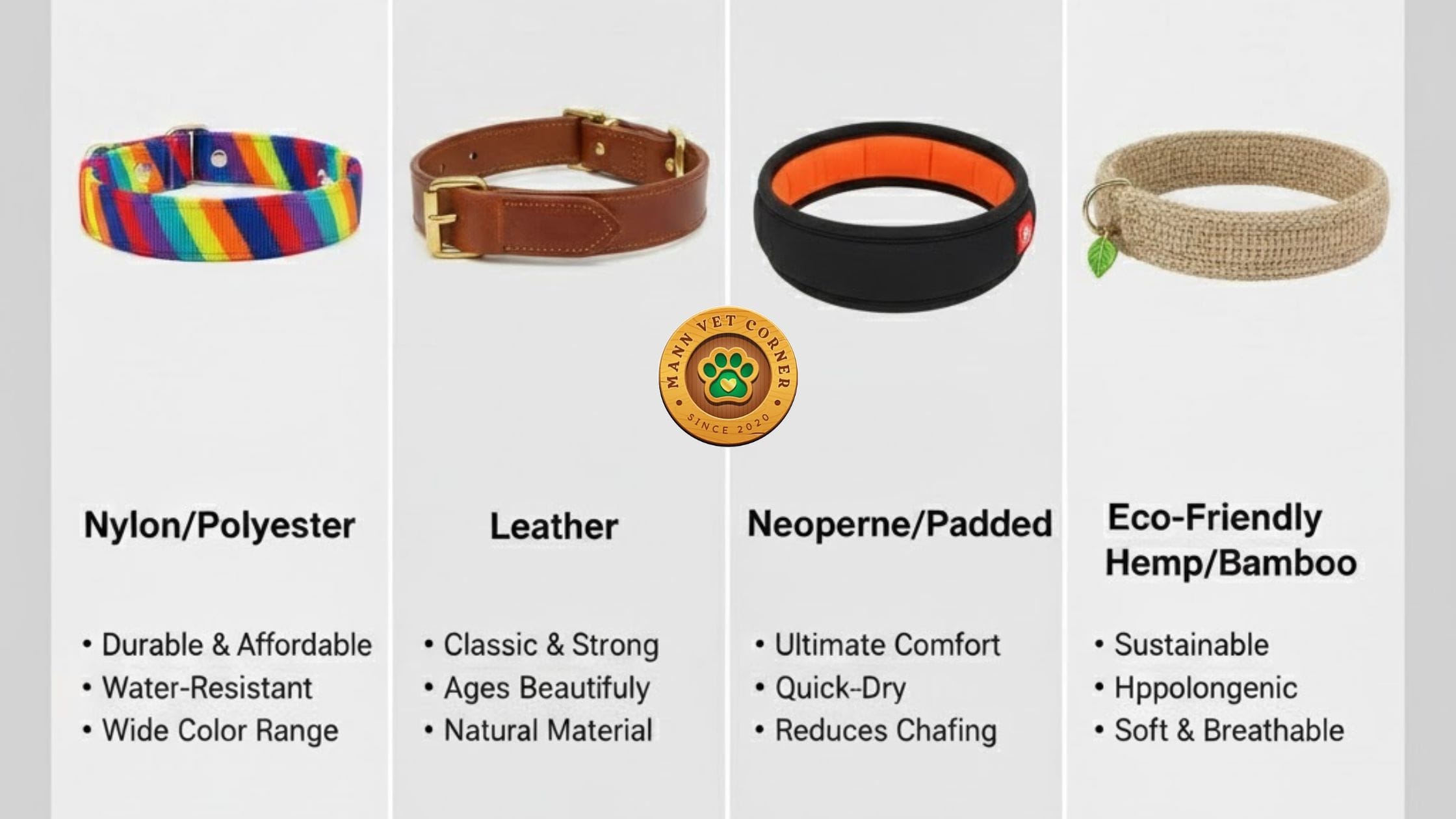
Material Comparison: Finding the Right Collar Fabric
Different collar materials suit different dogs, climates, and lifestyles. Understanding material properties helps you choose wisely.
Nylon: Affordable and Versatile
Nylon collars dominate the market due to their affordability and variety. These collars resist water, dry quickly, and come in endless colors and patterns. However, nylon can cause chafing in some dogs, particularly those with sensitive skin or thick fur. Quality nylon collars use double-stitched construction and rust-resistant hardware.
Biothane: The Modern Alternative
Biothane combines the look of leather with easy-care maintenance. This coated webbing material never absorbs water, odors, or bacteria. You can simply wipe it clean after muddy walks. Biothane collars suit dogs who swim frequently or live in humid climates where leather would deteriorate.
Chain Collars: When and Why
Chain collars serve specific training purposes but should never be left on unsupervised dogs. These collars can catch on objects, creating serious injury risks. Professional trainers sometimes use chain collars during structured training sessions, but they’re inappropriate for everyday wear.
Paracord: Military-Grade Strength
Paracord collars use the same material that military paratroopers trust with their lives. These ultra-strong collars suit adventurous dogs who hike, camp, or explore rugged terrain with their owners. The braided construction creates comfortable flexibility while providing exceptional strength.
Safety Features Every Collar Should Have
Certain safety features separate good collars from great ones. These elements protect your dog in various scenarios.
Quick-Release Buckles
Quick-release buckles let you remove collars instantly in emergencies. If your dog’s collar catches on something, these buckles prevent choking by releasing under pressure. However, ensure the release mechanism requires sufficient force that your dog cannot accidentally open it themselves.
Welded D-Rings
The D-ring where you attach leashes and tags must withstand substantial force. Welded rings eliminate weak points found in traditional riveted designs. Test D-rings by pulling firmly—they shouldn’t bend, twist, or show signs of weakness.
Rust-Resistant Hardware
Metal components rust when exposed to water, salt, and outdoor elements. Stainless steel or brass hardware resists corrosion far better than basic chrome-plated materials. This durability matters for dogs who swim or live in humid climates.
When to Replace Your Dog’s Collar
Even quality collars don’t last forever. Knowing when to retire an old collar prevents safety issues.
Signs of Wear and Damage
Frayed stitching indicates structural weakness. Cracked leather can suddenly snap during walks. Bent or damaged buckles may unexpectedly fail. Faded embroidery or illegible name tags defeat the collar’s identification purpose. Replace collars showing any of these warning signs immediately.
Seasonal Rotation Strategy
Many dog owners maintain multiple collars for different purposes. Winter collars might be thicker and more visible. Summer collars often use lighter materials that won’t overheat your dog. This rotation extends each collar’s lifespan while giving your dog appropriate gear for every season.
Budget Considerations: Investment vs. Economy
Dog collar prices range from a few dollars to over one hundred dollars. Understanding what you pay for helps justify your investment.
When to Splurge
Leather collars represent significant investments that last for years with proper care. Custom collars with embroidered names cost more upfront but eliminate recurring tag replacement costs. GPS-enabled smart collars carry high price tags but could save your dog’s life if they wander off.
When to Save
Puppies outgrow collars rapidly. Inexpensive adjustable collars make sense during these growth phases. Dogs who destroy their gear quickly benefit from affordable replacement options. Simple nylon collars work perfectly well for dogs living primarily indoors.
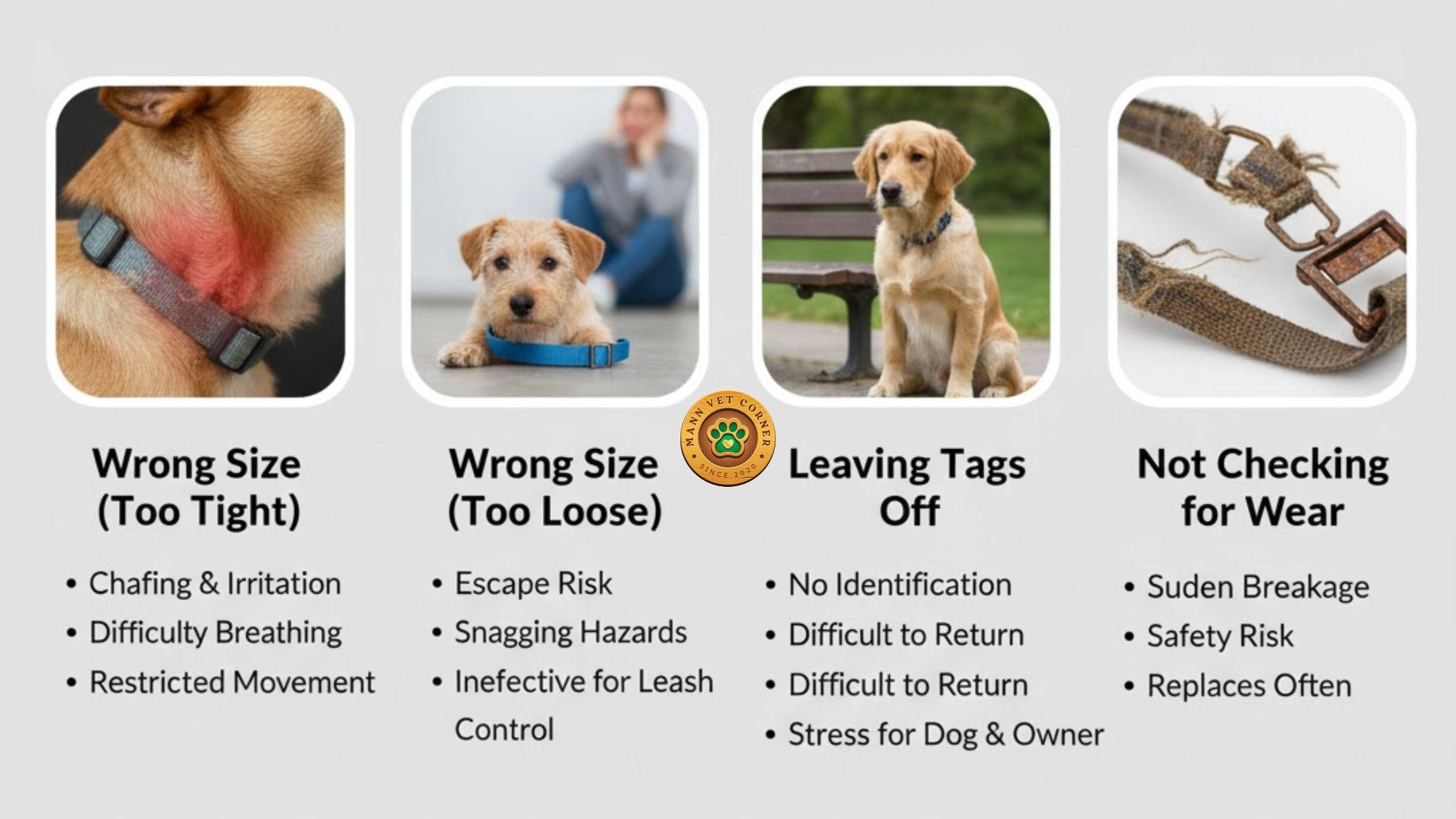
Top Mistakes Dog Owners Make with Collars
Avoiding these common errors keeps your dog safer and more comfortable.
Leaving Collars Too Loose
Loose collars let dogs slip free during walks or when frightened. Gates, fences, and startling noises can send dogs running. A properly fitted collar prevents these escapes.
Never Checking Fit
Your dog’s weight fluctuates. Puppies grow rapidly. Check collar fit weekly to ensure it remains appropriate. This quick habit prevents problems before they develop.
Using Wrong Collar Types for Activities
Walking collars differ from training collars, which differ from house collars. Using inappropriate collars for specific activities creates safety risks and reduces training effectiveness.
Environmental Factors Affecting Collar Choice
Your local climate and your dog’s lifestyle significantly influence ideal collar selection.
Hot, Humid Climates
Moisture-resistant materials like Biothane or coated nylon prevent mildew and odor. Lighter colors reflect heat better than dark options. Minimal padding reduces heat retention against your dog’s neck.
Cold, Snowy Regions
Reflective or LED collars improve visibility during long winter nights. Waterproof materials resist snow and ice accumulation. Adjustable designs accommodate winter coats and extra fur growth.
Urban vs. Rural Settings
City dogs benefit from highly visible collars that catch drivers’ attention. Rural dogs might need collars that resist catching on brush and branches during off-leash adventures.
Special Considerations for Puppies
Puppy collars require different thinking than adult dog collars.
Lightweight Materials
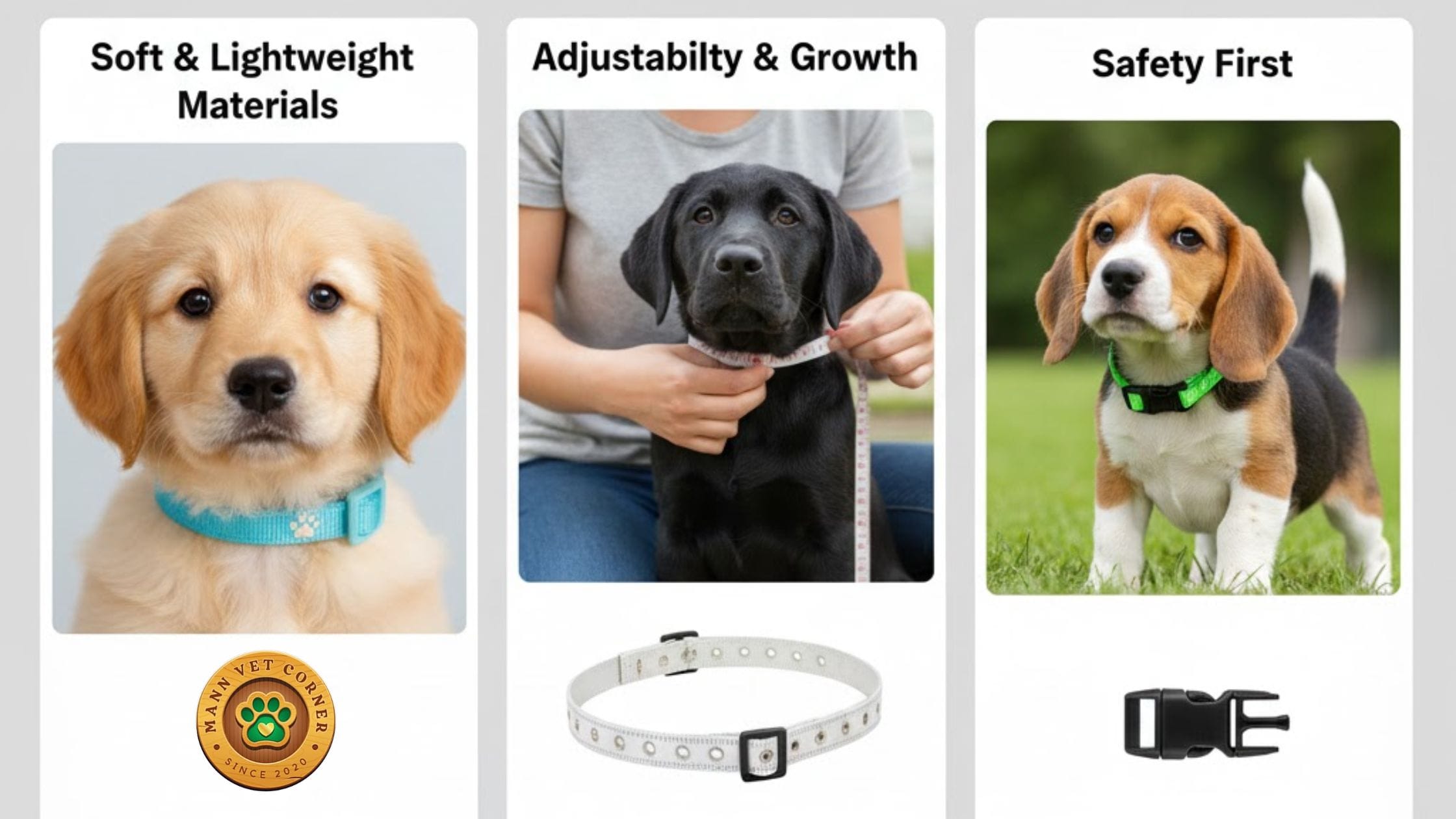
Heavy collars overwhelm puppies just learning to accept wearing one. Start with soft, lightweight options that help puppies adjust to this new sensation.
Frequent Size Changes
Puppies might need three or four collar sizes during their first year. Budget-friendly options make sense during these rapid growth phases. Mark a calendar to check collar fit every two weeks.
Positive Collar Associations
Make collar-wearing pleasant by associating it with treats and praise. Put the collar on before meals, walks, or playtime. This conditioning prevents collar-resistant behaviors from developing.
Caring for Your Dog’s Collar
Proper maintenance extends collar life and keeps your dog comfortable.
Regular Cleaning Schedules
Wash nylon collars weekly in warm, soapy water. Wipe leather collars with damp cloths and apply conditioner monthly. Spot-clean any material immediately after muddy adventures or swimming sessions.
Storage Between Uses
If you remove your dog’s collar at home, store it properly. Hang collars on hooks rather than tossing them in drawers. This prevents creasing, tangling, and accidental damage.
Where to Buy Quality Dog Collars
Shopping channels vary in selection, quality, and value.
Local Pet Stores
Physical stores let you examine collars directly, checking construction quality and hardware strength. Staff often provide sizing assistance and recommendations based on your dog’s breed and needs.
Online Retailers
Online shopping offers vast selection and competitive prices. Read customer reviews carefully, paying attention to sizing feedback and durability reports. Check return policies before purchasing.
Custom Collar Makers
Artisan craftspeople create unique, high-quality collars tailored to your specifications. These makers typically operate through Etsy, independent websites, or social media platforms. Custom orders require longer wait times but deliver personalized results.
Breed-Specific Specialists
Some manufacturers specialize in collars for particular breeds. Sighthound collars, bully breed collars, and toy breed collars address each breed’s unique neck shapes and strength requirements.
Making Your Final Decision
Choosing the perfect dog collar involves balancing multiple factors. Consider your dog’s size, strength, activity level, and personality. Think about your climate, budget, and aesthetic preferences. Prioritize safety features and proper fit above all else.
Your dog depends on you to make wise choices about their care and safety. The collar you select will touch their skin every day, identify them if they become lost, and keep them secure during walks and adventures. Take time to research options, measure carefully, and invest in quality that lasts.
The bond between dogs and their owners grows stronger through every walk, every training session, and every quiet evening together. Your dog’s collar participates in all these moments. Choose wisely, and that small band of material becomes part of your shared story—comfortable enough to forget, strong enough to trust, and meaningful enough to matter.
Frequently Asked Questions
How tight should a dog collar be? You should fit two fingers comfortably between your dog’s collar and their neck. This ensures the collar stays secure without choking or causing discomfort.
Can my dog wear their collar all the time? Most dogs safely wear collars continuously, but remove collars during crate time to prevent catching hazards. Check for skin irritation or fur loss regularly.
What’s the difference between a collar and a harness? Collars encircle only the neck, while harnesses distribute pressure across the chest and shoulders. Harnesses work better for dogs who pull or have respiratory issues.
How often should I replace my dog’s collar? Replace collars showing wear, damage, or illegible identification information. Even well-maintained collars typically need replacement every 1-3 years.
Are breakaway collars safe? Breakaway collars suit cats better than dogs. Dogs’ stronger pulling force can trigger unnecessary releases during walks or training sessions.
What collar works best for pullers? Martingale collars or front-clip harnesses effectively reduce pulling without causing harm. Avoid choke chains or prong collars, which can damage your dog’s throat.
Should I include my dog’s name on their collar? Including names helps strangers calm lost dogs but could help thieves lure your pet. Consider your neighborhood’s safety when deciding.
Do puppies need different collars than adult dogs? Puppies need lightweight, frequently adjusted collars during their rapid growth phases. Transition to adult-style collars once they reach full size.

 Dr. Bano Talpur