
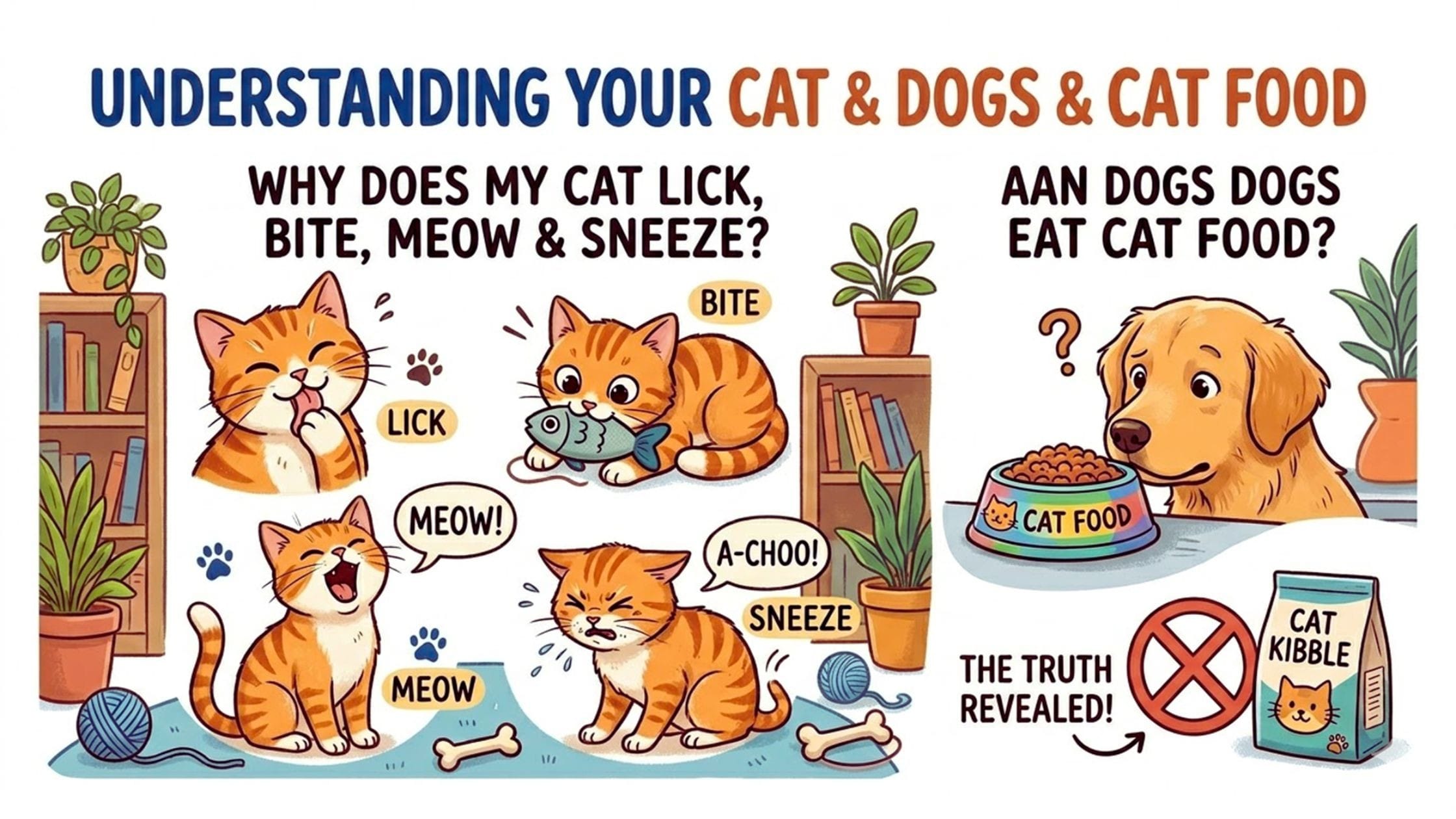
Cat Behavior & Health six of the most searched cat questions; Cat Behavior Secrets & Dog Food Truths their answered clearly, honestly, and backed by veterinary insight. No fluff, just real answers every cat owner actually needs. This guide tackles the six most searched cat questions of 2026 in one place — with clear, plain-language explanations drawn from veterinary behaviorists, feline medicine, and real owner experience. Whether you have a kitten or a senior cat, understanding what your pet is trying to tell you makes life better for both of you.
If you live with a cat, you already know they operate on a frequency that humans rarely decode on the first try. One moment your cat is purring peacefully on your lap — the next, it bites your hand without warning. Or it stares at the wall and meows at 2 AM for no apparent reason. These behaviors feel random, but they almost never are.
01 / Why Cats Lick People
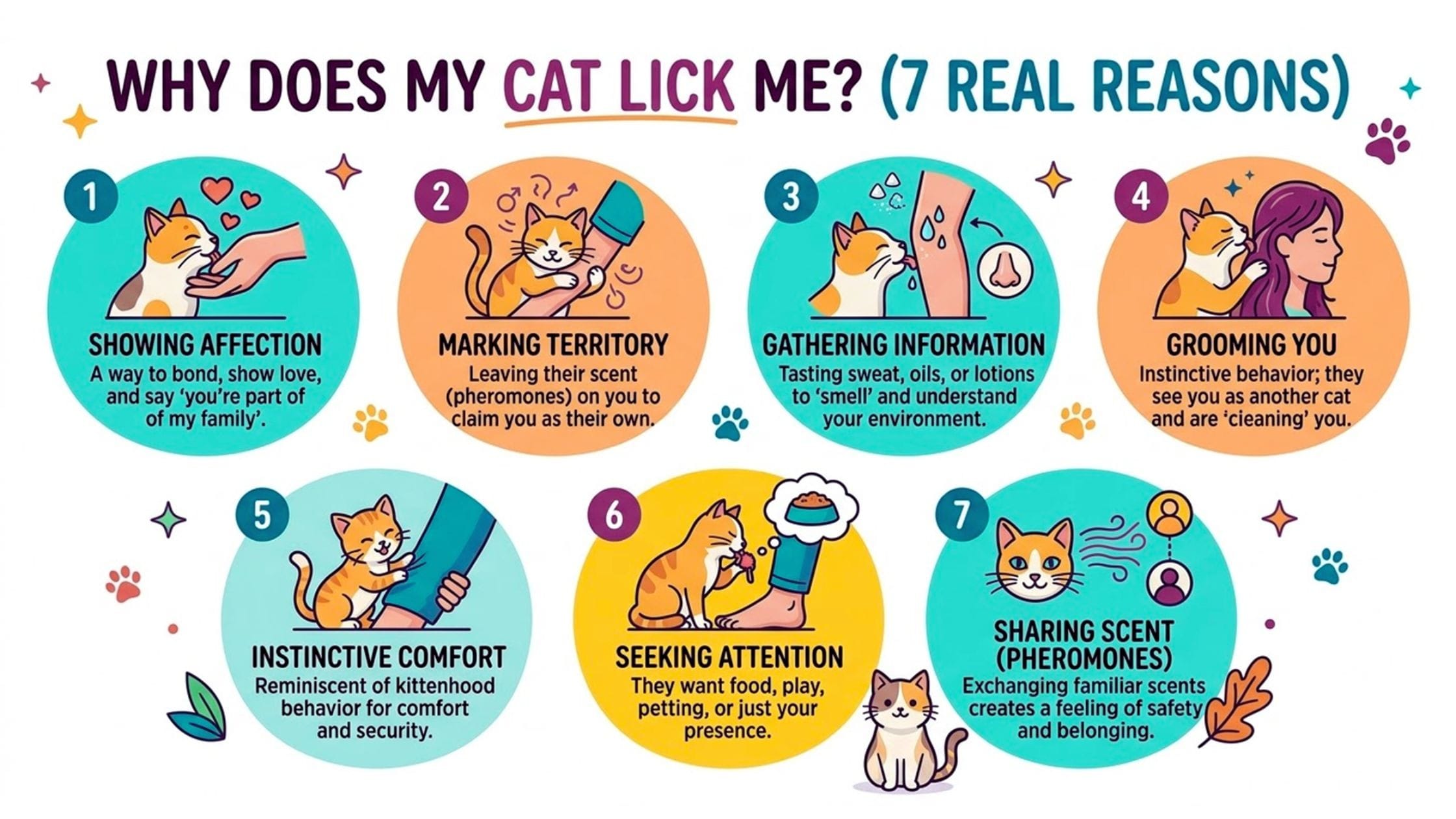
Why Does My Cat Lick Me? (7 Real Reasons)
Your cat’s tongue is not just a grooming tool — it is a communication device. When a cat licks a person, it is almost always intentional. Here is what that behavior actually means, depending on the context.
1. Affection and Social Bonding (Allogrooming)
In the cat world, mutual grooming — called allogrooming — is one of the clearest signs of trust and emotional closeness. Cats groom their bonded companions (other cats, kittens, or humans they love) to reinforce the relationship. When your cat licks your hand, arm, or hair, it is treating you as part of its social group. This is a high compliment from a species that is notoriously selective with affection.
2. Marking You with Scent
Cats are territorial animals who rely heavily on scent to define their world. Licking deposits their saliva on you — which contains pheromones that signal ownership. In short, your cat licking you is its way of saying, “This human belongs to me.” You may notice this behavior increase after you return home from somewhere that carries unfamiliar smells.
3. Attention-Seeking Behavior
Some cats learn quickly that licking gets a response — a laugh, a pet, eye contact, or food. Once that association is formed, licking becomes a reliable tool your cat uses to get what it wants. If your cat licks you and immediately looks toward its food bowl or the door, this is almost certainly what is happening.
4. The Salty Skin Theory
Human skin carries trace amounts of salt and natural oils. Many cats are attracted to this taste and will lick hands, faces, or legs purely because they find it enjoyable. It is especially common after you exercise or in warm weather when perspiration is higher.
5. Comfort and Stress Relief
Repetitive licking can be a self-soothing behavior. If your cat licks you (or itself) excessively during stressful situations — loud noises, visitors, changes at home — it may be using the rhythmic action to calm its nervous system. Occasional comfort licking is fine; obsessive or compulsive licking warrants a vet conversation.
6. Maternal Instinct
Mother cats lick their kittens constantly — to clean them, stimulate circulation, and keep them warm. Some cats, particularly those adopted young, carry this maternal licking behavior into adulthood and direct it toward their human caregivers.
7. Grooming You Because You Are Part of the Family
Simply put, your cat may just think you need help. If it notices you touched your face, came in from outside, or have unfamiliar smells on you, it may instinctively step in to “clean” you the same way it would groom another cat it cares about.
Cat saliva contains proteins that some people are allergic to. If licking causes skin redness or irritation, gently redirect your cat with a toy — do not punish the behavior, as it comes from a positive place.
02 / Dogs & Cat Food
Can Dogs Eat Cat Food? What Every Multi-Pet Owner Needs to Know
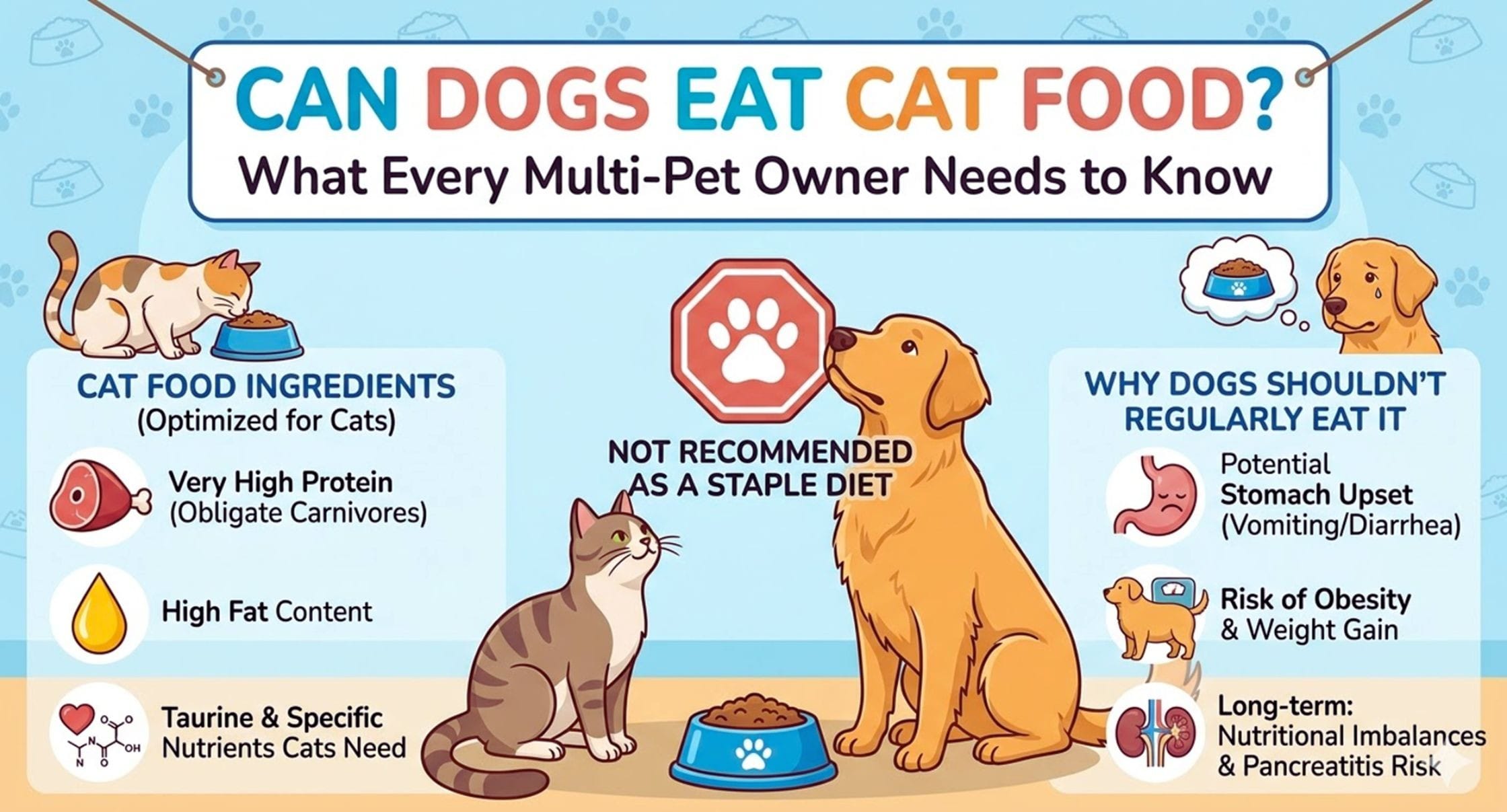
If you share your home with both a dog and a cat, there is a good chance your dog has stolen a mouthful of cat food at least once. The question most owners ask is: is that dangerous? The short answer is nuanced — a small amount is unlikely to cause immediate harm, but regular access to cat food is genuinely bad for dogs.
Why Cat Food Is Not Designed for Dogs
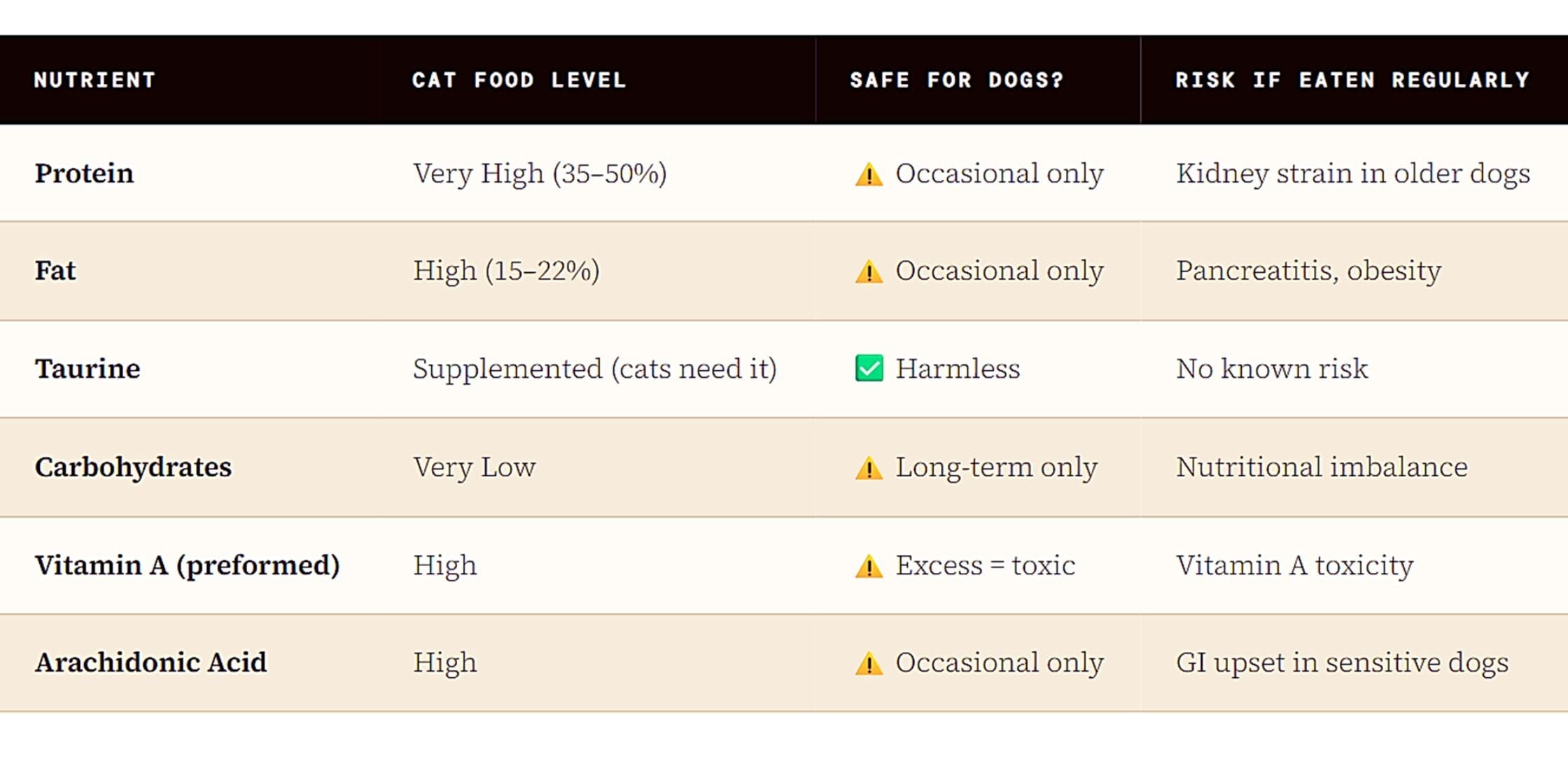
Cats are obligate carnivores — their bodies require a diet extremely high in protein and animal fat to survive. Dog food is formulated for a species that is biologically omnivorous and needs a much more balanced macronutrient profile. Cat food contains:
What Happens If a Dog Eats Cat Food Once?
What Happens If a Dog Eats Cat Food Regularly?
This is where the risk becomes real. Dogs fed cat food over weeks and months are at significantly higher risk for obesity, pancreatitis (painful inflammation of the pancreas), and kidney disease — especially in senior dogs whose kidneys are already working harder. The high fat content is the biggest concern.
Dogs with pre-existing pancreatitis, kidney disease, obesity, or sensitive stomachs should never be given cat food — even as a one-time treat. The fat content alone can trigger a dangerous flare-up.
Practical Tips for Multi-Pet Households
If your dog is determined to get into the cat’s bowl, feed your cat in an elevated location your dog cannot reach, use a cat flap that gives cats-only access to a separate feeding room, or consider a microchip-activated cat feeder that only opens for your cat.
03 / Cat Biting Behavior
Why Does My Cat Bite Me? Understanding Love Bites vs. Aggression
A cat that bites its owner is one of the most misunderstood situations in pet ownership. Context is everything — a gentle nibble during a cuddle session means something completely different from a sudden, hard bite out of nowhere. Learning to tell the difference protects you and helps your cat feel understood.
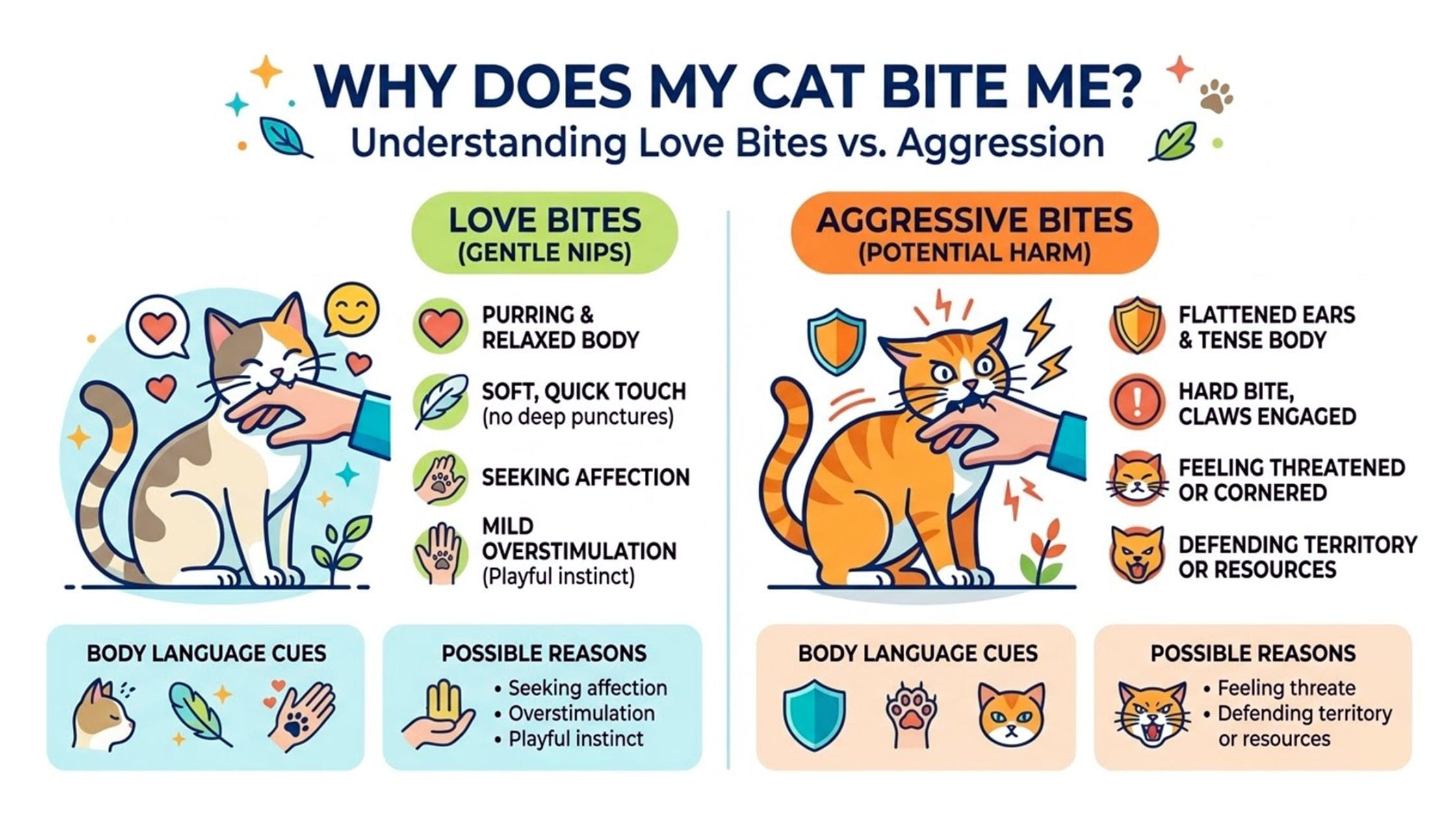
Love Bites: The Affectionate Nip
Gentle, light biting during petting or play — sometimes called “love bites” or “petting-induced biting” — is extremely common and usually harmless. Your cat is not angry. It is engaging with you the same way it would with a bonded feline friend. These bites are soft, do not break the skin, and are often accompanied by purring or kneading.
Overstimulation Biting
This is the most frequent type of bite cat owners experience. Cats have a threshold for physical contact — and when that threshold is crossed, they bite to stop the stimulus. The signs build gradually: the tail begins to flick, the ears flatten slightly, the skin along the back starts to twitch. If you miss these signals and keep petting, the bite is your cat’s only remaining option. Respecting these cues completely prevents this type of bite.
🎮 Play Aggression
Kittens and young cats learn to hunt through play. Using hands as toys teaches them that biting humans is acceptable — redirect to wand toys and feather teasers instead.
😨 Fear Biting
A frightened cat that feels cornered will bite in self-defense. Never reach toward a scared or hissing cat — give it space and a clear escape route.
🤕 Pain-Induced Biting
A cat that suddenly bites when touched in a specific area may be in pain. Arthritis, injuries, or internal illness can make previously comfortable contact unbearable.
🐾 Territorial Biting
Some cats bite to assert control over their space or person. Common in unneutered males and cats with limited early socialization.
🧠 Redirected Aggression
A cat aroused by an outdoor cat seen through the window may bite whoever is nearest. This bite is intense and seemingly unprovoked — the cat is overwhelmed, not angry at you.
❤️ Affection / Attention
Some cats use gentle biting to initiate play or seek interaction. If it comes with a chirp or slow blink, it is almost certainly a friendly overture.
If your cat’s biting behavior changes suddenly — especially in an older cat that has always been calm — schedule a vet visit. Pain, hyperthyroidism, neurological changes, and cognitive dysfunction can all cause new aggression in cats with no history of biting.
04 / Excessive Meowing
Why Is My Cat Meowing So Much? Causes of Excessive Vocalization in Cats
Here is something many cat owners do not realize: adult cats do not meow at other cats. They developed this vocalization specifically to communicate with humans. Every meow is directed at you — and understanding why requires looking at the pattern, timing, and your cat’s individual history.
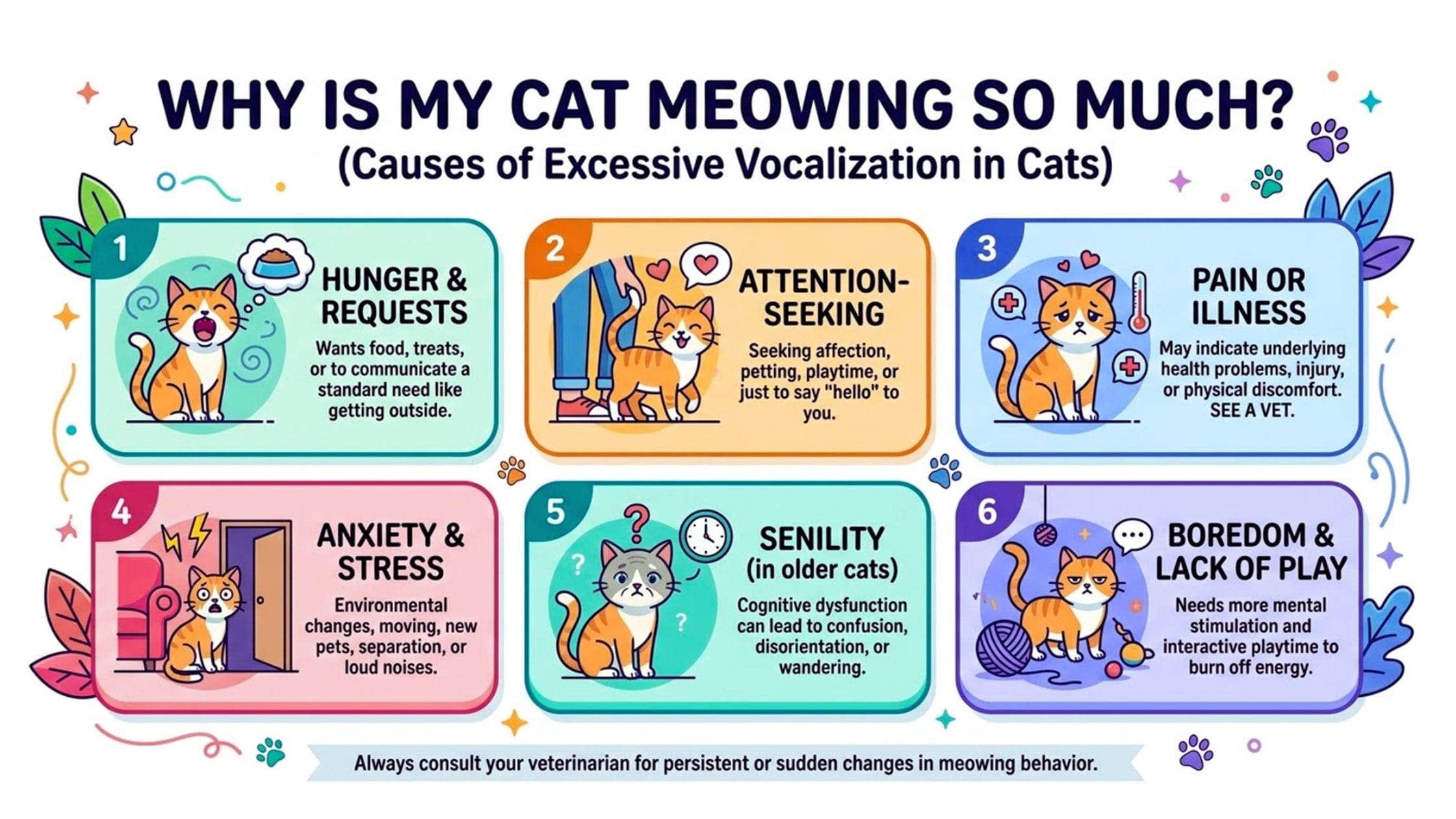
Hunger and Feeding Time
The most common cause of excessive meowing is also the simplest: your cat is hungry and knows that meowing gets results. If the meowing peaks before meals and stops once you fill the bowl, feeding schedules and puzzle feeders can help break this habit without leaving your cat genuinely underfed.
Attention and Boredom
Cats are intelligent animals that need mental stimulation. A bored cat in an under-enriched environment will vocalize, often loudly and persistently, to get interaction. Interactive play, window perches with outdoor views, cat TV, and rotating toys can dramatically reduce this behavior.
Stress, Anxiety, and Environmental Change
A new baby, a house move, a new pet, or even rearranged furniture can trigger anxiety-driven meowing. Cats are creatures of habit, and disruption to routine is genuinely distressing. Feliway diffusers (synthetic feline pheromones) can help during transitions.
Heat Cycles in Unspayed Females
Unspayed female cats in heat produce an almost constant, loud, and sometimes haunting vocalization. This can occur every two to three weeks and lasts several days. Spaying eliminates this entirely — and provides significant long-term health benefits beyond the noise issue.
Medical Causes: When Meowing Is a Symptom
Sudden, new-onset excessive meowing — especially in a cat that was previously quiet — should prompt a vet visit. Common medical triggers include:
- Dental pain or oral disease
- Hyperthyroidism (especially in cats over 10)
- Hypertension (high blood pressure)
- Vision or hearing loss causing disorientation
- Cognitive Dysfunction Syndrome (feline dementia)
- Kidney disease or urinary tract infection
Night-Time Meowing in Senior Cats
An older cat that meows loudly at night — seemingly disoriented or distressed — is exhibiting one of the clearest signs of feline cognitive dysfunction. This is the cat equivalent of Alzheimer’s disease and is manageable with veterinary support, environmental enrichment, and in some cases, medication.
Never punish meowing with a spray bottle or loud noises — this increases anxiety and worsens the behavior. Instead, identify the underlying cause and address it directly. Ignoring attention-based meowing consistently (while meeting your cat’s actual needs) is the most effective behavioral approach.
05 / Cat Sneezing
Why Is My Cat Sneezing? From Dust to Vet-Worthy Warning Signs
An occasional sneeze from your cat is completely normal — just as it is for humans. The nasal passages are sensitive, and anything from a stray dust particle to a strong scent can trigger a quick sneeze. The concern arises when sneezing becomes frequent, prolonged, or paired with other symptoms.
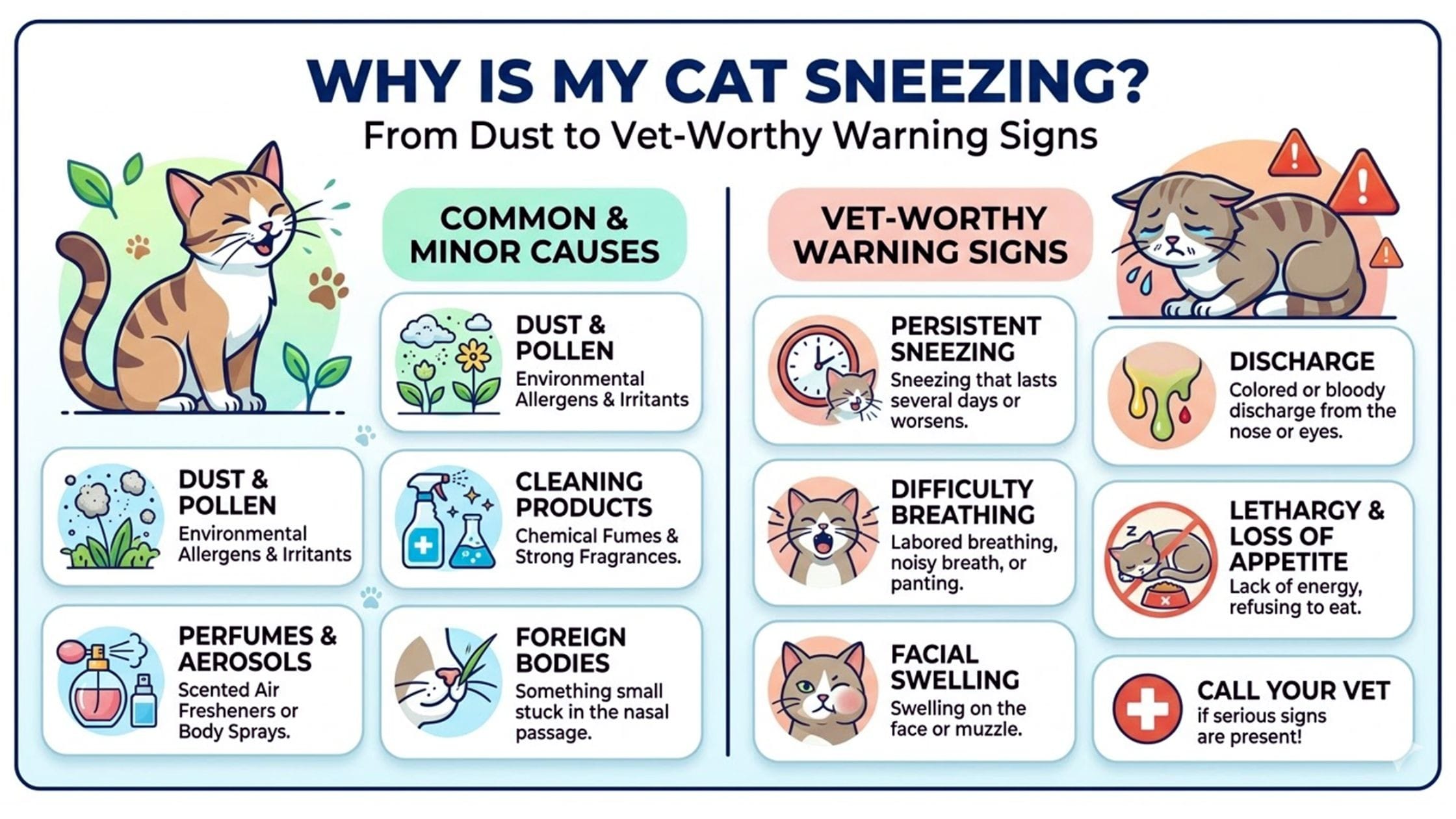
Normal, Non-Worrying Sneezing
Single sneezes or brief sneezing fits after exposure to dust, perfume, cleaning sprays, smoke, or pollen are not a cause for alarm. Cats have an exceptional sense of smell — they are far more sensitive to airborne irritants than we are. If the sneezing stops quickly and your cat seems fine otherwise, no action is needed beyond removing the irritant if possible.
Upper Respiratory Infection (Cat Cold)
This is the most common medical cause of sneezing in cats. Feline upper respiratory infections (URIs) — often called cat colds — are caused by viruses like Feline Herpesvirus (FHV-1) and Feline Calicivirus (FCV). They are highly contagious between cats. Signs include:
- Repeated sneezing, sometimes in rapid bursts
- Watery or yellow/green eye discharge
- Runny nose — clear or colored nasal discharge
- Low-grade fever and lethargy
- Reduced appetite due to congestion affecting smell
- Open-mouth breathing if very congested
Allergies and Environmental Triggers
Cats can develop environmental allergies — to pollen, mold, dust mites, or certain fabrics and chemicals. Allergy-related sneezing tends to be seasonal or linked to specific environments, and is usually accompanied by itchy skin, watery eyes, and over-grooming rather than nasal discharge.
Less Common but Important Causes
Nasal polyps or tumors — benign or malignant growths inside the nasal passage — cause persistent one-sided sneezing, often with nosebleeds. Dental disease is surprisingly connected: the roots of upper teeth sit very close to the nasal passage, and a tooth root abscess can cause chronic sneezing and discharge on one side of the face. Foreign bodies (grass blades, tiny seeds) can lodge in the nasal cavity and cause frantic, violent sneezing until removed.
🩺 When to Call Your Vet About Sneezing
- Sneezing persists for more than 7–10 days
- Nasal discharge is thick, yellow, green, or bloody
- Your cat has stopped eating or is losing weight
- Eye discharge accompanies the sneezing
- Sneezing is only on one side of the nose
- You notice nosebleeds of any frequency
- Your cat is breathing with its mouth open
- Lethargy or fever is present alongside sneezing
06 / Cat Vomiting
Why Is My Cat Throwing Up? Normal vs. Concerning Vomiting Explained
Cat vomiting sits in an unusual zone of pet ownership: it is common enough that many owners treat it as routine, yet frequent enough to miss real illness. The key is knowing which kind of vomiting is benign and which requires a vet visit.
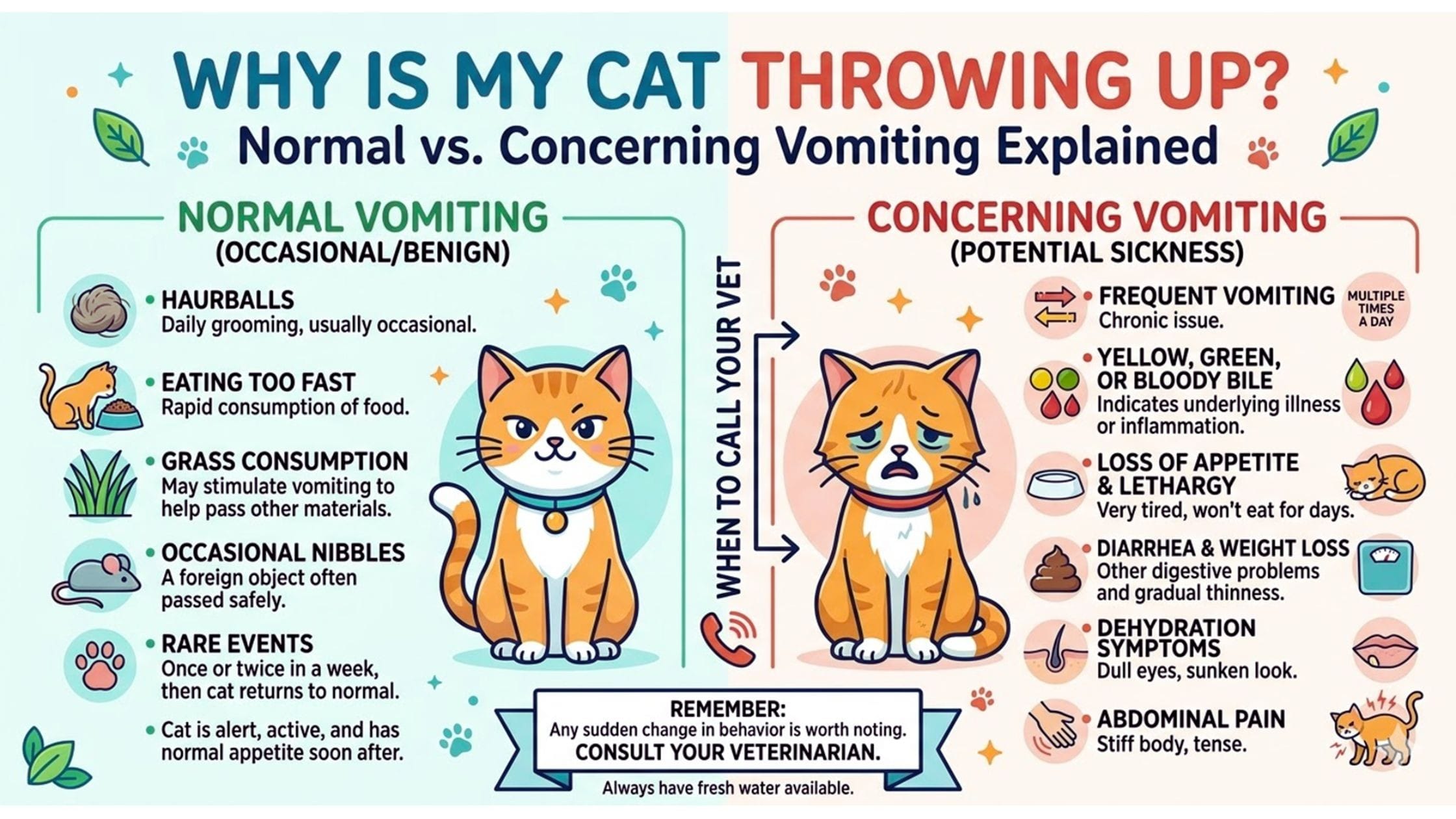
Hairballs: The Most Common Culprit
Cats groom themselves constantly, and in doing so, they swallow a significant amount of fur. Most of this passes through the digestive system harmlessly, but some accumulates in the stomach and must be expelled — as a hairball. A typical hairball looks like a sausage-shaped mass of compacted fur, often mixed with a small amount of fluid or bile. This is normal in cats that groom heavily, particularly long-haired breeds. Hairball-control diets and regular brushing reduce frequency significantly.
Eating Too Fast
Many cats eat their food faster than their stomach can comfortably register — especially after a long gap between meals. The stomach distends rapidly, triggering regurgitation. This type of vomiting happens quickly after eating and brings up mostly undigested food. Raised slow-feeder bowls, puzzle feeders, and smaller more frequent meals typically solve the problem without any medical intervention.
Food Intolerance or Dietary Change
Switching cat food brands or formulas too abruptly is a very common cause of vomiting. A cat’s digestive system is adapted to its current diet, and sudden changes disrupt the gut microbiome. Always transition over 7–10 days by mixing increasing proportions of the new food with the old. If vomiting persists on a stable diet, a food intolerance or allergy may be the cause — your vet can help identify the trigger.
Serious Medical Conditions That Cause Vomiting
Vomiting is a symptom, not a disease — and it appears in a wide range of feline health conditions that require diagnosis and treatment:
🫘 Kidney Disease
One of the most common conditions in senior cats. Nausea and vomiting occur as toxins build up in the bloodstream when kidneys filter less efficiently.
🦠 Intestinal Parasites
Roundworms, hookworms, and tapeworms cause vomiting, weight loss, and a pot-bellied appearance. Routine deworming prevents and treats this.
🩺 Hyperthyroidism
An overactive thyroid is extremely common in cats over 10 years old. Vomiting, weight loss despite good appetite, and hyperactivity are classic signs.
💊 Pancreatitis
Inflammation of the pancreas causes severe vomiting, abdominal pain, and lethargy. Often difficult to diagnose without blood tests and imaging.
🚫 Obstruction
A foreign object (string, toy part, bone) lodged in the digestive tract causes persistent vomiting with nothing coming up. This is a medical emergency.
🧬 IBD / Lymphoma
Inflammatory bowel disease and intestinal lymphoma are common in middle-aged and senior cats, causing chronic vomiting and weight loss over months.
🩺 Take Your Cat to the Vet If Vomiting Is:
- Happening more than once or twice a week
- Containing blood or dark material
- Accompanied by weight loss
- Paired with lethargy or behavior changes
- Followed by straining to defecate or urinate
- Projectile in force
- Happening after possible ingestion of a foreign object
- Occurring in a kitten under 6 months old
Keep a simple log when vomiting happens: note the time, frequency, what the vomit looked like, and what your cat had eaten beforehand. This information is invaluable to your vet and can shave significant time off the diagnostic process.
The Bottom Line: Your Cat Is Always Communicating
Every behavior in this guide — licking, biting, meowing, sneezing, vomiting — is your cat’s way of expressing something. Some of it is love, while some of it is discomfort, and some of it is a request. Very little of it is random.
The best thing any cat owner can do is pay attention to patterns. When a behavior is new, sudden, or increasing in frequency, that shift is your signal. Most of the time, the explanation is simple and behavioral. But occasionally, the change points to something medical — and catching that early makes all the difference.
When in doubt, call your veterinarian. A five-minute phone triage call is always worth more than a week of wondering.

 Dr. Bano Talpur