

Every dog owner has watched their furry friend’s tail swish, wag, or tuck in response to the world around them. But do you really understand what your dog’s tail positions mean? Learning to decode dog tail meanings, that tale the canine tail language and understanding different tail positions opens up a whole new level of communication between you and your canine companion.
Understanding Dog Tail Behavior: Why Tail Language Matters
Dogs use their tails as one of their primary communication tools. When you learn to read these dog tail signals correctly, you can respond to your dog’s emotional needs more effectively. You’ll know when your dog feels happy, anxious, or threatened. This knowledge of canine body language helps you create a safer, more comfortable environment for your pet.
Dog tail wagging is far more complex than most people realize. The position, speed, direction, and stiffness of your dog’s tail all convey different meanings. Understanding these nuances in dog tail communication helps you become a better pet parent.
Happy Dog Tail Positions: Signs Your Dog Feels Great
Wide Tail Wagging with Slightly Raised Tail Position
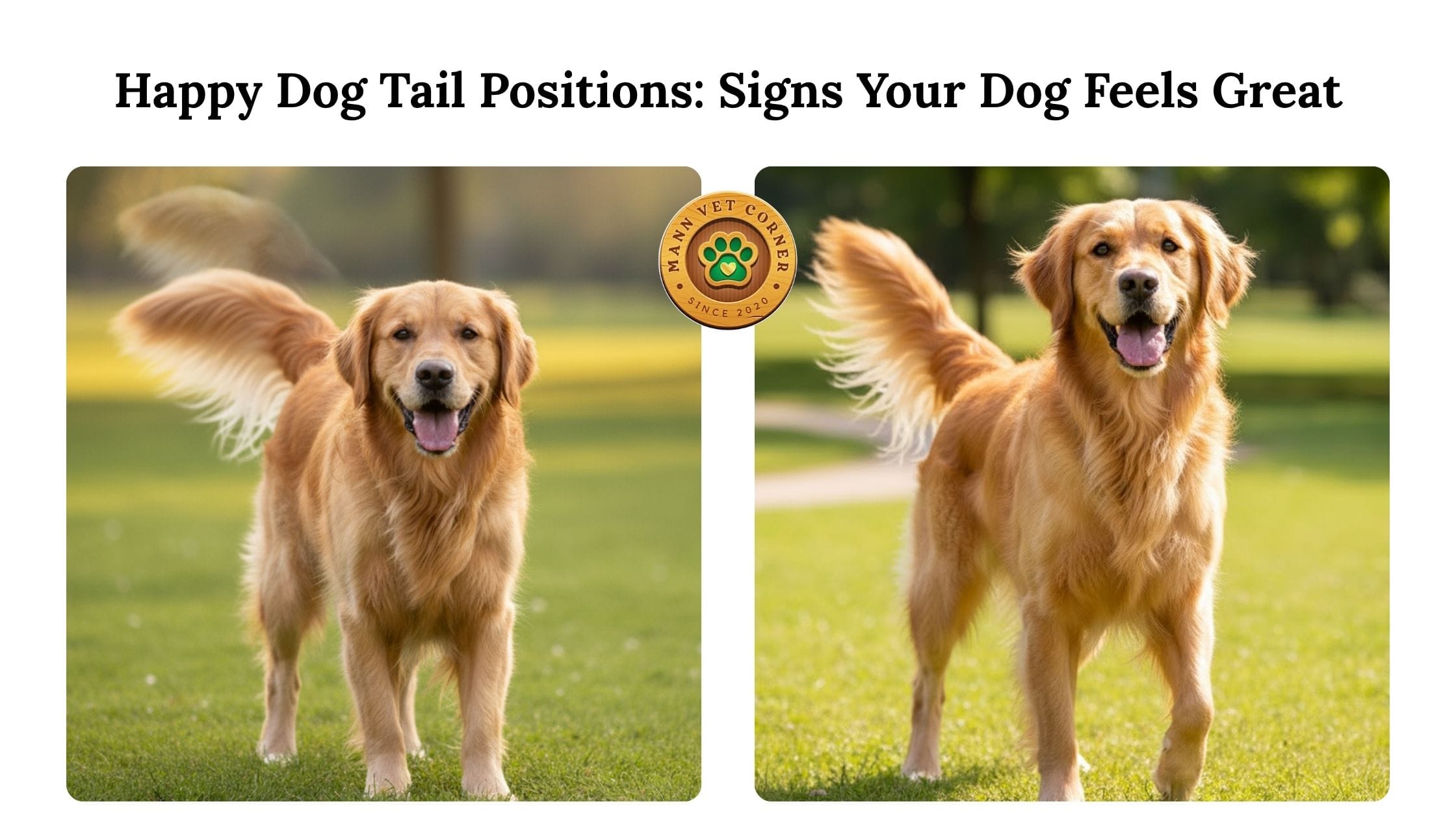
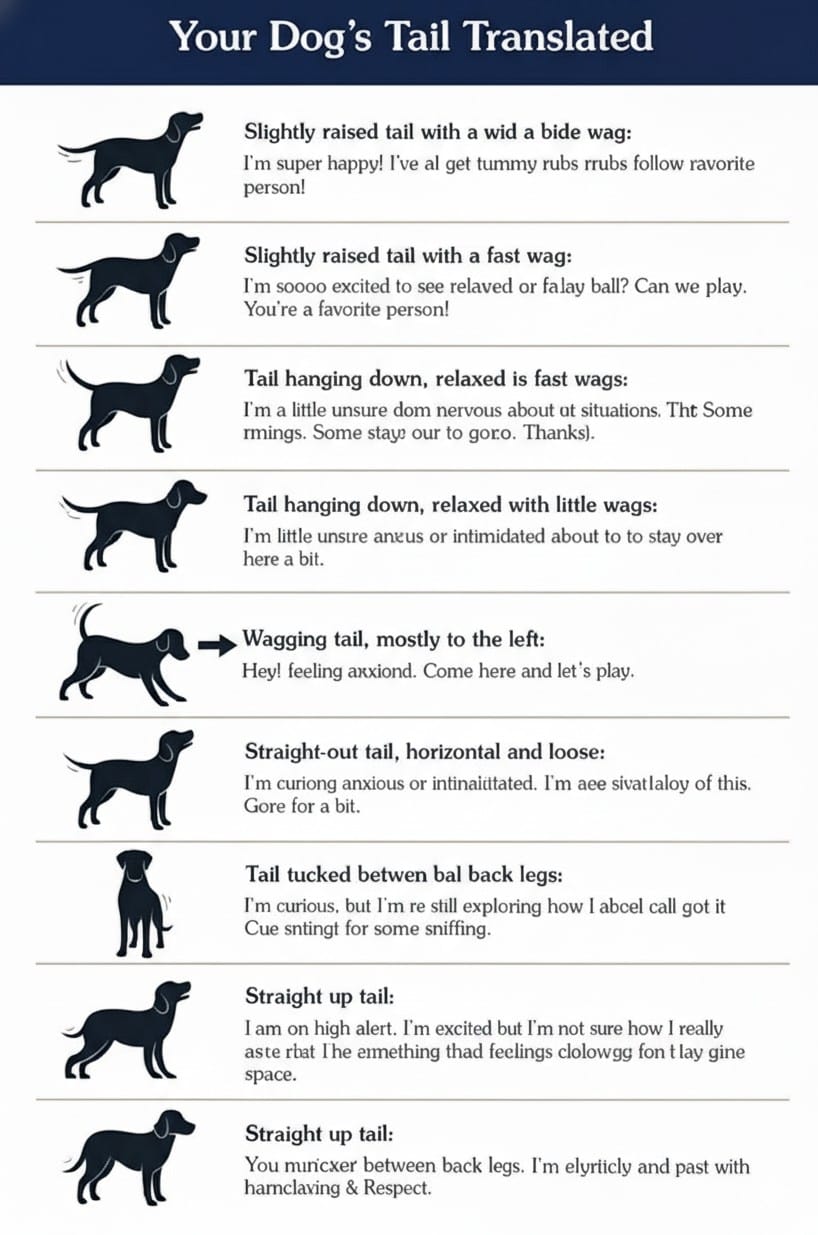
When you see your dog’s tail held slightly up with big, sweeping wags, you’re witnessing pure joy. This happy dog tail position tells you they’re super happy and ready to play. They want tummy rubs and quality time with their favorite person – you!
This confident dog tail position shows friendliness and security. Your dog feels comfortable in their environment and excited about what’s happening around them. The wide tail wag indicates genuine enthusiasm and positive dog emotions.
Fast Dog Tail Wagging: Excited Tail Movements
Does your dog’s tail move so fast it becomes a blur? This rapid tail wagging means your dog is extremely excited. They’re asking you: “Can we play ball? Can we go for a walk? What fun thing are we doing next?”
You might notice this excited tail wagging when you grab the leash, fill their food bowl, or come home after being away. Your dog simply can’t contain their enthusiasm. This high-speed tail movement is one of the clearest dog tail meanings indicating happiness.
Nervous Dog Tail Signs: Understanding Anxious Tail Positions
Low Tail Position with Minimal Wagging
When your dog’s tail hangs down with small, tentative wags, they’re feeling unsure. This nervous dog tail position tells you they need reassurance. Something in their environment is making them anxious, and they’re looking to you for comfort.
This low hanging tail differs from a completely relaxed position. The slight tension and slow wagging reveal your dog’s uncertainty about the situation. Understanding this anxious dog tail language helps you provide timely comfort.

Tucked Tail Between Legs: Fearful Dog Body Language
A tucked tail is your dog’s way of saying they feel scared or very concerned. This fearful dog tail position shows your dog is experiencing genuine fear or anxiety about someone or something nearby. They’re making themselves appear smaller and less threatening.
Never force a dog with a tucked tail to interact with whatever is scaring them. Instead, remove them from the stressful situation and provide comfort. This submissive dog tail position requires immediate attention and compassion.
Dog Tail Wagging Direction: Left vs Right Tail Movement
Research has revealed something fascinating about tail wagging direction and dog emotions. Your dog’s brain actually influences which way their tail wags based on their feelings.
Right Side Tail Wagging: Positive Dog Emotions
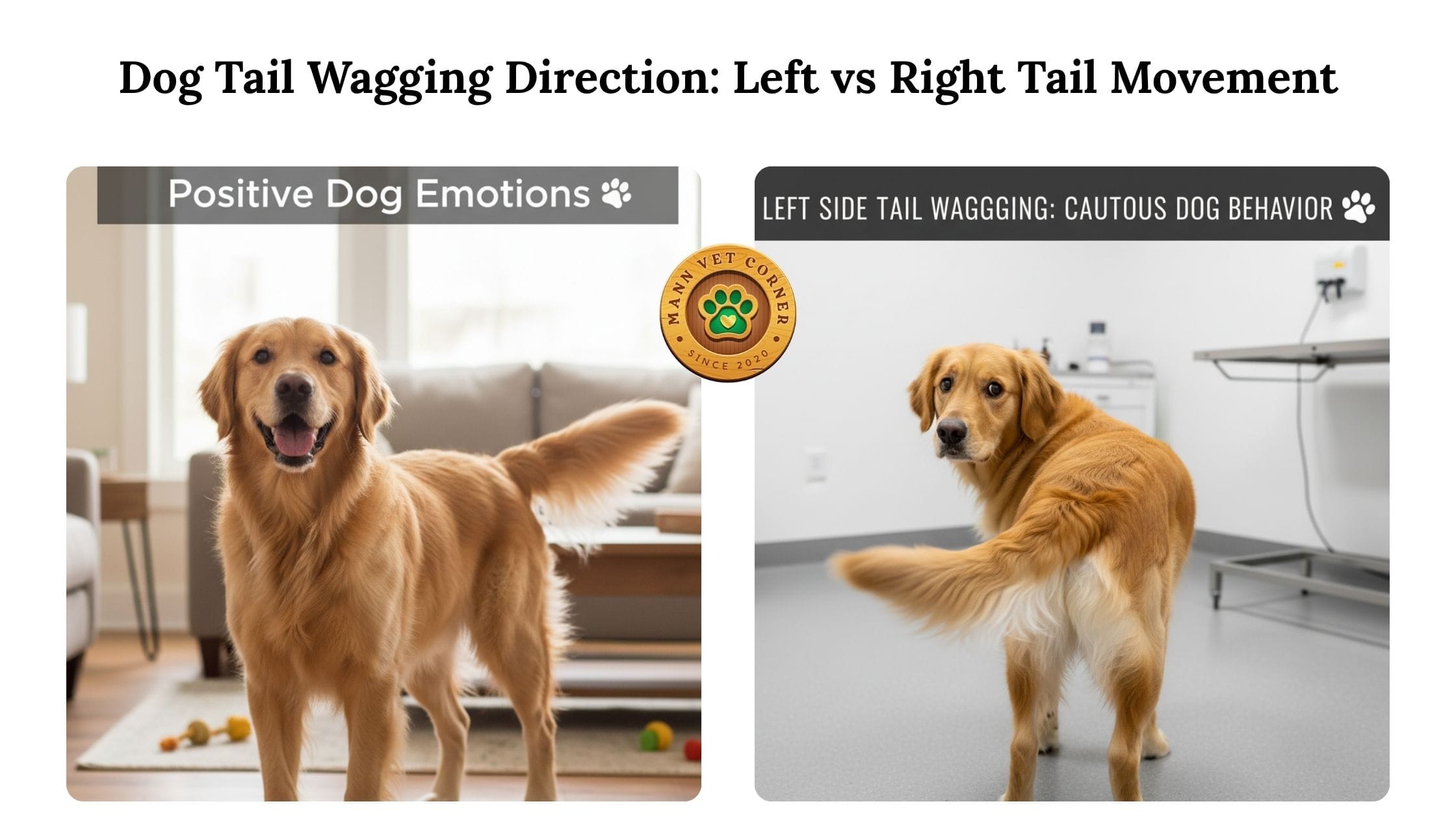
When your dog’s tail wags more to their right side, they’re showing positive emotions. They’re happy to see you and ready to play. This right-wagging tail movement indicates your dog recognizes you as a friend and feels comfortable.
This friendly dog tail signal demonstrates the connection between brain function and canine communication. The left hemisphere of your dog’s brain controls positive emotions and right-side movements.
Left Side Tail Wagging: Cautious Dog Behavior
A tail that wags primarily to the left suggests your dog feels anxious or intimidated. They’re uncertain about approaching and need more time to assess the situation. This doesn’t mean your dog will become aggressive – they’re just feeling cautious.
Understanding this subtle dog tail direction helps you interpret your dog’s comfort level in different situations. The right hemisphere controls withdrawal emotions and left-side tail movements.
Alert Dog Tail Positions: Curious and Attentive Body Language
Horizontal Tail Position: Curious Dog Behavior
A horizontal tail held loose shows curiosity. Your dog is exploring their environment and gathering information through dog tail communication. They’re interested but still deciding how they feel about everything. Get ready for some serious sniffing sessions!
This straight tail position appears when your dog encounters something new or interesting. They’re engaged and attentive but not yet committed to a specific emotional response. This neutral dog tail position indicates focused attention.

Vertical Tail Position: High Alert Dog Behavior
When your dog’s tail stands straight up without wagging, they’re on high alert. Your dog is excited but carefully analyzing the situation. They need space to process what’s happening around them.
This upright tail position often appears when your dog hears an unfamiliar sound or spots something unusual. They’re gathering information before deciding how to react. This stiff tail position shows intense concentration and assessment.
Aggressive Dog Tail Signs: Warning Tail Positions to Recognize
Stiff Raised Tail with Quick Wags: Defensive Dog Posture
This tail position serves as a clear warning sign. Your dog is telling everyone nearby: “Back off. I’m not happy, and I’m ready to defend myself.” The stiffness and the arched back indicate serious displeasure in dog body language.
Never approach a dog showing this aggressive tail position. They’re communicating their discomfort clearly, and pushing forward could lead to defensive behavior. This threatening dog tail signal requires immediate respect for boundaries.
Understanding these warning dog tail meanings prevents dangerous situations and potential dog bites. Always combine tail position with other body language signals like raised hackles, growling, and teeth showing.

Dog Breed Tail Differences: Reading Various Tail Types
Different dog breeds carry their tails differently, which affects how you interpret their signals. A Greyhound’s natural tail position hangs much lower than a Husky’s curled tail. You need to know your dog’s normal tail carriage to spot changes.
Breeds with docked tails or naturally short tails can still communicate, but their signals are subtler. Watch their whole body language – ears, posture, and facial expressions – to get the complete picture of dog communication.
Tail Positions by Breed Type
Sporting breeds like Golden Retrievers typically carry their tails in a relaxed, slightly curved position. Working breeds such as German Shepherds hold their tails lower when relaxed. Spitz breeds like Huskies naturally curl their tails over their backs.
Understanding breed-specific tail positions helps you accurately interpret your individual dog’s tail language and emotional states.
Common Dog Tail Language Mistakes: Misreading Canine Signals
Many people assume all tail wagging means happiness. This misconception about dog tail wagging can lead to dangerous situations. A wagging tail doesn’t automatically signal a friendly dog.
You need to look at the whole package: tail position, wagging speed, direction, and stiffness. Combine these tail signals with your dog’s body posture, ear position, and facial expression for accurate interpretation of dog behavior.
Responding to Dog Tail Signals: Proper Reactions to Tail Positions
When your dog shows happy tail language, engage with them! Play, pet, and reinforce those positive feelings through interactive dog training. When you see nervous or fearful tail positions, provide comfort and remove stressors when possible.
If your dog displays warning signals through aggressive tail positions, respect their boundaries. Don’t force interactions, and give them space to calm down. Teaching children to recognize these dog communication signals prevents bites and builds better relationships between kids and dogs.
Teaching Dog Body Language: Educating Others About Tail Meanings
Help friends, family, and visitors understand your dog’s tail language before they interact with your pet. Explain what different tail positions mean and how to read dog emotions. This education creates safer encounters and helps your dog feel more comfortable around guests.
Children especially need guidance in reading dog signals and understanding canine body language. Teach them to ask permission before approaching any dog and to watch for signs the dog wants space through tail position changes.

Strengthening Human-Dog Bond Through Tail Language Understanding
Learning your dog’s tail language strengthens your relationship and improves dog-owner communication. Your dog feels understood and secure when you respond appropriately to their emotional states shown through tail positions. This mutual understanding builds trust and deepens your connection.
Pay attention to your individual dog’s patterns and unique tail communication style. Every dog has quirks and variations in how they express themselves through tail movements. The more time you spend observing your dog, the better you’ll understand their personal tail vocabulary.
Complete Dog Communication System: Beyond Tail Language
Remember that tails work as part of a larger dog body language system. Watch your dog’s ears, eyes, mouth, and overall body posture alongside their tail positions. This complete picture gives you the most accurate understanding of your dog’s emotional state and intentions.
Dogs also use vocalizations, play bows, and other body language signals to express themselves. The tail is just one important piece of the canine communication puzzle that includes barking, whining, and physical gestures.
Practical Dog Tail Observation: Start Reading Signals Today
Start observing your dog’s tail language and positions right now. Notice how their tail position changes throughout the day. Watch what triggers different tail movements and positions in various situations. Keep a mental note of patterns you discover in your dog’s behavior.
Your growing understanding will help you respond better to your dog’s needs through improved dog care. You’ll prevent stressful situations, maximize happy moments, and create a more harmonious home for your furry family member.
Understanding dog tail language isn’t complicated – it just requires attention and practice in reading dog behavior. Your dog has been trying to communicate with you all along through tail positions and movements. Now you have the knowledge to truly listen and respond. The stronger bond you’ll build makes every moment of learning about dog tail meanings worthwhile.
Frequently Asked Questions About Dog Tail Language and Positions
Does a wagging tail always mean a dog is friendly?
No, a wagging tail doesn’t always mean your dog feels friendly or happy. The tail position, wagging speed, stiffness, and direction all matter in dog tail communication. A stiff, high tail with quick, small wags can signal aggression or discomfort. Always look at complete dog body language before approaching any dog.
Why does my dog wag their tail in their sleep?
Dogs wag their tails during sleep because they’re dreaming. Your dog is likely experiencing positive dream content, possibly replaying fun activities from their day. This sleeping dog behavior is completely normal and shows your dog feels relaxed and secure enough to enter deep sleep with active dreaming.
Can dogs control their tail wagging movements?
Dogs have some control over their tail movements, but much of their wagging happens involuntarily as an emotional response. Your dog’s tail often reacts automatically to their feelings through natural dog instincts, similar to how humans smile when happy. This automatic response makes tail language such a reliable dog communication tool.
What does it mean when my dog’s tail stops wagging suddenly?
A sudden stop in tail wagging usually means your dog has shifted their attention or emotional state in their behavior assessment. They might have noticed something concerning, become uncertain about a situation, or simply lost interest in what was exciting them. Watch their overall body language to understand what caused the change in tail position.
Do puppies understand tail language from other dogs?
Puppies learn to read tail language gradually through socialization and puppy development. Young puppies don’t fully understand these canine communication signals at first. They develop this skill by interacting with their mother, littermates, and other dogs. Proper puppy socialization during the critical early months helps puppies become fluent in dog body language.
Why do some dogs chase their own tails?
Dogs chase their tails for various reasons related to dog behavior. Puppies often do this out of curiosity and playfulness. Adult dogs might chase their tails due to boredom, anxiety, or seeking attention. Excessive tail chasing can indicate a medical issue like fleas, allergies, or compulsive dog behavior disorder. Consult your veterinarian if this behavior becomes frequent.
How do dogs with docked or short tails communicate?
Dogs with docked or naturally short tails still communicate effectively through alternative dog body language. They rely more heavily on other signals like ear position, facial expressions, body posture, and vocalizations. These dogs often develop more expressive body movements to compensate for their limited tail mobility in dog communication.
Can my dog’s tail position indicate pain or injury?
Yes, unusual tail positions can signal pain or injury in dogs. If your dog holds their tail differently than normal, seems reluctant to wag, or shows signs of discomfort when you touch their tail, they might be injured. Tail injuries, hip problems, or spinal issues can all affect tail carriage. Schedule a veterinary check-up if you notice persistent changes in tail position or movement.
Why does my dog’s tail wag when I scold them?
When your dog wags their tail during a scolding, they’re often showing appeasement behavior or nervous energy through submissive dog body language. This wagging typically appears lower and slower than happy wagging. Your dog is trying to communicate that they’re not a threat and hoping to reduce tension in the situation through calming signals.
Do all dog breeds wag their tails the same way?
Different dog breeds have different natural tail positions and wagging styles based on genetics. Basenjis rarely wag their tightly curled tails. Greyhounds have low-hanging tails that wag differently than a Beagle’s upright tail. Understanding your specific breed’s normal tail carriage through breed research helps you interpret their unique tail signals accurately.
At what age do puppies start wagging their tails?
Puppies typically start wagging their tails around three to four weeks old during early puppy development. This timing coincides with their developing social awareness and interaction with littermates. Early tail wags are often uncoordinated, but puppies quickly refine this important communication skill through practice.
Can anxiety medication affect my dog’s tail language?
Anxiety medications can affect your dog’s tail language by changing their emotional state and dog behavior patterns. Dogs on anti-anxiety medications might show more relaxed tail positions and less frantic wagging. However, the medications shouldn’t eliminate tail communication entirely. Discuss any significant changes in your dog’s behavior with your veterinarian.
Why does my dog’s tail go straight up when they poop?
Dogs often hold their tails up during elimination for several reasons related to natural dog behavior. This position keeps their tail clean and out of the way. The raised tail also exposes their anal glands, which release scent markers. This behavior combines practicality with territorial communication in canine instinct.
How can I tell if my dog’s tail wagging is happy or nervous?
Happy tail wagging typically involves loose, wide movements with a mid-to-high tail position showing relaxed dog body language. The dog’s whole back end often wiggles. Nervous wagging appears stiffer, smaller, and lower, with tension visible in the dog’s body. Happy dogs have relaxed faces and bodies, while nervous dogs show tension in their muscles and facial expressions.
Do older dogs change how they wag their tails?
Senior dogs may change their tail wagging patterns due to arthritis, decreased energy, or cognitive changes in aging dog behavior. Older dogs might wag less enthusiastically or hold their tails lower due to physical discomfort. However, they still use tail language to communicate. Adjust your expectations while remaining attentive to their signals in senior dog care.
Key Takeaways About Dog Tail Meanings and Positions
Understanding dog tail language requires observing multiple factors: tail position (high, low, neutral, tucked), wagging speed (fast, slow, still), wagging direction (left, right, centered), tail stiffness (rigid, loose, relaxed), and overall dog body language context.
Master these dog tail meanings to improve your relationship with your canine companion. Whether you’re dealing with a happy wagging tail, nervous tucked tail, or alert raised tail, proper interpretation of dog tail positions enhances communication and strengthens your bond.
Start practicing your dog tail reading skills today and become fluent in the universal language of canine tail communication!

 Dr. Bano Talpur