

The Stunning Truth About Animal Populations on Earth:
99.99% You’ve Never Seen
We share this planet with trillions upon trillions of animals. But here’s something that will blow your mind: nearly every single animal on Earth belongs to a group you rarely think about. Scientists have crunched the numbers, and the results paint a picture that challenges everything we assume about animal life on our planet.
The Numbers That Changed Everything
When researchers sat down to count the animals sharing our world, they discovered something extraordinary. The dogs we walk, the birds we watch, and the fish we admire in aquariums represent just a tiny fraction of animal life. The real story lies in the shadows, under rocks, in soil, and buzzing through the air.
The Shocking Reality
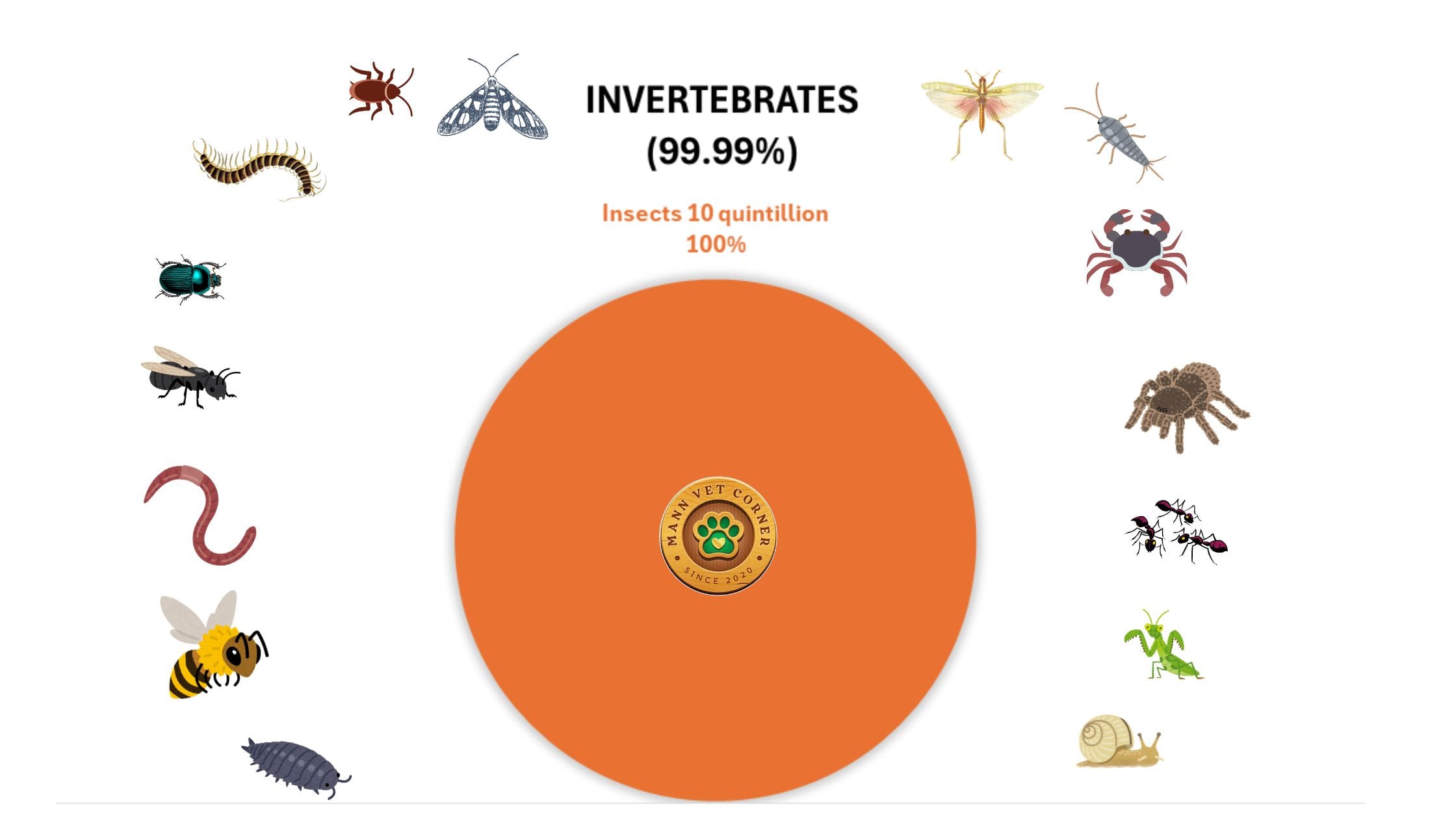
Invertebrates dominate our planet with approximately 10 quintillion individuals. That’s a 10 followed by 18 zeros. This single group accounts for 99.99% of all animal life on Earth.
Breaking Down the Animal Kingdom by Numbers
🐛 Invertebrates: The Silent Majority (99.99%)
Invertebrates rule our planet with an iron grip. Scientists estimate roughly 10 quintillion insects alone crawl, fly, and burrow across every continent except Antarctica. These creatures form the backbone of virtually every ecosystem on Earth.
Ants outnumber humans by a ratio of 2.5 million to one. Beetles make up one-quarter of all known animal species. Every step you take, you walk over hundreds or thousands of tiny invertebrates working tirelessly beneath your feet.
🐟 Wild Vertebrates: The Visible Minority (0.01%)
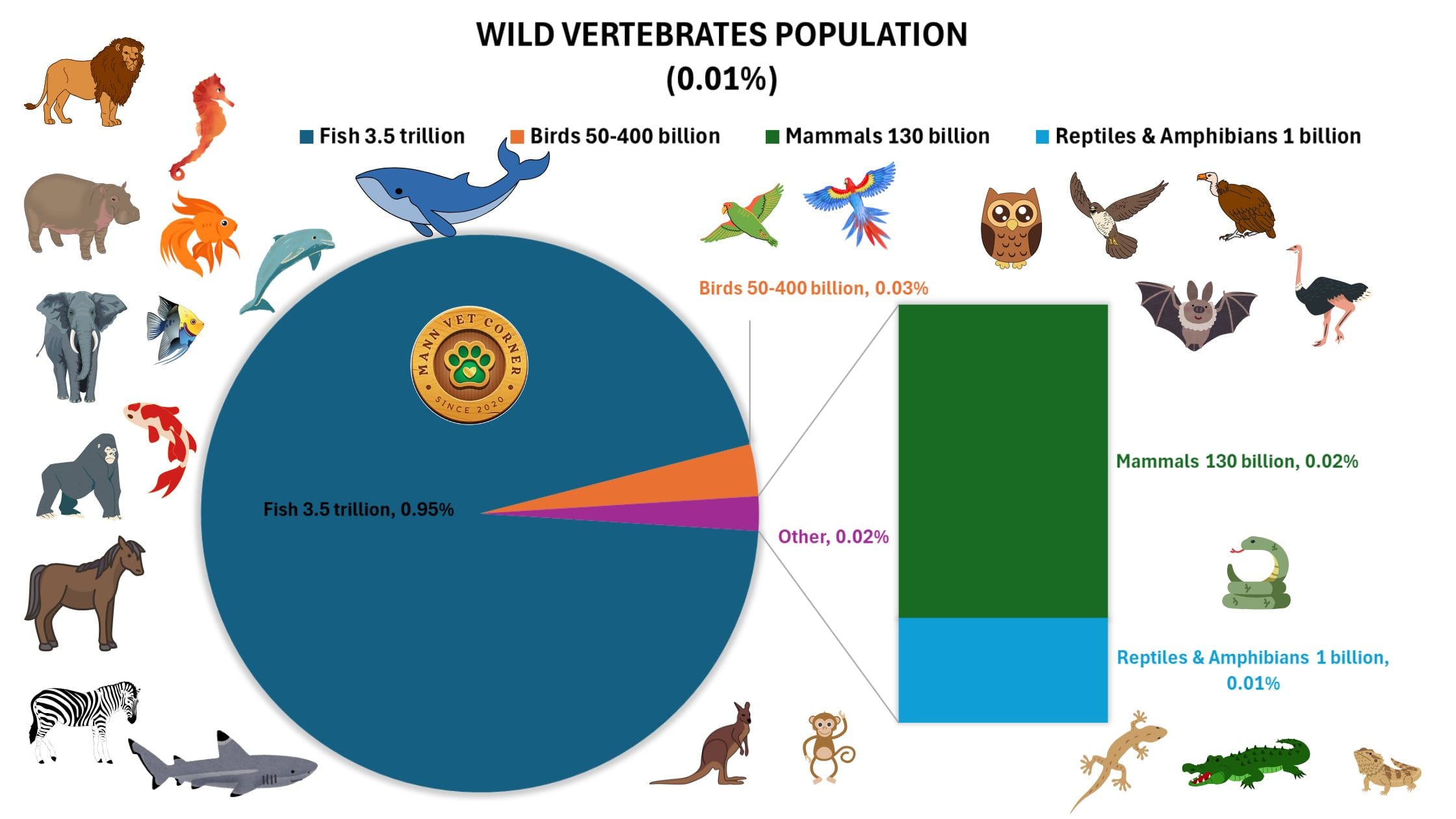
Wild vertebrates capture our imagination, but they represent just 0.01% of all animals. Scientists count approximately 3.5 trillion fish swimming in our oceans, rivers, and lakes. Add several hundred billion birds, around 130 billion wild mammals, and billions of reptiles and amphibians.
Fish dominate this category, making up roughly 95% of wild vertebrates. The remaining 5% includes all the animals we typically think about: elephants roaming savannas, wolves howling in forests, eagles soaring overhead, and frogs chirping in wetlands.
🐄 Livestock: Humanity’s Agricultural Force (0.0001%)
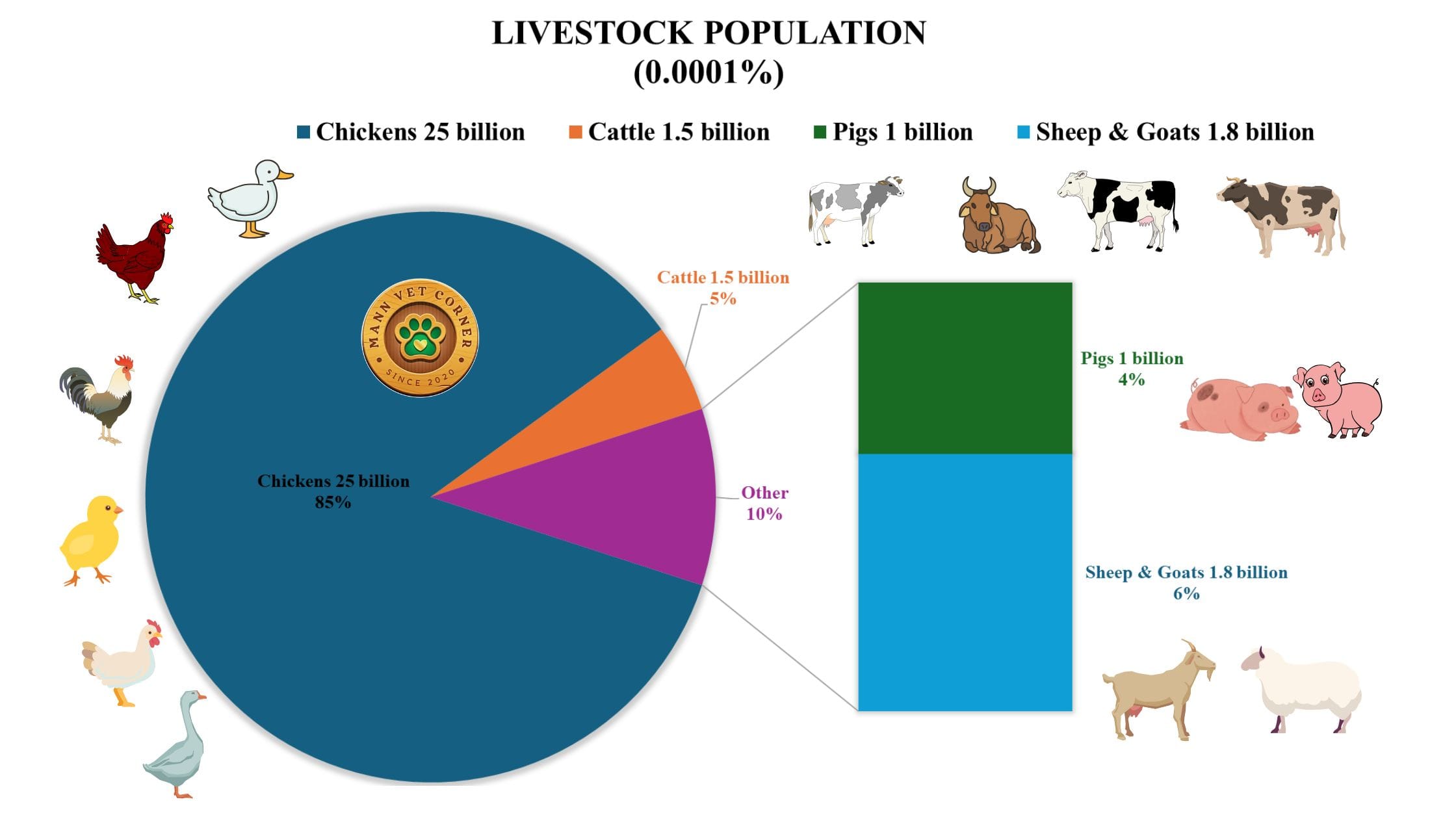
Humans raise approximately 29.3 billion livestock animals worldwide. Chickens dominate this group with 25 billion individuals. Cattle, pigs, sheep, and goats make up the remaining 4.3 billion.
Despite feeling ubiquitous on farms and ranches worldwide, livestock represents just 0.0001% of all animal life. Yet these animals consume massive resources and occupy significant land areas across every inhabited continent.
🐕 Pets: Our Closest Companions (0.000006%)
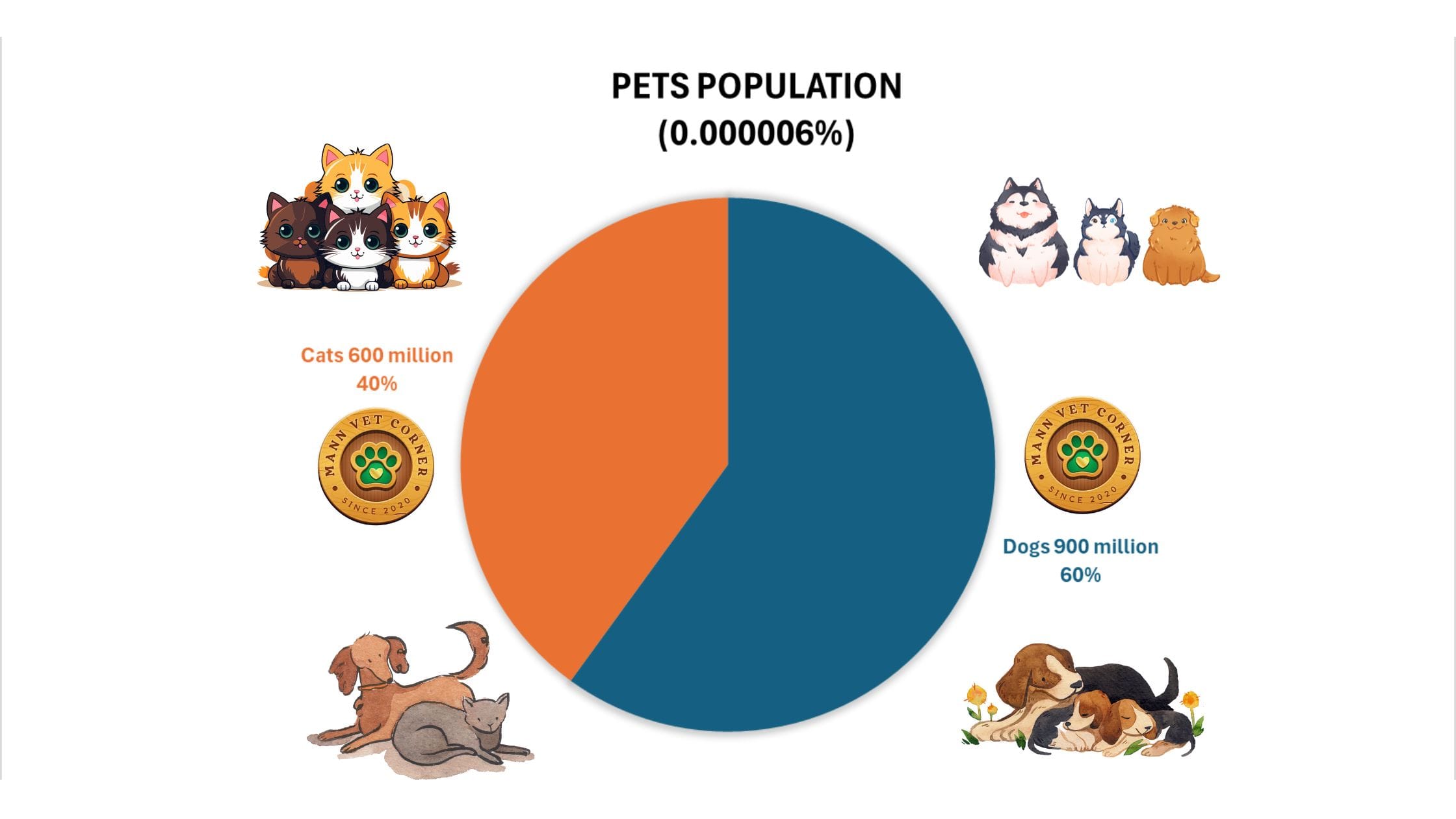
Dogs and cats fill our homes and hearts. We pamper approximately 900 million dogs and 600 million cats worldwide. These beloved companions share our living spaces, sleep in our beds, and become cherished family members.
Yet pets represent merely 0.000006% of all animals. This microscopic fraction reminds us how human-centered our perspective on animal life truly is.
Why Invertebrates Dominate Our Planet
Invertebrates conquered Earth through several remarkable advantages. Their small size allows them to exploit countless ecological niches. They reproduce rapidly, with some species producing thousands of offspring in weeks. They adapt quickly to changing environments, evolving faster than their larger cousins.
These creatures perform essential services we often take for granted. Insects pollinate over 75% of global food crops. Decomposers break down dead matter, recycling nutrients back into soil. Invertebrates form the foundation of food chains, feeding fish, birds, and countless other animals.
💡 Key Insight
Without invertebrates, ecosystems would collapse within weeks. Plants would fail to reproduce. Dead matter would pile up. Food chains would crumble from the bottom up. These tiny creatures literally hold our world together.
The Fish Factor: Underwater Abundance
Oceans cover 71% of Earth’s surface, and fish exploit this vast territory brilliantly. Scientists estimate 3.5 trillion fish populate marine and freshwater environments. Small forage fish like anchovies and sardines account for trillions alone.
Fish outnumber all terrestrial vertebrates combined by enormous margins. A single school of herring can contain billions of individuals. The deep ocean, still largely unexplored, likely hides trillions more fish we haven’t yet discovered.
Comparing Population Scales
| Category | Population | Percentage |
|---|---|---|
| Invertebrates | ~10 quintillion | 99.99% |
| Wild Vertebrates | ~3.5 trillion | 0.01% |
| Livestock | ~29.3 billion | 0.0001% |
| Pets | ~1.5 billion | 0.000006% |
| Humans | ~8 billion | 0.0000008% |
What These Numbers Mean for Conservation
These statistics reshape how we think about conservation. We focus enormous attention on charismatic megafauna like tigers, elephants, and pandas. Yet the creatures that truly matter for ecosystem health receive far less attention and funding.
Insect populations have crashed by 75% in some regions over the past 50 years. This silent catastrophe threatens food security, ecosystem stability, and biodiversity worldwide. Scientists call it the “insect apocalypse,” and it deserves urgent attention.
Fish populations face similar pressures. Overfishing has depleted 90% of large predatory fish from oceans. Industrial fishing fleets vacuum up trillions of fish annually, disrupting marine ecosystems at fundamental levels.
Understanding animal populations helps us recognize which species truly drive ecosystem function. The smallest creatures often matter most.
The Human Perspective Problem
Humans naturally focus on animals we see daily. We notice birds at feeders, squirrels in parks, and pets in homes. This creates a distorted view of animal life. We think vertebrates dominate because they dominate our attention.
Media coverage reinforces this bias. Documentaries feature lions, not nematodes. Zoos display elephants, not springtails. Conservation campaigns highlight polar bears, not pollinators. Yet the invisible majority deserves equal consideration.
Looking Forward: Protecting Biodiversity
These population statistics teach us valuable lessons. First, biodiversity extends far beyond what we see. Second, small creatures drive ecosystem processes. Third, conservation must protect invertebrates as vigorously as it protects vertebrates.
We need new approaches to wildlife protection. Habitat preservation helps all species, not just flagship animals. Reducing pesticide use protects insect populations. Sustainable fishing preserves marine ecosystems. Climate action benefits every living thing.
Individual actions matter too. Planting native gardens supports local insects. Reducing lawn mowing helps ground-dwelling invertebrates. Choosing sustainable seafood protects fish populations. Every choice ripples through ecosystems.
The Bottom Line
Our planet teems with an almost unimaginable abundance of life. Invertebrates dominate by numbers that dwarf everything else. Fish rule the oceans. Livestock and pets, despite their proximity to humans, represent statistical dust in the grand scheme.
Understanding these populations changes how we see the world. Next time you swat a fly or step over an ant, remember: you’re interacting with members of the planet’s most successful group. These tiny creatures built this world long before humans arrived, and they’ll likely outlast us by eons.

 Dr. Bano Talpur