
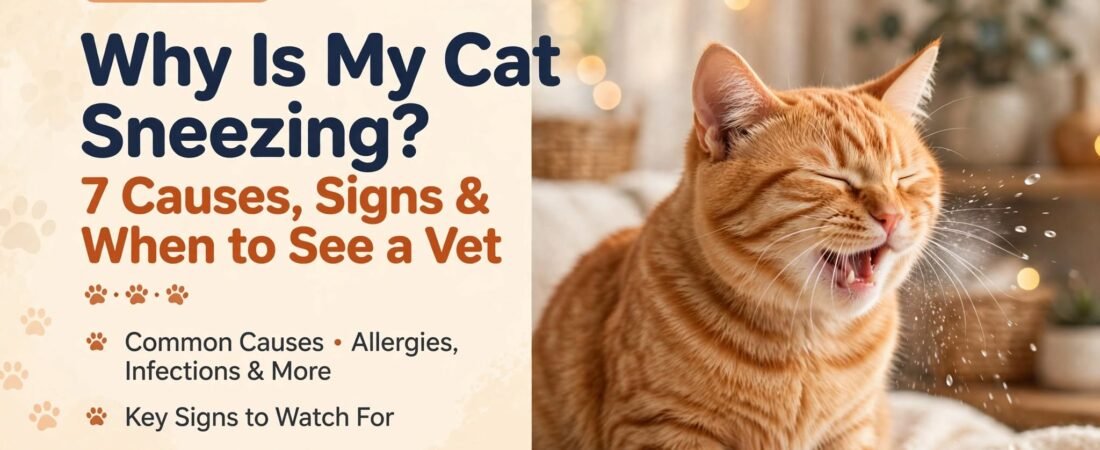
Why is my cat sneezing? Most cats sneeze because of an upper respiratory infection (cat flu), an airborne irritant, or an object stuck in the nose. This guide answers why is my cat sneezing by walking you through the anatomy of the feline nose, the seven most common causes, and the warning signs that mean your cat needs a vet. If you keep asking yourself why is my cat sneezing, use this clinical reference to sort harmless sneezes from serious disease.
Is Cat Sneezing Normal?
An occasional sneeze is normal. A cat’s nose filters dust, pollen, and fine particles all day, and a quick sneeze clears the airway. Single sneezes after your cat sniffs litter, dust, or a strong scent rarely signal a problem.
Sneezing becomes a medical concern when it follows a pattern. Watch for these changes:
- Sneezing fits that repeat over several days
- Sneezing that comes with runny eyes, nasal discharge, or drooling
- Lethargy, fever, or a drop in appetite
- Facial swelling, pawing at the nose, or noisy breathing
How the Feline Nose Works: Anatomy Behind the Sneeze
A clear picture of the nose explains why so many different problems produce the same sneeze. The infographic below shows the four anatomical views that matter most in a sneezing cat.
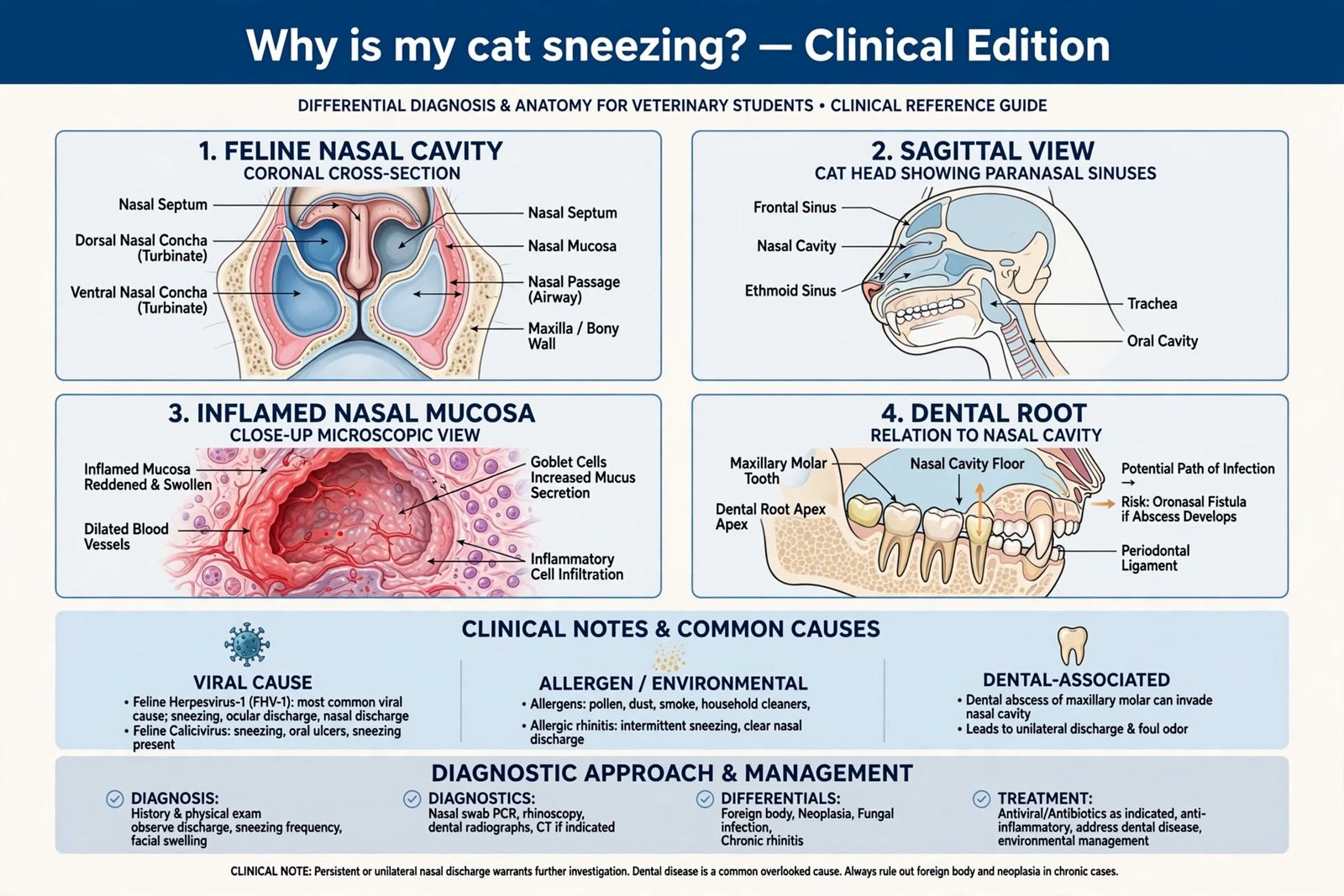
1. Nasal cavity (coronal cross-section)
A thin nasal septum splits the nose into two passages. Inside each passage, the dorsal and ventral nasal conchae (turbinates) fold into scroll-like shapes. These folds warm, humidify, and filter incoming air. A layer of nasal mucosa covers them and traps particles. The maxilla forms the bony wall around the airway.
2. Sagittal view and paranasal sinuses
The side view shows the frontal sinus, ethmoid region, nasal cavity, oral cavity, and trachea. The nose and mouth sit close together, so oral disease can reach the nasal cavity easily.
3. Inflamed nasal mucosa under the microscope
When a virus, irritant, or allergen hits the lining, the mucosa turns red and swollen. Blood vessels dilate, goblet cells pump out extra mucus, and inflammatory cells flood the tissue. Your cat then sneezes to clear the excess mucus and debris.
4. Dental root relation to the nasal cavity
The roots of the maxillary molars and canines sit just below the nasal cavity floor. An abscess at a dental root apex can erode the bone and spread into the nose. If the abscess keeps growing, it can form an oronasal fistula, an abnormal channel between the mouth and nose.
7 Common Causes of Cat Sneezing
Cause 1: Feline Herpesvirus-1 (FHV-1)
Feline herpesvirus-1 ranks as the most common viral cause of sneezing in cats. The virus attacks the lining of the nose, eyes, and throat. Infected cats typically show sneezing, watery or crusty eyes, and nasal discharge. Some cats also develop corneal ulcers, which can threaten eyesight.
After the first infection, the virus usually stays in the body for life. Stress, a move, a new pet, or illness can reactivate it, and your cat may start sneezing again. This pattern explains why some adult cats sneeze every few months for no obvious reason.
Cause 2: Feline Calicivirus (FCV)
Feline calicivirus also drives cat flu. It causes sneezing and nasal discharge like herpesvirus does, but it often adds oral ulcers on the tongue and gums. Cats with calicivirus may drool, paw at the mouth, and refuse food because eating hurts. Check your cat’s mouth if you see sneezing plus drooling, and call your vet promptly.
Bacteria such as Chlamydia felis and Bordetella bronchiseptica also cause upper respiratory infections, and they often join a viral infection to make symptoms worse.
Cause 3: Environmental Irritants
Cats have a sensitive sense of smell, and airborne irritants tickle the nasal lining. Common triggers include:
- Dust and dusty cat litter
- Cigarette smoke and fireplace smoke
- Perfume, air fresheners, and scented candles
- Cleaning sprays and household chemicals
Irritant sneezing usually starts and stops with exposure. Remove the trigger, and the sneezing should settle within hours. Switch to a low-dust, unscented litter and ventilate the room while you clean.
Cause 4: Foreign Objects in the Nose
Blades of grass, stray hairs, plant seeds, and tiny particles can lodge in the nasal passage. They cause sudden, violent, repeated sneezing, and your cat may paw at the face or shake the head. Outdoor cats that chew grass run a higher risk. A foreign body often causes discharge from one nostril only. Never probe the nose yourself, because you can push the object deeper or injure the tissue. Your vet can remove it with the cat sedated.
Cause 5: Dental Disease
Dental disease stands out as a commonly overlooked cause of chronic sneezing. An infected root in the upper jaw can spread bacteria into the nasal cavity and sinuses. Look for these signs:
- Sneezing with discharge from one nostril
- A foul odor from the mouth or nose
- Facial swelling below the eye
- Drooling, dropping food, or chewing on one side
Dental radiographs confirm the problem, and treatment usually means extracting the diseased tooth.
Cause 6: Allergic Rhinitis
True allergies occur less often in cats than in humans, but allergic rhinitis does happen. Inhaled pollen, mold, dust, smoke, and household cleaners can inflame the nasal lining. Allergic cats typically sneeze on and off and produce clear nasal discharge. Your vet will rule out infection and dental disease first, then help you identify and reduce the trigger.
Cause 7: Fungal Infection, Chronic Rhinitis, and Nasal Tumors
Rare but serious causes produce chronic sneezing that does not respond to routine treatment.
- Fungal infection (for example, cryptococcosis) can cause nasal discharge, facial swelling, and a firm bump over the nose bridge.
- Chronic rhinitis develops when repeated infections damage the nasal lining and leave a cat with permanent snuffles.
- Neoplasia (nasal tumors, most often lymphoma in cats) typically affects older cats and causes persistent, often one-sided discharge, sometimes with blood.
Vets rule out these conditions in any cat with long-term sneezing, which makes early referral for rhinoscopy or CT valuable.
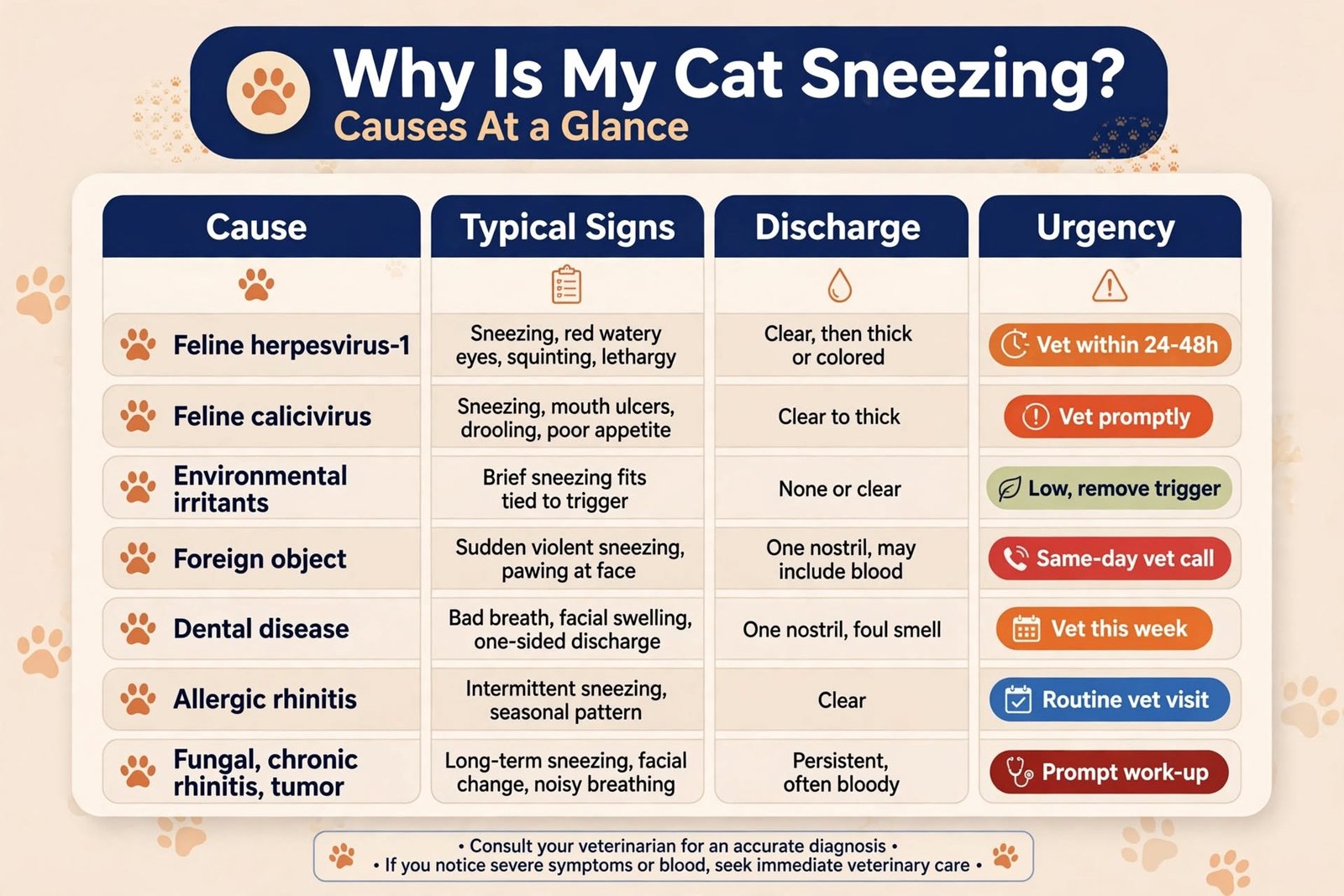
Cat Sneezing Causes Compared
When to Worry: Red Flags for Cat Sneezing
Persistent or one-sided nasal discharge always deserves further investigation. Call your vet the same day if your cat shows any of these signs:
- Sneezing that lasts more than three to five days
- Yellow, green, or bloody nasal discharge
- Discharge from one nostril only
- Open-mouth breathing, labored breathing, or blue-tinged gums (emergency)
- No appetite for more than 24 hours. Cats that stop eating can develop liver problems quickly
- Eye ulcers, cloudy eyes, or heavy squinting
- Facial swelling or a bump on the nose
- Kittens, senior cats, or cats with other illnesses showing any sneezing
How Vets Diagnose the Cause of Cat Sneezing
Your vet follows a stepwise approach, starting with simple checks and moving to advanced tests only when needed.
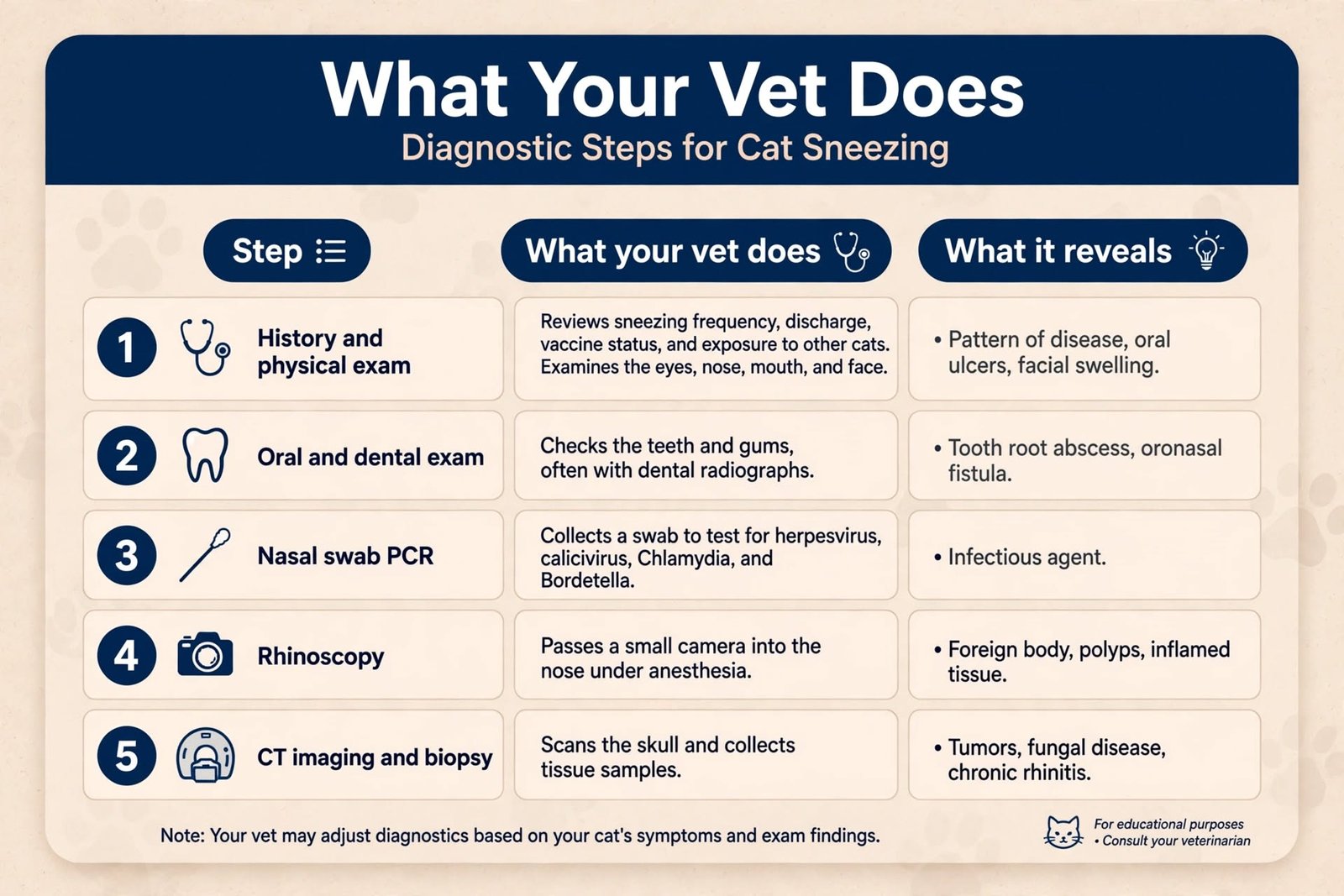
Your vet will also consider the main differentials: foreign body, neoplasia, fungal infection, and chronic rhinitis.
Cat Sneezing Treatment
Treatment depends on the cause. Your vet may combine several approaches:
- Antivirals for severe herpesvirus infections, chosen and dosed by your vet.
- Antibiotics when a bacterial infection is present or likely.
- Anti-inflammatory medication to ease swelling in the nasal lining.
- Dental treatment, including tooth extraction, when a root abscess feeds the infection.
- Foreign body removal under sedation or anesthesia.
- Antifungal therapy for confirmed fungal disease.
- Supportive care such as fluids, nutritional support, and eye medication for sick cats.
- Environmental management to remove allergens and irritants.
Never give your cat human cold medicine. Many common ingredients, including acetaminophen and decongestants, are toxic to cats.
What You Can Do at Home to Help a Sneezing Cat
Home care supports treatment but never replaces a vet exam when red flags appear.
- Clean the face. Wipe discharge from the nose and eyes with a soft, damp cotton pad several times a day.
- Add moisture. Run a humidifier or sit with your cat in a steamy bathroom for 10 minutes to loosen mucus.
- Tempt the appetite. Warm wet food to release its smell. Cats with blocked noses often skip meals because they cannot smell their food.
- Cut irritants. Switch to low-dust, unscented litter. Stop using aerosols, candles, and strong cleaners near your cat.
- Reduce stress. Keep routines steady, because stress can reactivate herpesvirus.
- Isolate sick cats. Keep a sneezing cat away from other cats, and wash your hands and bowls between pets.
How to Prevent Cat Sneezing and Cat Flu
- Vaccinate on schedule. The core FVRCP vaccine protects against herpesvirus, calicivirus, and panleukopenia. It does not always block infection, but it usually makes illness milder.
- Book regular dental checks so small tooth problems never reach the nose.
- Quarantine new cats before they meet your resident cats.
- Keep the home clean and fresh. Vacuum often and choose low-dust litter.
- Manage stress with hiding spots, vertical space, and predictable routines.
Frequently Asked Questions About Cat Sneezing
Why is my cat sneezing so much all of a sudden?
Sudden, repeated sneezing usually points to an irritant such as dust, smoke, perfume, or litter dust, or to a foreign object like a blade of grass in the nose. A new upper respiratory infection also starts abruptly. If the sneezing continues for more than 24 to 48 hours, or if your cat develops discharge, call your vet.
Is cat sneezing normal?
Yes, an occasional sneeze is normal. Cats sneeze to clear dust or mucus from the nose. Repeated sneezing fits, sneezing every day, or sneezing with discharge, eye changes, lethargy, or appetite loss is not normal and needs a vet exam.
Can cats catch a cold from humans?
No. Human cold viruses do not infect cats. Cat flu comes from feline herpesvirus, feline calicivirus, and bacteria such as Chlamydia felis and Bordetella bronchiseptica, which spread between cats.
Why is my cat sneezing and have watery eyes?
Sneezing with watery or crusty eyes classically signals feline herpesvirus-1, which infects both the nose and the eyes. Your vet can check the cornea for ulcers and prescribe treatment to protect your cat’s vision.
How long does cat sneezing last?
Mild irritant sneezing stops within minutes to hours once the trigger disappears. Cat flu usually runs 7 to 21 days. Cats with feline herpesvirus often carry the virus for life and can sneeze again during stress. Sneezing that lasts longer than three weeks calls for further testing.
Is my cat sneezing because of allergies?
Allergies can cause sneezing, but they rank lower on the list of causes in cats than infections, dental disease, or irritants. Pollen, mold, dust, smoke, and household cleaners can trigger allergic rhinitis, which tends to cause intermittent sneezing and clear nasal discharge.
Should I take my sneezing cat to the vet?
Yes, if sneezing lasts more than a few days, if discharge turns yellow, green, or bloody, if the discharge comes from one nostril only, or if your cat eats less, breathes with an open mouth, or acts lethargic. Kittens, senior cats, and cats with other illnesses need a vet visit sooner.
Can a tooth problem make my cat sneeze?
Yes. The roots of the upper molars sit close to the floor of the nasal cavity. An abscess can spread bacteria into the nose, which often causes one-sided discharge and a foul odor. Dental radiographs confirm the problem.
Final Thoughts
Cat sneezing ranges from a harmless nose tickle to a sign of cat flu, dental abscess, or nasal disease. Watch the pattern, check the discharge, and look at the mouth and eyes. Act early when sneezing persists, comes from one nostril, or comes with appetite loss. A prompt vet visit protects your cat’s comfort, eyesight, and long-term health.
Clinical Note
Persistent or unilateral nasal discharge warrants further investigation. Dental disease is a common overlooked cause. Always rule out foreign body and neoplasia in chronic cases.
This article provides general education and does not replace a veterinary exam.
References and Further Reading
- International Cat Care / Cats Protection: Why is my cat sneezing?
- PDSA: Sneezing in cats
- PetMD: Cat sneezing
- Purina NZ: Cat sneezing
- BluePearl: Cat sneezing, does your cat have a cold?



Leave a Reply