

Friendly American Hunting Breed
The Bluetick Coonhound stands out as one of America’s most distinctive hunting breeds. Originating from Louisiana, United States, these dogs have captured the hearts of hunters and families alike with their unique spotted coat and exceptional tracking abilities. This guide of Bluetick Coonhound: A Dog Breed & Adaption will helps owner to deal with it.
What Makes a Bluetick Hound Special?
This American breed combines outstanding hunting skills with a surprisingly gentle nature. Bluetick Coonhounds possess what hunters call a “cold nose,” meaning they can follow trails that have gone cold for hours or even days. Their deep, melodious bawl serves as a signature call that echoes through forests during raccoon hunts.
The breed’s striking appearance features a predominantly white coat covered with heavy black ticking that creates a blue-grey illusion. This distinctive coloring inspired the breed’s memorable name.
Are Bluetick Coonhounds Good Family Dogs?
Many families wonder whether this hunting breed adapts well to home life. The answer brings good news for dog lovers seeking an active companion.
Bluetick Coonhounds display remarkably friendly personalities that extend beyond the hunting field. These dogs form strong bonds with their human family members and show patience with children. Their intelligent nature makes them responsive to training when owners use consistent, positive methods.
However, families should understand what ownership truly demands. These dogs need significant daily exercise to channel their boundless energy. A Bluetick Coonhound thrives with families who enjoy outdoor activities like hiking, jogging, or long walks through nature.
Bluetick Coonhound Temperament and Personality Traits
The breed’s temperament combines several appealing characteristics:
Intelligence: Bluetick Coonhounds learn quickly and solve problems independently, traits that served them well during centuries of hunting work.
Friendliness: These dogs greet both familiar faces and strangers with enthusiasm, making them poor guard dogs but excellent social companions.
Activity Level: Expect high energy that requires daily outlets. Without adequate exercise, Bluetick Coonhounds may develop destructive behaviors.
Vocal Nature: The breed’s famous bawl sounds beautiful to some ears but can challenge neighbors in quiet suburban settings.
Understanding the Bluetick Name Origin
People frequently ask why this breed carries such an unusual name. The answer lies in their coat’s unique appearance.
The “bluetick” description refers to the heavy black spotting pattern against white fur. When viewed from a distance, these countless small black spots create an optical effect that appears blue or slate-grey. Breeders and hunters coined the term “ticking” to describe this specific pattern of small, scattered spots.
This distinctive marking sets Bluetick Coonhounds apart from other coonhound varieties like Redbone or Black and Tan Coonhounds. The blue-tinted appearance became so iconic that it defines the breed’s identity.
Bluetick Coonhound Size and Physical Characteristics
Understanding the breed’s physical specifications helps potential owners prepare for their new companion.
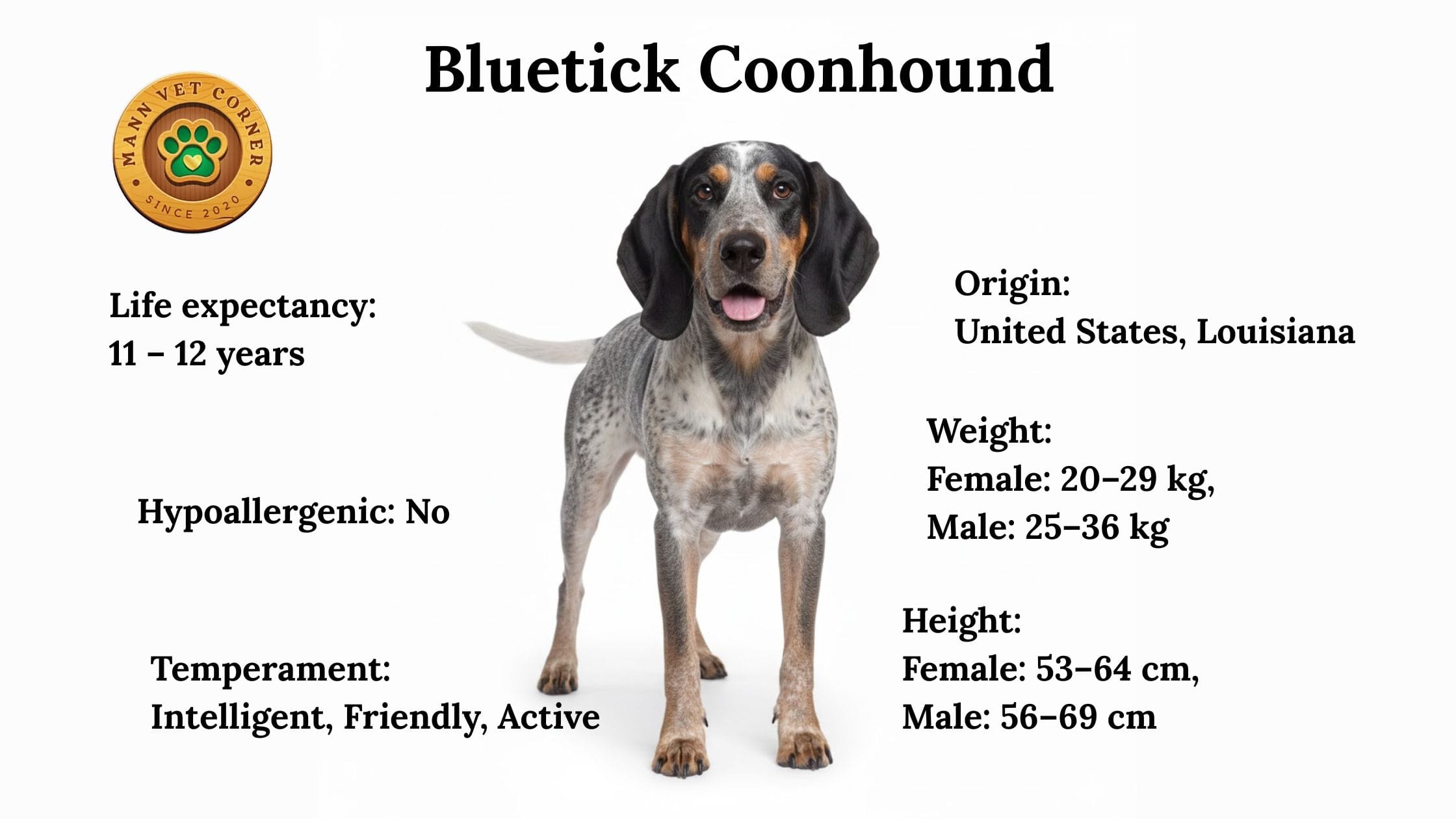
Male Bluetick Coonhounds:
- Height: 56-69 cm (22-27 inches)
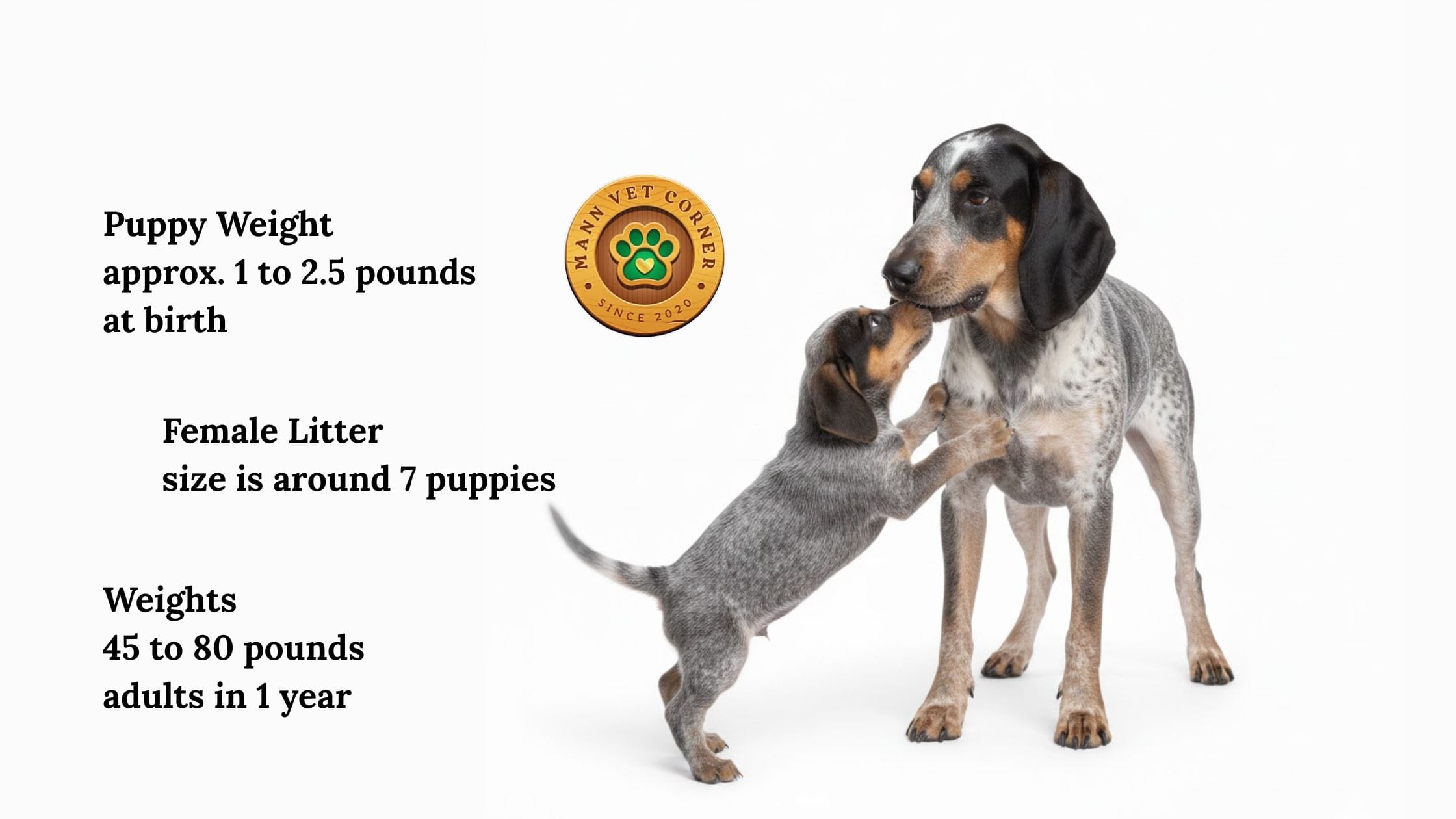
- Weight: 25-36 kg (55-80 pounds)
Female Bluetick Coonhounds:
- Height: 53-64 cm (21-25 inches)
- Weight: 20-29 kg (45-65 pounds)
These medium-to-large dogs possess muscular builds designed for endurance. Their long ears hang low, helping sweep scents toward their sensitive noses. Strong legs carry them across rough terrain for hours without tiring.
Are Bluetick Coonhounds Aggressive Dogs?
Safety concerns naturally arise when families consider any new breed. Bluetick Coonhounds generally display minimal aggression toward people.
The breed’s hunting heritage focused on tracking and treeing game, not attacking it. This background shaped a temperament that remains friendly toward humans. Most Bluetick Coonhounds greet strangers with wagging tails rather than suspicion.
However, owners should note some important considerations:
Prey Drive: These dogs possess strong instincts to chase small animals. Cats, rabbits, and other small pets may trigger their hunting behavior. Early socialization helps, but the instinct runs deep.
Same-Sex Aggression: Some Bluetick Coonhounds show dominance toward dogs of the same gender. Proper socialization during puppyhood reduces this tendency.
Resource Guarding: Like many breeds, individual dogs may guard food or toys. Training from an early age prevents these behaviors from developing.
The key factor determining temperament remains consistent training and socialization. Bluetick Coonhounds raised with positive reinforcement methods rarely develop aggressive tendencies toward people.
Can Bluetick Coonhounds Live as House Dogs?
The transition from hunting dog to household companion raises practical questions. Bluetick Coonhounds can absolutely thrive as indoor family pets when owners meet their specific needs.
Making Indoor Living Work for Bluetick Coonhounds
Exercise Requirements: These dogs need 60-90 minutes of vigorous daily activity. Morning jogs, afternoon fetch sessions, and evening walks keep them content indoors.
Mental Stimulation: Puzzle toys, scent work games, and training sessions prevent boredom. A tired Bluetick Coonhound becomes a well-behaved house dog.
Noise Management: The breed’s vocal nature poses the biggest indoor challenge. Training “quiet” commands helps, though completely silencing a Bluetick proves nearly impossible.
Space Considerations: While adaptable, these dogs appreciate homes with yards. Apartment living works only for exceptionally dedicated owners who provide extensive outdoor time.
Bluetick Coonhound Training Tips for Indoor Living
Start housetraining immediately upon bringing your puppy home. Bluetick Coonhounds respond well to crate training, which provides them a secure den space.
Establish boundaries early. Decide which furniture stays off-limits and enforce rules consistently. These intelligent dogs test boundaries, so firm, patient guidance works best.
Address the prey drive through controlled exposure to other pets. Never leave a Bluetick Coonhound unsupervised with small animals until you’ve established reliable behavior.
Bluetick Coonhound Life Expectancy and Health
Prospective owners should understand the commitment’s duration. Bluetick Coonhounds typically live 11-12 years with proper care.
Common Health Concerns
Hip Dysplasia: This genetic condition affects many medium-to-large breeds. Reputable breeders screen parent dogs to reduce occurrence.
Ear Infections: Those long, floppy ears trap moisture and debris. Weekly cleaning prevents infections.
Bloat: Deep-chested breeds face elevated risk for gastric torsion. Feeding smaller meals and avoiding exercise immediately after eating reduces danger.
Regular veterinary checkups, quality nutrition, and appropriate exercise maximize your Bluetick’s lifespan and quality of life.
Grooming and Maintenance Needs
The Bluetick Coonhound’s short coat requires minimal grooming compared to many breeds.
Weekly brushing removes loose hair and distributes natural oils. These dogs shed moderately year-round with heavier shedding during seasonal changes.
Bathe your Bluetick every 6-8 weeks or when they roll in something unpleasant. Their hunting heritage means they sometimes find mud irresistible.
Check and clean ears weekly to prevent infections. Trim nails monthly, and brush teeth several times weekly for optimal dental health.
Are Bluetick Coonhounds Hypoallergenic?
People with allergies should note that Bluetick Coonhounds are not hypoallergenic breeds. They produce normal amounts of dander and shed regularly.
No truly hypoallergenic dogs exist, but some breeds produce less dander than others. Bluetick Coonhounds fall into the moderate dander production category.
Feeding Your Bluetick Coonhound
Active breeds require quality nutrition to fuel their energy levels. Adult Bluetick Coonhounds typically need 2-3 cups of high-quality dog food daily, divided into two meals.
Choose formulas designed for active, medium-to-large breeds. Protein should come from identifiable meat sources as the first ingredient.
Monitor your dog’s body condition and adjust portions accordingly. These athletic dogs should maintain lean, muscular builds rather than carrying excess weight.

Exercise and Activity Requirements
Exercise represents the most critical aspect of Bluetick Coonhound ownership. These dogs were bred to track game across miles of wilderness, and their energy reflects that heritage.
Daily Minimum: Plan for 60-90 minutes of vigorous exercise. Simple leash walks won’t suffice for this athletic breed.
Ideal Activities:
- Long hikes through varied terrain
- Jogging or running alongside bikes
- Swimming in safe water
- Organized scent work or tracking games
- Fetch sessions in securely fenced areas
Mental Exercise: Puzzle feeders, hide-and-seek games, and training sessions tire Bluetick minds alongside their bodies.
Training a Bluetick Coonhound Successfully
Intelligence makes Bluetick Coonhounds capable learners, but independence requires patient training approaches.
Effective Training Methods
Positive Reinforcement: Rewards-based training works far better than punishment. Use treats, praise, and play to motivate desired behaviors.
Consistency: Every family member must enforce the same rules. Mixed messages confuse dogs and slow progress.
Short Sessions: Keep training sessions under 15 minutes to maintain focus. Multiple short sessions beat one long, unfocused practice.
Scent Work: Channel natural instincts through nose work classes or DIY tracking games. This mentally exhausting activity satisfies hunting drives.
Common Training Challenges
Selective Hearing: A Bluetick on a scent trail may ignore commands. Practice reliable recall in controlled environments before allowing off-leash freedom.
Stubbornness: These independent thinkers sometimes question why they should obey. Make training rewarding enough that cooperation seems worthwhile.
Distraction: Strong noses pick up countless interesting scents. Gradually increase distractions during training to build focus.
Bluetick Coonhounds with Children and Other Pets
Families with kids often find excellent companions in Bluetick Coonhounds. These patient dogs tolerate childish antics better than many breeds.
Supervise interactions between dogs and young children, teaching kids to respect the dog’s space and signals. Even friendly dogs need breaks from enthusiastic toddlers.
With Other Dogs: Bluetick Coonhounds often enjoy canine companionship, especially dogs of opposite genders. Their pack-hunting heritage makes them cooperative with other dogs.
With Cats and Small Pets: Extreme caution applies here. The strong prey drive means many Bluetick Coonhounds cannot safely live with cats, rabbits, or other small animals. Dogs raised from puppyhood with cats may develop tolerance, but guarantees don’t exist.
Finding a Bluetick Coonhound: Breeder vs. Rescue
Prospective owners have two primary paths to Bluetick Coonhound ownership.
Choosing a Responsible Breeder
Reputable breeders perform health testing on parent dogs, raise puppies in home environments, and provide lifetime support. Expect to pay $500-$1,200 for a well-bred puppy.
Ask breeders about:
- Health clearances for hip dysplasia
- Temperament testing of puppies
- Return policies if circumstances change
- Parent dogs’ hunting titles or certifications
Adopting from Rescue Organizations
Many Bluetick Coonhounds need homes after unsuccessful hunting careers or owner surrenders. Breed-specific rescues exist across the United States.
Rescue dogs may come with unknown histories, but many adapt beautifully to family life. Adoption fees typically range from $150-$400 and include spaying/neutering and vaccinations.
Living with a Bluetick Coonhound: Real Owner Experiences
Current owners consistently mention the breed’s affectionate nature and boundless enthusiasm. These dogs greet family members with full-body wiggles and enthusiastic vocalizations.
The biggest adjustment most families face involves exercise requirements. Prospective owners who underestimate activity needs often struggle with destructive behaviors.
Successful Bluetick families embrace outdoor lifestyles. Weekend hiking trips, daily running routines, and active play sessions become normal life rhythms.
Is a Bluetick Coonhound Right for Your Family?
This breed thrives with specific types of owners. Consider whether your lifestyle matches Bluetick Coonhound needs.
Ideal Owners:
- Active individuals or families who exercise daily
- People with securely fenced yards
- Those who appreciate vocal, expressive dogs
- Hunters seeking capable tracking companions
- Experienced dog owners comfortable training independent breeds
Poor Matches:
- Apartment dwellers without extensive outdoor access
- People wanting quiet, low-energy companions
- Households with cats or small pets
- First-time dog owners unprepared for training challenges
- Anyone unable to provide 60+ minutes of daily exercise
The Bluetick Coonhound Legacy in American Culture
Beyond family companionship, Bluetick Coonhounds hold significant places in American hunting traditions. These dogs have worked alongside hunters for generations, particularly across Southern states.
The breed’s Louisiana origins connect to rich Cajun hunting culture. Stories of legendary Blueticks tracking raccoons through swamps have passed through families for decades.
Today, competitive coon hunting trials showcase the breed’s abilities. These events test tracking skills, treeing instincts, and that characteristic bawl that announces success.
Final Thoughts on Bluetick Coonhounds as Family Companions
Bluetick Coonhounds bring unique combinations of hunting prowess and family friendliness. These distinctive American dogs offer loyal companionship to families ready to meet their needs.
The breed’s intelligence, trainability, and affectionate nature make them rewarding pets. However, significant exercise requirements and strong prey drives mean they’re not suitable for every household.
Families who embrace active lifestyles, appreciate the breed’s vocal expressions, and commit to consistent training find remarkable companions in Bluetick Coonhounds. These dogs transform from raccoon hunters to beloved family members seamlessly when given proper outlets for their energy and instincts.
Whether you seek a hunting partner, jogging companion, or affectionate family dog, the Bluetick Coonhound deserves serious consideration. Their striking appearance, friendly temperament, and rich American heritage create dogs that stand out in any setting.
Understanding the breed’s needs before bringing one home ensures successful, long-lasting relationships. When matched with the right family, Bluetick Coonhounds prove why they’ve remained treasured companions for generations of American dog lovers.
