

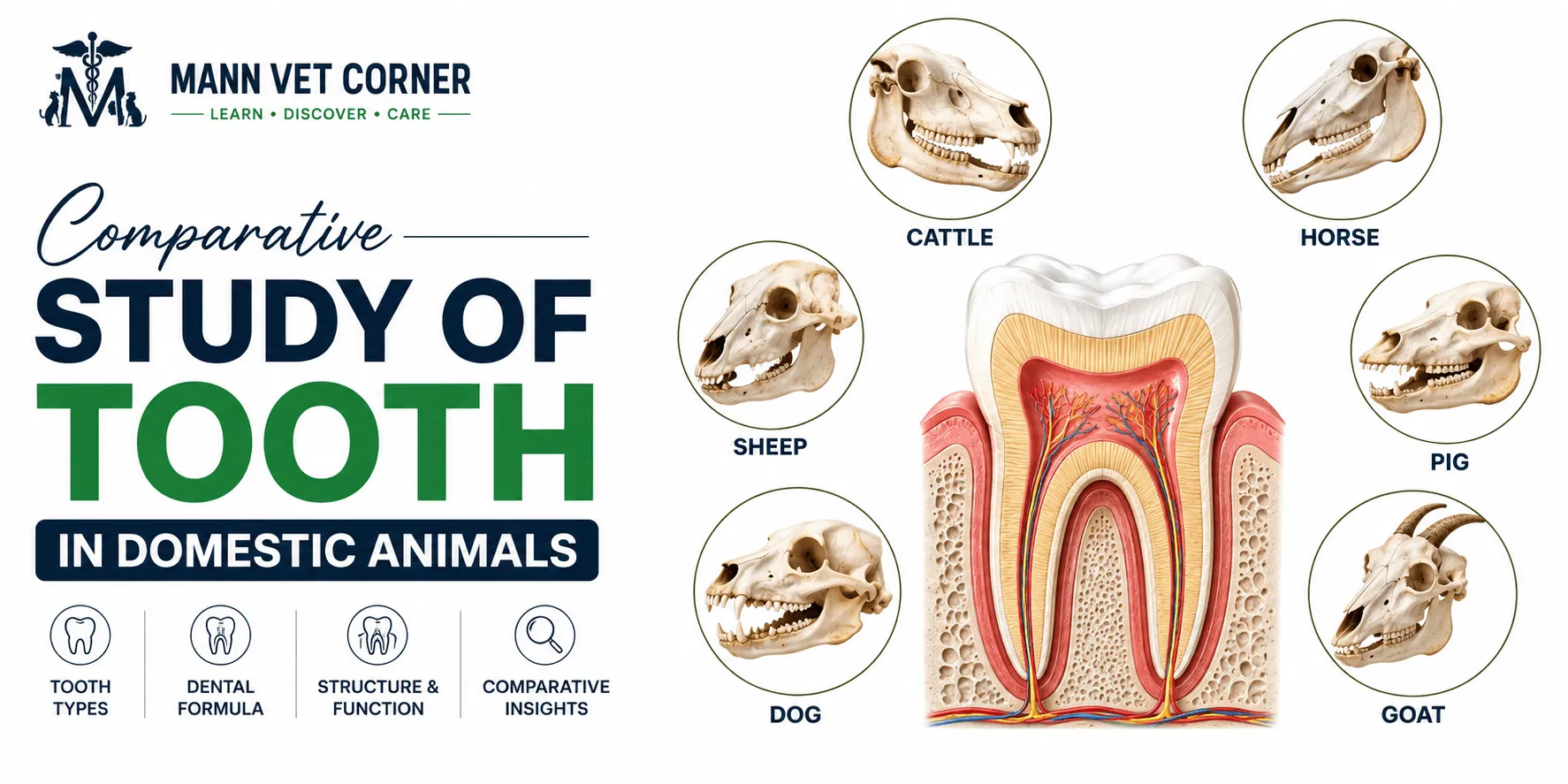
The dental anatomy of domestic animals represents a remarkable example of evolutionary adaptation, where tooth composition and structure have evolved to match specific dietary requirements and feeding behaviors. Understanding these adaptations is crucial for veterinary medicine, as dental health directly impacts animal welfare, nutrition, and overall health outcomes.
1. Introduction
The comparative study of teeth in domestic animals reveals significant differences in ground structure and wear patterns, which are influenced by their dietary habits and evolutionary adaptations. For instance, the enamel covering the external surface of the crown in dogs, pigs, and cattle is distinct, with cementum covering the enamel in the cheek teeth of cattle. The study also highlights the demineralization of enamel, indicating early tooth decay stages, which are linked to bacterial plaque accumulation. These findings underscore the importance of understanding the dental anatomy and wear patterns of domestic animals to improve their dental health and welfare.
All mammalian teeth share a fundamental structural composition consisting of four primary components:
- Enamel: The hardest substance in the body, composed primarily of hydroxyapatite crystals (96% inorganic content), providing protection against wear and acid erosion
- Dentin: The bulk of the tooth structure, containing approximately 70% inorganic material and 30% organic matrix, primarily collagen
- Cementum: A bone-like tissue covering the tooth root, facilitating attachment to the periodontal ligament
- Pulp: The innermost living tissue containing nerves, blood vessels, and odontoblasts responsible for dentin formation
Comparative dental studies are essential for several reasons. First, they inform species-appropriate veterinary dental care protocols, as treatment approaches must be tailored to each species’ unique dental characteristics. Second, understanding natural tooth structure helps identify pathological conditions and their underlying causes. Third, these studies provide insights into how domestication and modern feeding practices affect dental health compared to wild ancestors.
The variation in tooth morphology and composition across species reflects millions of years of evolutionary pressure, where dental structures have been optimized for specific ecological niches and dietary strategies. This optimization manifests in two primary tooth types: brachydont (low-crowned) teeth found in animals with varied diets, and hypsodont (high-crowned) teeth adapted for processing abrasive plant materials.
2. Species-Specific Analysis
Dogs (Canis lupus familiaris)
Dental Formula: 2(I 3/3, C 1/1, P 4/4, M 2/3) = 42 teeth
Dogs possess a heterodont dentition optimized for their ancestral carnivorous lifestyle. The dental composition reflects this predatory heritage:
Composition and Structure:
- Enamel thickness: Moderate (0.5-1.5mm), thickest on carnassial teeth
- Tooth type: Brachydont with well-developed roots
- Specialized features: Prominent carnassial teeth (P4/M1) with sharp, shearing edges
The canine teeth demonstrate the most robust construction, with thick enamel and substantial dentin cores designed to withstand the forces of prey capture and bone crushing. The carnassial teeth feature complex enamel ridge patterns that create efficient shearing surfaces for processing meat and breaking bones.
Functional Adaptations: The dental architecture supports three primary functions: prey capture (canines), initial processing (incisors), and food reduction (premolars and molars). The carnassial teeth are particularly specialized, with the upper fourth premolar and lower first molar forming scissor-like cutting surfaces.
Breed Variations and Common Issues: Brachycephalic breeds often experience malocclusion due to compressed facial structures, while toy breeds frequently suffer from retained deciduous teeth and periodontal disease due to tooth crowding. Giant breeds may experience delayed eruption patterns.
Cats (Felis catus)
Dental Formula: 2(I 3/3, C 1/1, P 3/2, M 1/1) = 30 teeth
Feline dentition represents the ultimate carnivorous adaptation among domestic animals:
Composition and Structure:
- Enamel thickness: Thin to moderate (0.3-1.0mm)
- Tooth type: Brachydont with sharp, pointed crowns
- Specialized features: Highly developed carnassial complex, reduced molar dentition
The feline dental structure prioritizes cutting efficiency over grinding capability. The enamel composition contains a higher proportion of prismatic structures aligned to resist shearing forces rather than compressive loads.
Functional Adaptations: The canine teeth are proportionally larger and more curved than in dogs, optimized for precise prey dispatch. The carnassial teeth are highly specialized for meat processing, with the upper fourth premolar and lower first molar forming the primary cutting surfaces. The absence of grinding surfaces reflects the cat’s obligate carnivorous diet.
Common Dental Issues: Feline odontoclastic resorptive lesions (FORL) affect up to 60% of cats over six years old. Gingivostomatitis and periodontal disease are also prevalent, often related to the species’ grooming behaviors and oral bacteria composition.
Ruminants (Cattle, Sheep, and Goats)
Dental Formula: 2(I 0/4, C 0/0, P 3/3, M 3/3) = 32 teeth Note: Upper incisors and canines are absent; lower canines are incisiform
Ruminant dentition demonstrates remarkable adaptation for processing fibrous plant materials:
Composition and Structure:
- Enamel thickness: Variable, with complex folding patterns
- Tooth type: Hypsodont with continuous eruption
- Specialized features: Dental pad replacing upper incisors, selenodont molar patterns
The molar teeth exhibit complex enamel infolding creating sharp ridges and valleys. This selenodont pattern, characterized by crescent-shaped cusps, maximizes grinding efficiency for cellulose-rich plant materials.
Species Variations:
- Cattle: Larger teeth with more pronounced enamel ridges, adapted for processing coarse forages
- Sheep: Narrower dental arcade with finer enamel patterns, optimized for selective grazing
- Goats: Intermediate characteristics with enhanced cutting edges for browse processing
Functional Adaptations: The absence of upper incisors is compensated by the dental pad, allowing efficient grass gathering. The hypsodont nature ensures continued functionality despite significant wear from abrasive plant materials. The complex molar surface topology creates multiple cutting and grinding surfaces during mastication.
Common Issues: Wave mouth, step mouth, and shear mouth conditions result from uneven wear patterns. Nutritional deficiencies can affect enamel quality, while age-related changes in eruption patterns may compromise chewing efficiency.
Horses (Equus caballus)
Dental Formula: 2(I 3/3, C 1/1, P 3-4/3, M 3/3) = 40-42 teeth Note: Canines may be absent or rudimentary in mares; P1 (wolf teeth) may be present
Equine dentition represents the pinnacle of herbivorous dental adaptation:
Composition and Structure:
- Enamel thickness: Complex with differential hardness zones
- Tooth type: Hypsodont with extreme crown heights (up to 4-5 inches)
- Specialized features: Infundibula (cement lakes), complex enamel folding
Horse teeth contain the most sophisticated enamel architecture among domestic animals. The enamel forms complex infoldings filled with cementum, creating a self-sharpening surface as differential wear maintains grinding efficiency throughout the animal’s lifetime.
Functional Adaptations: The extreme hypsodonty accommodates a lifetime of processing abrasive silica-containing grasses. The grinding surface area is maximized through complex enamel patterns and the large occlusal surface of cheek teeth. Lateral chewing movements utilize the anisodont (unequal upper and lower jaw widths) architecture for efficient fiber processing.
Common Issues: Sharp enamel points, hooks, ramps, and waves develop due to the anisodont structure and chewing patterns. Modern feeding practices often reduce natural wear patterns, necessitating regular dental maintenance.
Camels (Camelus dromedarius and C. bactrianus)
Dental Formula: 2(I 1/3, C 1/1, P 3/2, M 3/3) = 34 teeth
Camel dentition reflects adaptation to harsh desert environments and specialized feeding behaviors:
Composition and Structure:
- Enamel thickness: Variable, with enhanced wear resistance
- Tooth type: Brachydont to semi-hypsodont
- Specialized features: Robust canines, spatulate incisors, complex premolar morphology
The enamel composition includes enhanced fluoride content for improved acid resistance, an adaptation to alkaline desert vegetation and occasional consumption of salt-tolerant plants.
Functional Adaptations: The dentition accommodates a highly varied diet including thorny shrubs, salt-tolerant plants, and occasional browse materials. The robust canines and spatulate incisors facilitate manipulation of thorny vegetation, while the cheek teeth balance cutting and grinding functions.
Common Issues: Dental problems in camels are less well-documented but include wear patterns related to environmental abrasion and occasional impactions from fibrous plant materials.
3. Comparative Analysis
| Species | Dental Formula | Crown Height | Primary Diet | Enamel Adaptation |
|---|---|---|---|---|
| Dog | 2(I3/3,C1/1,P4/4,M2/3)=42 | Brachydont | Omnivorous | Moderate thickness, shearing ridges |
| Cat | 2(I3/3,C1/1,P3/2,M1/1)=30 | Brachydont | Carnivorous | Thin, sharp cutting edges |
| Ruminants | 2(I0/4,C0/0,P3/3,M3/3)=32 | Hypsodont | Herbivorous | Complex folding, selenodont |
| Horse | 2(I3/3,C1/1,P3-4/3,M3/3)=40-42 | Hypsodont | Herbivorous | Extreme folding, infundibula |
| Camel | 2(I1/3,C1/1,P3/2,M3/3)=34 | Semi-hypsodont | Mixed browser | Enhanced wear resistance |
Evolutionary Relationships: The progression from carnivorous to herbivorous adaptations demonstrates clear evolutionary trends. Carnivores maintain relatively simple, brachydont teeth optimized for food acquisition and initial processing. Herbivores develop increasingly complex, hypsodont teeth to handle abrasive plant materials requiring extensive processing.
Eruption Patterns: Deciduous tooth eruption follows species-specific timelines: dogs and cats complete eruption by 6-7 months, ruminants by 24-48 months, and horses by 36-60 months. These patterns reflect differing growth rates and weaning strategies.
Wear Resistance: Herbivorous species demonstrate superior wear resistance through hypsodont morphology and complex enamel architecture. Carnivorous species rely on efficient food processing to minimize wear, while their brachydont teeth are renewed through natural replacement rather than continuous eruption.
Domestication Impacts: Modern feeding practices significantly impact dental health across all species. Processed diets often reduce natural wear patterns in herbivores, while increased dietary carbohydrates in carnivores promote dental disease. These changes highlight the importance of understanding natural dental function in domestic animal care.
4. Conclusion
This comparative analysis reveals the remarkable diversity of dental adaptations among domestic animals, each reflecting millions of years of evolutionary optimization for specific ecological niches. The progression from simple carnivorous dentition to complex herbivorous systems demonstrates the powerful influence of dietary pressures on dental evolution.
Key insights from this study include:
- Structural Diversity: The range from thin-enameled carnivorous teeth to complex hypsodont herbivorous teeth illustrates the remarkable plasticity of mammalian dental development.
- Functional Integration: Dental structure closely matches functional requirements, with carnivorous species prioritizing cutting efficiency and herbivorous species maximizing grinding capability.
- Clinical Implications: Understanding species-specific dental characteristics is crucial for appropriate veterinary care, as treatment protocols must respect natural dental architecture and function.
- Domestication Challenges: Modern feeding practices often conflict with natural dental function, necessitating enhanced dental care protocols for domestic animals.
5. Frequently Asked Questions About Animal Teeth
What animal has the most teeth?
Among domestic animals, dogs have the most teeth with 42 total teeth in their permanent dentition. However, if we expand beyond domestic animals, sharks hold the record with some species having over 3,000 teeth at any given time, with the ability to replace them continuously throughout their lives. The giant armadillo can have up to 100 teeth, making it the land mammal with the most teeth.
Which animal has the sharpest teeth?
Cats possess the sharpest teeth among domestic animals, with their canine teeth being perfectly designed for precise penetration and their carnassial teeth featuring razor-sharp cutting edges. In the broader animal kingdom, sharks and big cats like tigers and lions have exceptionally sharp teeth, with some shark teeth being sharper than surgical scalpels.
What animal has the strongest teeth?
Horses have the strongest teeth among domestic animals due to their hypsodont structure and complex enamel folding that creates incredibly durable grinding surfaces. Their teeth can withstand decades of processing abrasive grasses. In the animal kingdom, crocodiles have the strongest bite force, and their teeth are designed to withstand enormous pressure.
What animal has the biggest/largest teeth?
Among domestic animals, horses have the largest teeth overall, with cheek teeth measuring 3-4 inches in length and extending deep into the jaw bones. However, elephants hold the record for largest teeth in the animal kingdom, with their tusks (modified incisors) potentially growing over 10 feet long and weighing more than 100 pounds each.
What animal has 500 teeth?
While no domestic animal has exactly 500 teeth, sharks can have 500+ teeth at any given time. Some shark species, like the great white shark, may have up to 3,000 teeth in various stages of development. Among land animals, the giant armadillo comes closest with up to 100 teeth.
What if you had animal teeth?
Having different animal teeth would dramatically change your diet and eating habits:
- Dog teeth: You’d excel at tearing meat and crushing bones but struggle with grinding plant materials
- Cat teeth: You’d be limited to a carnivorous diet, as the lack of grinding surfaces would make processing plant matter nearly impossible
- Horse teeth: You could efficiently process grasses and hay but would struggle with meat consumption
- Ruminant teeth: Without upper incisors, you’d need to use your lips and tongue extensively for food gathering, and you’d be limited to plant-based diets
Do animals get cavities like humans?
Wild animals rarely get cavities because their natural diets are low in processed sugars and starches. However, domestic animals can develop cavities, especially when fed high-carbohydrate diets. Dogs and cats can develop tooth decay, though it’s less common than in humans due to differences in oral bacteria and saliva pH.
Why don’t animals need to brush their teeth?
Wild animals maintain dental health through:
- Natural diet: Raw, unprocessed foods that require extensive chewing
- Abrasive foods: Natural wear keeps teeth clean and sharp
- Different oral bacteria: Less cavity-causing bacteria than humans
- Saliva differences: More alkaline saliva that neutralizes acids
- Chewing behaviors: Gnawing on bones, sticks, and tough materials
However, domestic animals often benefit from dental care due to processed diets and reduced natural cleaning behaviors.
How often do animals replace their teeth?
Replacement patterns vary by species:
- Sharks: Continuously throughout life (every 1-2 weeks)
- Domestic mammals: Once (deciduous to permanent teeth)
- Elephants: Six sets throughout their 60-70 year lifespan
- Crocodiles: Up to 50 times throughout their lives
- Horses/Ruminants: Continuous eruption compensates for wear rather than replacement
Can animals get braces or dental work?
Yes, veterinary dentistry is a growing field:
- Dogs and cats: Can receive dental cleanings, extractions, root canals, and even orthodontics
- Horses: Regular dental floating (filing) to maintain proper chewing surfaces
- Zoo animals: Receive comprehensive dental care including root canals for large carnivores
- Wild pets: Rabbits and other animals receive specialized dental care
Why do some animals have such different tooth shapes?
Tooth shape directly relates to diet and feeding strategy:
- Pointed teeth (carnivores): For piercing, holding, and tearing flesh
- Flat teeth (herbivores): For grinding tough plant materials
- Sharp edges (omnivores): Combination for varied diet processing
- Chisel-like (rodents): For gnawing through tough materials
This is a perfect example of evolutionary adaptation, where tooth form follows function over millions of years of natural selection.
Do baby animals lose teeth like human children?
Most mammals have deciduous (baby) teeth that are replaced by permanent teeth:
- Puppies: Lose baby teeth around 3-6 months
- Kittens: Baby teeth fall out around 3.5-6 months
- Foals: Replace teeth gradually from 6 months to 5 years
- Calves: Begin replacing teeth around 18-24 months




Leave a Reply