
Quick Answer: What is Fumigation in Veterinary Biosecurity?
Fumigation is a terminal disinfection method used in veterinary and agricultural biosecurity that completely fills a tightly sealed facility with toxic gases to eliminate microscopic pathogens—bacteria, viruses, fungi, and spores—at every level. Unlike surface-level chemical sprays that only reach visible areas, fumigation gases penetrate deep into wood grain, wall cavities, equipment cracks, and biofilm layers where pathogens hide.
Common fumigants include formaldehyde vapor (traditional method for poultry houses), phosphine gas (for grain and livestock facilities), sulfuryl fluoride (for structural pests), and modern alternatives like hydrogen peroxide vapor and chlorine dioxide (for safer worker environments).
1. What Is Fumigation? Definition and Veterinary Biosecurity Role
Fumigation is a pest and pathogen elimination method that fills a tightly sealed structure with toxic gases (fumigants) to destroy organisms at every life stage, from eggs and spores to adult organisms. In veterinary and agricultural contexts, fumigation represents a critical terminal disinfection strategy rather than routine pest management.
The distinction between fumigation in residential pest control versus veterinary biosecurity is fundamental:
Residential Pest Control Fumigation:
Targets visible insects and pests—termites, bedbugs, cockroaches, wood-boring beetles, and carpet moths. The goal is structural protection and pest elimination.
Veterinary & Agricultural Biosecurity Fumigation:
Targets microscopic pathogens—bacteria, viruses, fungi, spores, and prions. The goal is terminal disinfection of facilities to prevent disease transmission between production cycles or after outbreaks. This fumigation is conducted exclusively during facility downtime when no animals are present.
2. Why Fumigation Matters: The Limitations of Surface Disinfection
Standard disinfection methods—liquid chemical sprays, aerosol misting, wipe-down protocols—only reach surfaces accessible to application equipment. They cannot penetrate:
- Deep wood grain and wooden structural components
- Cracks and crevices in walls and floors
- Wall cavity voids and insulation spaces
- Beneath equipment and machinery
- Inside air handling systems and ductwork
- Biofilm layers on contaminated surfaces
- Stored materials and grain
- Blind spaces and sealed areas
Pathogens that escape surface disinfection can survive in these protected microhabitats and re-contaminate cleaned facilities. Fumigation gases penetrate all these areas, making it the most comprehensive disinfection method available for terminal facility treatment.
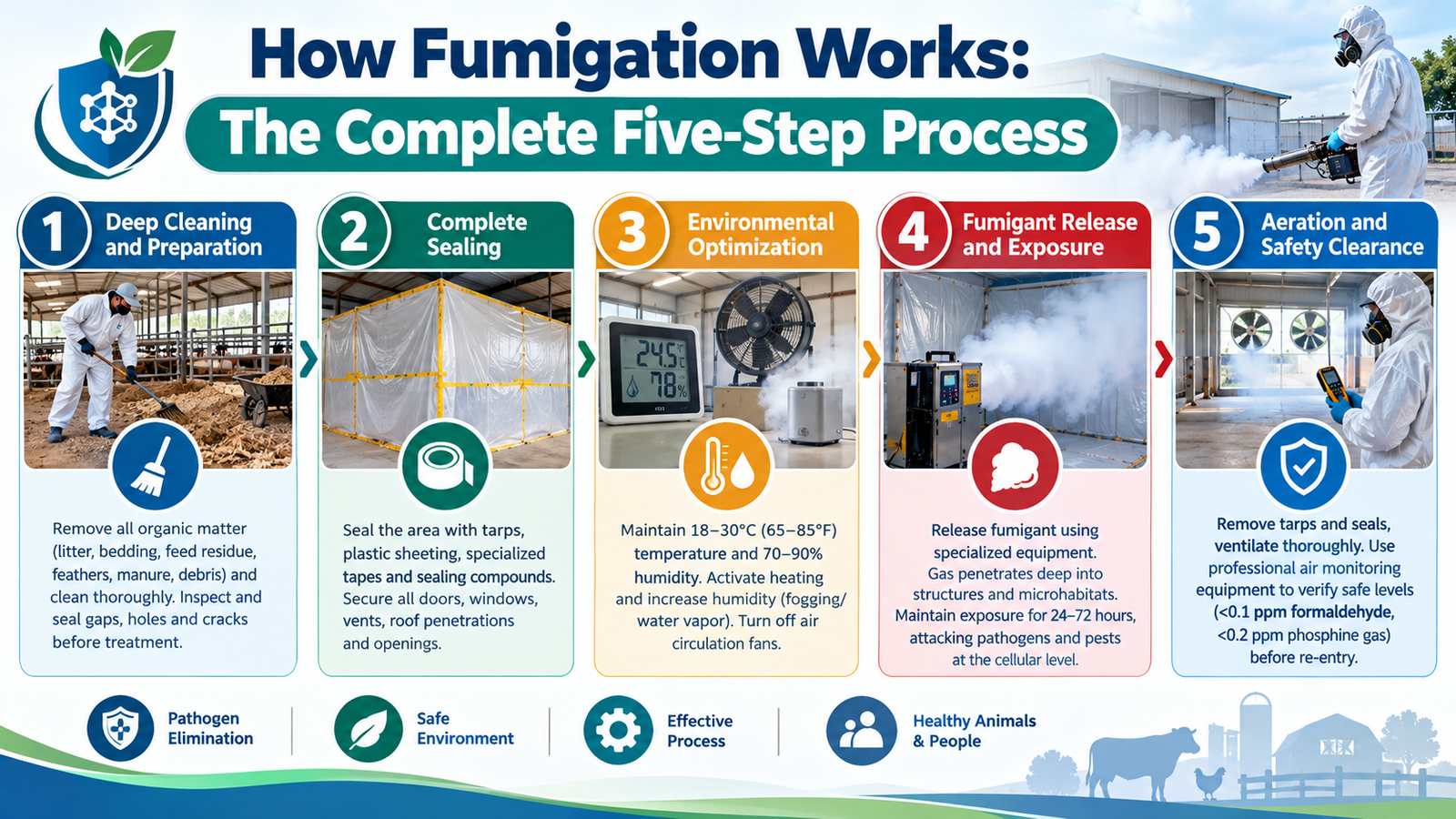
3. How Fumigation Works: The Complete Five-Step Process
The fumigation process consists of five critical steps that ensure complete pathogen elimination while maintaining safety for workers and subsequent facility occupants.
Step 1: Deep Cleaning and Preparation
Before fumigation can begin, the facility must be thoroughly cleaned. All organic matter—litter, bedding, feed residue, feathers, manure, and debris must be removed. Dust and organic material bind to fumigant molecules, preventing gas penetration and reducing effectiveness. The facility is also inspected for gaps, holes, and cracks that must be sealed before treatment begins.
Step 2: Complete Sealing
Clean the facility thoroughly before beginning fumigation. Remove all organic matter: litter, bedding, feed residue, feathers, manure, and debris. Dust and organic material bind to fumigant molecules, block gas penetration, and reduce effectiveness. Inspect the facility for gaps, holes, and cracks, and seal them before starting treatment.
Step 3: Environmental Optimization
Temperature, humidity, and air circulation are optimized for fumigant efficacy. Most fumigants work best in warm (18–30°C / 65–85°F), humid conditions (70–90% relative humidity). Heating systems are activated; humidity is increased through fogging or water vapor introduction. Air circulation fans are typically turned OFF to prevent gas dissipation and maintain consistent concentration throughout the space.
Step 4: Fumigant Release and Exposure
Fumigant chemicals are released into the sealed space using specialized equipment (generators, heaters, or diffusers, depending on fumigant type). The gas penetrates deep into wood, building materials, equipment, and protected microhabitats. Pathogens and pests are exposed to lethal concentrations for a specified period (typically 24–72 hours). The fumigant gas attacks cellular structures, disrupts nervous system function, and causes death of target organisms.
Step 5: Aeration and Safety Clearance
After the exposure period, all tarps and seals are removed, and the structure is thoroughly ventilated. Professional-grade air monitoring equipment with calibrated detection instruments verifies that fumigant residues have dropped to safe regulatory levels (typically <0.1 ppm formaldehyde and <0.2 ppm phosphine gas). Only after clearance certification can the facility be safely re-entered.
4. Types of Fumigants: Chemical Classification and Mechanisms
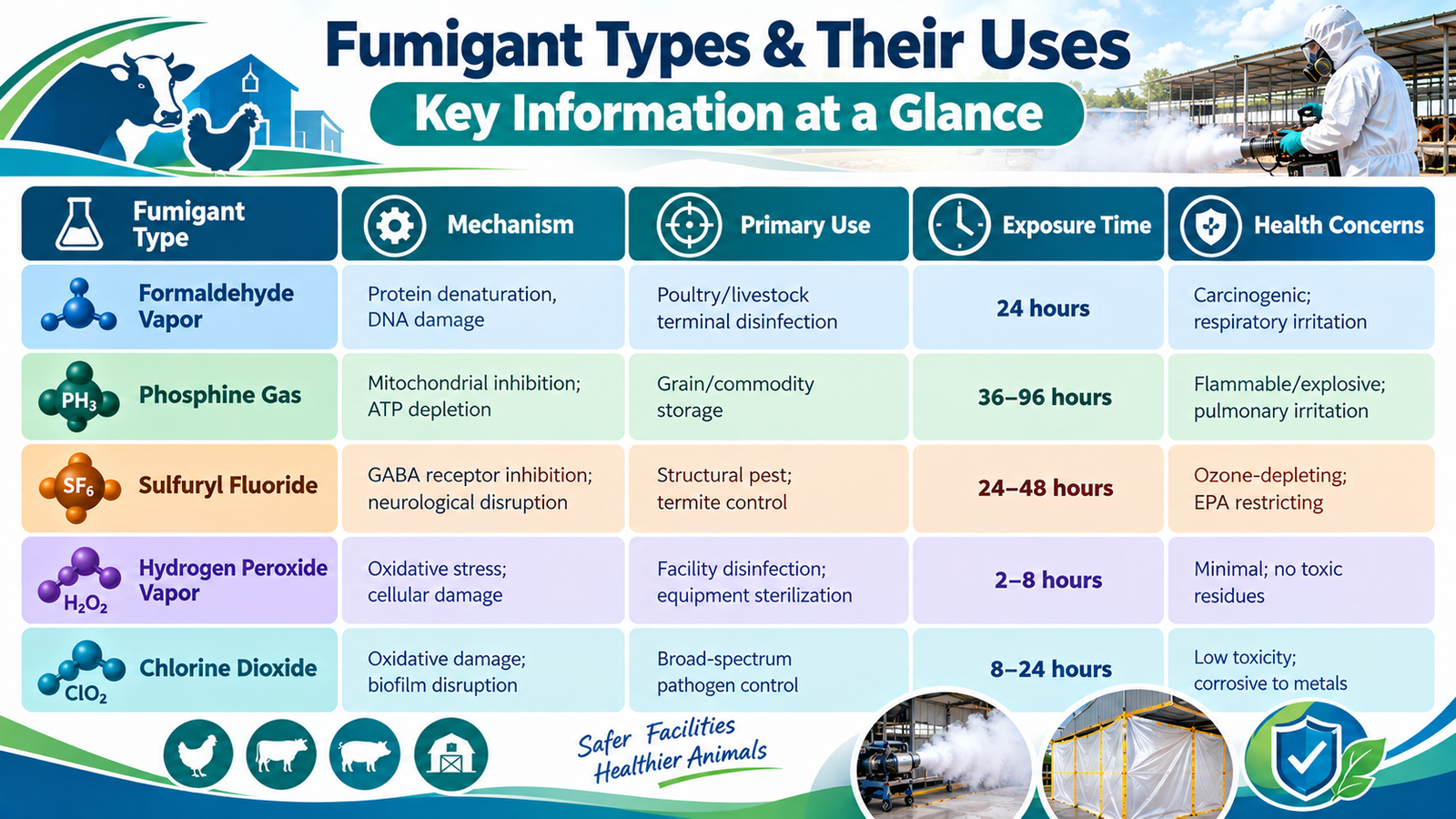
Different fumigants are used for different applications based on their antimicrobial mechanism, volatility, penetration capability, and safety profile. Understanding each fumigant type helps agricultural and veterinary professionals select the most appropriate method for their facility.
5. Formaldehyde Fumigation: The Traditional Method and Safety Concerns
Formaldehyde has been the traditional fumigant for terminal disinfection in poultry houses and livestock facilities for decades. It is generated by combining Potassium Permanganate (KMnO₄) and Formalin (40% Formaldehyde solution) at a 1:2 ratio. The chemical reaction creates an exothermic release of formaldehyde vapor throughout the facility.
How Formaldehyde Works:
Formaldehyde is a potent antimicrobial that works by:
- Cross-linking protein molecules, causing denaturation
- Damaging cellular DNA and RNA
- Disrupting enzyme function
- Breaking down bacterial cell walls and fungal spore coats
Advantages of Formaldehyde Fumigation:
- Proven efficacy across broad spectrum of pathogens (bacteria, viruses, fungi, spores)
- Excellent penetration into wood and building materials
- Traditional method with established protocols in veterinary literature
- Works effectively in cooler temperatures compared to some alternatives
Critical Safety Concerns:
Formaldehyde is classified as a human carcinogen by:
- OSHA (Occupational Safety and Health Administration)
- IARC (International Agency for Research on Cancer)
- EPA (Environmental Protection Agency)
- NTP (National Toxicology Program) Worker exposure to formaldehyde gas causes:
- Acute: Eye irritation, respiratory irritation, throat burning, asthma exacerbation
- Chronic: Increased risk of nasopharyngeal cancer, sinonasal cancer, and leukemia with repeated exposure
- Neurological: Headaches, dizziness, cognitive impairment
- Dermatological: Allergic contact dermatitis and skin sensitization
For these reasons, many modern veterinary facilities and commercial farms are transitioning away from formaldehyde fumigation toward safer alternatives.
6. Phosphine Gas Fumigation: Applications and Effectiveness
Phosphine gas (PH₃) is an inorganic fumigant commonly used in grain storage facilities, large agricultural warehouses, and livestock sheds. It is generated from solid phosphide compounds (aluminum phosphide or magnesium phosphide) that release phosphine gas when exposed to moisture and heat.
How Phosphine Works:
Phosphine gas disrupts cellular respiration by:
- Inhibiting mitochondrial function and ATP production
- Interfering with enzyme systems involved in energy metabolism
- Causing cellular asphyxiation at the biochemical level
Advantages of Phosphine Fumigation:
- Effective against stored grain pests and resistant insect populations
- Lower mammalian toxicity compared to formaldehyde
- Can be used in agricultural commodities without significant residue concerns
- Easier re-entry procedures with shorter aeration times
- Lower cost relative to some modern alternatives
Critical Safety and Operational Concerns:
- Phosphine gas is extremely flammable and explosive in air
- Strict protocols required to prevent ignition sources (sparks, flames, heat)
- Risk of spontaneous ignition in certain moisture/temperature conditions
- Can spontaneously combust if concentrations reach explosive ranges
- Worker respiratory exposure can cause pulmonary irritation and neurological symptoms
Due to flammability concerns, phosphine fumigation requires specialized handling and is typically restricted to grain storage and agricultural commodity treatment rather than facility fumigation.
7. Sulfuryl Fluoride: Structural Fumigation and Penetration
Sulfuryl fluoride (SO₂F₂) is a broad-spectrum fumigant commonly used for structural pest control (termites, bedbugs, wood-boring beetles) but also employed in agricultural facilities for pathogen control. It is non-flammable and penetrates wood and building materials exceptionally well.
How Sulfuryl Fluoride Works:
Sulfuryl fluoride functions as a neurotoxin that: • Inhibits the GABA receptor complex in insect nervous systems • Disrupts neural signal transmission • Causes paralysis and death through neurological failure
Advantages of Sulfuryl Fluoride:
- Exceptional penetration into wood grain and structural voids
- Non-flammable and non-explosive
- Suitable for structures with complex geometry
- Effective against wood-boring insects and structural pests
- Lower toxicity to mammals compared to formaldehyde
- Well-established use in agricultural settings
Environmental and Safety Considerations:
- Ozone-depleting potential (ODP) contributes to stratospheric ozone depletion
- EPA increasingly restricting use due to environmental concerns
- Worker exposure can cause fluoride-related health effects.
- Requires specialized containment and aeration procedures
8. Modern Alternatives: Hydrogen Peroxide Vapor and Chlorine Dioxide
As health and environmental concerns mount regarding traditional fumigants, advanced agricultural and veterinary facilities are adopting safer alternatives that maintain efficacy while reducing worker and environmental hazards.
Hydrogen Peroxide Vapor (HPV) Fumigation:
Generate hydrogen peroxide vapor by heating or vaporizing hydrogen peroxide solutions (7–35% concentration). Allow the vapor to penetrate facility spaces and dissipate into water and oxygen, leaving no toxic residues.
How Hydrogen Peroxide Vapor Works Hydrogen peroxide destroys pathogens through oxidative stress:
- It breaks down bacterial cell membranes.
- It damages viral envelopes.
- It disrupts fungal cell wall integrity.
- It destroys spore germination capacity.
Advantages of HPV
- Leaves no toxic residues because it breaks down into water and oxygen.
- Protects workers when used with proper ventilation.
- Provides broad‑spectrum efficacy against bacteria, viruses, fungi, spores, and biofilms.
- Requires shorter exposure times (2–8 hours) compared to traditional fumigants.
- Reduces environmental impact.
- Remains compatible with sensitive equipment such as electronics, optics, and mechanical components.
Limitations of HPV
- Loses effectiveness in high‑protein environments because organic matter consumes reactive molecules.
- Fails to achieve deep wood penetration equal to formaldehyde.
- Requires precise humidity and temperature control.
- Demands higher equipment investment and operational training.
Chlorine Dioxide Gas Fumigation:
Chemists generate chlorine dioxide by reacting sodium chlorite with chlorine‑releasing compounds. The gas penetrates facility spaces and rapidly oxidizes pathogen cellular structures.
How Chlorine Dioxide Works Chlorine dioxide acts as a strong oxidizing agent:
- It disrupts bacterial cell walls through oxidative damage.
- It denatures viral proteins.
- It damages fungal membrane lipids.
- It breaks down biofilm polymers.
Advantages of Chlorine Dioxide
- Provides broad‑spectrum efficacy against bacteria, viruses, fungi, spores, and biofilms.
- Penetrates moderately well (better than HPV, less than formaldehyde).
- Exhibits relatively low mammalian toxicity.
- Requires shorter exposure times (8–24 hours).
- Remains effective even in moderate organic matter environments.
Limitations of Chlorine Dioxide
- Corrodes certain metals (copper, aluminum) in the presence of moisture.
- Leaves residual chlorine compounds on surfaces.
- Requires specialized generation equipment.
- Demands higher operational complexity compared to traditional fumigants.
9. Poultry House Terminal Disinfection: Protocol and Best Practices
Terminal disinfection of poultry houses is performed exclusively during facility downtime—after the final bird from one flock is removed and before new chicks arrive for the next production cycle. This is the critical 7–14 day window when intensive fumigation can be conducted.
Why Terminal Disinfection is Critical:
Poultry houses accumulate pathogenic contamination throughout the production cycle:
- Fecal material and litter embed bacteria and viruses into wood and surfaces
- Biofilm develops on feeders, drinkers, and equipment
- Respiratory pathogens settle on ceiling beams and roof structures
- Fungal spores colonize damp areas Without terminal disinfection, incoming chicks inherit this pathogenic burden and suffer higher disease susceptibility, elevated mortality, and reduced productivity.
The Traditional Formaldehyde Protocol:
Step 1: Deep Cleaning Remove all birds and empty the litter completely from the facility. Sweep, scrub, and pressure‑wash the house to eliminate visible organic matter. Eliminate dust and feather debris because they interfere with fumigant action.
Step 2: Environmental Optimization Seal the building tightly with tarps and tape. Raise the temperature to 21–25 °C (70–77 °F) using heaters. Increase humidity to 80–90% with humidifiers or fogging systems. Maintain high humidity to enhance formaldehyde gas effectiveness.
Step 3: Fumigant Preparation and Release Mix KMnO₄ and Formalin in wide‑mouth buckets placed strategically throughout the facility. Use multiple buckets to ensure even gas distribution. Allow the violent chemical reaction to release dense formaldehyde vapor. Seal the facility immediately and leave it undisturbed for 24 hours.
Step 4: Exposure Period Keep the house sealed for the full 24‑hour exposure window. Let formaldehyde gas penetrate wood fibers, equipment cracks, litter residues, and biofilm layers. Expose pathogens to lethal concentrations throughout the period.
Step 5: Aeration and Safety Clearance After 24 hours, remove all tarps and open the house fully. Keep doors and windows open for 4–6 hours of continuous aeration. Allow formaldehyde residues to dissipate into the atmosphere. Operate high‑speed ventilation fans to accelerate gas removal.
Modern Facility Practices:
Concern about formaldehyde carcinogenicity has prompted advanced poultry operations to adopt alternative strategies:
- Hydrogen peroxide vapor systems for reduced health risk
- Electrostatic disinfection misting with quaternary ammonium compounds
- Chlorine dioxide fogging in facilities with better containment infrastructure
- Combination approaches: HPV for general pathogen elimination + targeted liquid disinfection for high-touch equipment
10. Hatchery Fumigation: Precision, Egg Safety, and Embryo Protection
Hatchery fumigation requires extraordinary precision. The objective is to eliminate surface pathogens on fertile eggs while protecting developing embryos inside the shell. Under-fumigation leaves pathogens intact; over-fumigation damages embryonic tissue and kills developing chicks.
Egg Contamination Pathway:
Fertile eggs are contaminated with pathogenic bacteria (particularly Salmonella spp.) during laying or in the collection process. Pathogens adhere to the porous eggshell surface and, if not eliminated, gradually penetrate the shell membrane into the albumen and yolk, infecting the developing embryo.
Timing of Egg Fumigation:
Optimal fumigation occurs immediately after laying or within 24 hours of collection—before pathogen penetration begins. Fumigant concentrations destroy surface pathogens without damaging the non-living eggshell or underlying embryonic membranes.
The Critical Embryonic Window (24–96 Hours of Incubation):
Egg fumigation must NEVER be conducted between 24 and 96 hours of incubation. This developmental window encompasses:
- Heart formation and first heartbeats (24–36 hours)
- Blood vessel development and circulation establishment (36–48 hours)
- Early nervous system formation (48–72 hours)
- Organ primordia development (72–96 hours) Fumigant exposure during this critical period causes:
- Embryonic mortality and developmental arrest
- Congenital malformations (cardiac defects, nervous system abnormalities)
- Severe reduction in chick viability and post-hatch survival
Safe Fumigation Windows for Eggs:
Window 1: Pre-Incubation Eggs are fumigated immediately after laying or upon arrival at the hatchery, before any incubation begins. This is the SAFEST and MOST EFFECTIVE timing.
Window 2: Post-Critical Development (>96 hours) After 96 hours of incubation, embryos have completed critical organ formation. Fumigation can be performed at reduced concentrations, though early-stage fumigation is always preferred.
Live Chick Fumigation (STRICTLY CONTRAINDICATED):
- Fumigating newly hatched or live chicks severely damages their respiratory system.
- Formaldehyde and other fumigants destroy the respiratory epithelium.
- This destruction produces acute and chronic respiratory disease.
- Fumigation causes high early mortality and lifelong impaired lung function.
11. Livestock Facilities: Disease Outbreak Response and Biosecurity
In cattle, sheep, goat, and swine facilities, structural fumigation is less routine than in poultry operations. Livestock sheds are less tightly sealed and more difficult to fumigate effectively. However, fumigation becomes the critical intervention when highly contagious pathogens threaten the herd.
Disease Scenarios Requiring Facility Fumigation:
Foot-and-Mouth Disease (FMD) FMD virus survives for extended periods on surfaces, feed bunks, water troughs, and structural materials. The virus can persist in protected microhabitats for weeks. Fumigation eliminates the pathogen from areas inaccessible to surface disinfectants.
Brucellosis Brucella organisms contaminate facility surfaces and animal housing materials. Fumigation eliminates this environmental reservoir and breaks the transmission cycle.
Bovine Viral Diarrhea (BVD) BVD virus contaminates shared equipment, feed delivery systems, and air handling infrastructure. Fumigation disinfects these areas comprehensively.
Livestock Fumigation Protocol:
- Complete Facility Evacuation Remove all livestock, people, and pets from the premises. Clear all feed, water, and bedding completely.
- Structural Sealing Address the unique challenges of livestock facilities, which often lack air‑tight construction compared to poultry houses. Apply extensive tarp sealing, foam, and tape to achieve effective sealing.
- Fumigant Selection and Release Select phosphine gas or formaldehyde based on facility characteristics. Conduct fumigation for 24–72 hours depending on the fumigant type and facility size.
- Thorough Aeration and Cleaning Aerate the facility thoroughly. Clean all surfaces, equipment, feeders, and water systems professionally before allowing livestock to re‑enter.
12. Pet Facilities and Kennels: Fumigation vs. Aerosol Methods
In commercial and residential pet facilities—kennels, catteries, dog boarding facilities, rescue shelters—fumigation presents unique considerations. The facilities are not purpose-built for sealing, and true structural fumigation is rarely necessary or practical.
Pet Facility Contamination Challenges:
- High-traffic environments with constant surface contamination
- Difficult to seal due to residential or commercial construction standards
- Frequent need for disinfection without requiring extended downtime
- Combination of pest control (fleas, ticks) and pathogen control (viral, bacterial)
True Gas Fumigation vs. Deep-Penetrating Aerosol Misting:
True structural gas fumigation (sulfuryl fluoride or phosphine) is rarely employed for small domestic pet structures unless addressing a severe wood-boring termite infestation.
Instead, professional facilities utilize specialized aerosol and fogging techniques:
- Apply electrostatic disinfection misting with quaternary ammonium (QUAT) compounds.
- Perform thermal fogging using veterinary‑approved pyrethroids or permethrin.
- Operate hydrogen peroxide vapor systems in facilities with sealing capability.
- Use insect growth regulator (IGR) aerosols such as pyriproxyfen or methoprene for flea control.
- Employ dry‑fog technology that combines multiple disinfectant compounds.
Benefits of Aerosol Methods
- Deliver rapid treatment without requiring structural sealing.
- Reduce downtime between animal accommodations.
- Penetrate effectively into equipment, kennels, and play areas.
- Allow flexible re‑entry, typically 2–4 hours after treatment.
13. Safety Protocols: Worker Protection and Re-Entry Guidelines
Fumigation operations present significant hazards to workers and must be conducted strictly by licensed professionals following regulatory protocols.
Worker Safety Requirements
- Allow only licensed fumigation professionals to conduct treatment operations.
- Wear respiratory protection such as SCBA (Self‑Contained Breathing Apparatus) for high‑concentration work.
- Use protective equipment including chemical‑resistant suits, gloves, and eye protection.
- Train workers in emergency procedures, chemical safety, and decontamination protocols.
- Monitor worker health through medical surveillance for chronic exposure.
Re‑Entry Guidelines and Safety Testing
Facilities are cleared for re‑entry only after professionals complete safety verification:
- Conduct air quality testing with calibrated detection equipment.
- Verify fumigant residues fall below regulatory thresholds:
- Formaldehyde: <0.1 ppm (OSHA PEL)
- Phosphine gas: <0.2 ppm (EPA guideline)
- Sulfuryl fluoride: <0.4 ppm (EPA guideline)
- Issue written clearance certification from a licensed fumigation contractor.
- Aerate facilities for 4–24 hours after the exposure period.
⚠️ Never re‑enter a fumigated structure without professional clearance testing.
Ongoing Residue Concerns:
Formaldehyde Off-Gassing: After fumigation clearance, formaldehyde may continue off-gassing from building materials for days or weeks. Enhanced ventilation should continue post-entry. Sensitive individuals (young animals, pregnant animals, animals with respiratory compromise) may need extended re-entry delays.
Phosphine Gas Residues: Phosphine gas disperses rapidly into the atmosphere. Indoor residue is minimal once aeration is complete. However, phosphine compounds may bind to certain surfaces; thorough ventilation ensures safety.
Equipment and Feed Contamination: Fumigated facilities should have all equipment, feeders, drinkers, and water systems professionally cleaned before animal re-entry. Fumigant residues should not contact feed or water sources.
Comparison of Major Fumigant Types

Frequently Asked Questions About Fumigation in Veterinary Biosecurity
Q1: What is the primary advantage of fumigation over liquid chemical disinfection?
Fumigation gases penetrate deep into wood grain, wall cavities, cracks, crevices, and biofilm layers where liquid disinfectants cannot reach. This comprehensive pathogen elimination makes fumigation superior for terminal disinfection of facilities.
Q2: How do I choose between formaldehyde and modern alternative fumigants?
Formaldehyde offers superior penetration and proven efficacy but poses significant worker health risks (carcinogenicity). Modern alternatives (hydrogen peroxide vapor, chlorine dioxide) prioritize worker safety with minimal to no toxic residues. The choice depends on facility sealing capability, pathogen concerns, and worker health priorities. Advanced operations increasingly favor alternatives.
Q3: Can I fumigate a poultry house while birds are present?
Fumigation must only occur during facility downtime with all birds removed. Fumigant gases are lethal to birds at any concentration. Birds present during fumigation will die rapidly from respiratory and neurological damage.
Q4: What is the difference between pre-incubation egg fumigation and fumigation during incubation?
Pre-incubation (pre-development) fumigation is safe and highly effective for eliminating surface pathogens. Fumigation between 24–96 hours of incubation is strictly prohibited because this is the critical embryonic organ development window. Exposure during this period causes embryonic death and malformations. After 96 hours, fumigation can be tolerated at reduced concentrations.
Q5: Is formaldehyde fumigation truly carcinogenic?
Yes. Formaldehyde is classified as a human carcinogen by OSHA, IARC, EPA, and NTP. Chronic occupational exposure increases risk of nasopharyngeal cancer, sinonasal cancer, and leukemia. For this reason, regulatory agencies increasingly restrict its use and advanced facilities are transitioning to safer alternatives.
Q6: How long does aeration take after fumigation?
Typical aeration takes 4–24 hours, depending on fumigant type and facility size. Formaldehyde typically requires 4–6 hours of full aeration. Modern alternatives like hydrogen peroxide vapor may require only 2–4 hours. Professional testing must confirm safe residue levels before re-entry.
Q7: Can hydrogen peroxide vapor substitute completely for formaldehyde fumigation?
Hydrogen peroxide vapor provides excellent pathogen elimination and poses minimal health risks. However, its penetration capability is less than formaldehyde, particularly in deeply soiled environments with high organic matter. For heavily contaminated facilities, formaldehyde or combination approaches may remain necessary.
Q8: What makes phosphine gas suitable for grain storage but risky for facilities?
Phosphine gas is extremely flammable and explosive in air. Grain storage uses specialized equipment in controlled commodity environments. Facility fumigation with phosphine poses significant fire/explosion risk and is generally restricted. Formaldehyde or alternatives are preferred for facility fumigation.
Q9: How does fumigation eliminate pathogens in biofilm?
Biofilm is a protective matrix of bacteria and extracellular polysaccharides that resists liquid disinfectants. Fumigant gases penetrate biofilm polymers and destroy the underlying bacterial cells through direct chemical damage. This is why fumigation is superior to surface spraying for biofilm-contaminated surfaces.
Q10: What should I do if someone is exposed to fumigant gas?
Immediately evacuate the exposed person to fresh air. If exposure is significant or ongoing symptoms develop (respiratory irritation, headache, dizziness), seek emergency medical attention. Provide treating physicians with the specific fumigant name and exposure duration. Formaldehyde exposure may require extended monitoring for delayed respiratory symptoms.
Conclusion: Fumigation as a Critical Veterinary Biosecurity Tool
Fumigation represents the most comprehensive terminal disinfection method available to agricultural and veterinary professionals. By penetrating deep into facility infrastructure—wood, walls, equipment cracks, and biofilm layers—fumigation eliminates microscopic pathogens where surface disinfection cannot reach. This makes it irreplaceable for preventing disease transmission between production cycles and controlling disease outbreaks.
The choice of fumigant type depends on facility characteristics, pathogen concerns, and worker health priorities. Traditional formaldehyde fumigation offers superior penetration but poses significant carcinogenic risks. Modern alternatives—hydrogen peroxide vapor, chlorine dioxide, and combination approaches—provide safer options that increasingly meet industry standards without compromising biosecurity.
Specialized applications demand specialized protocols: poultry house terminal disinfection during production downtime, hatchery egg fumigation before incubation begins, livestock facility treatment during disease outbreaks, and pet facility aerosol disinfection with minimal downtime.
By understanding fumigation types, mechanisms, applications, and safety protocols, agricultural and veterinary professionals can select and implement the most appropriate biosecurity measures for their specific facilities and production systems.
