
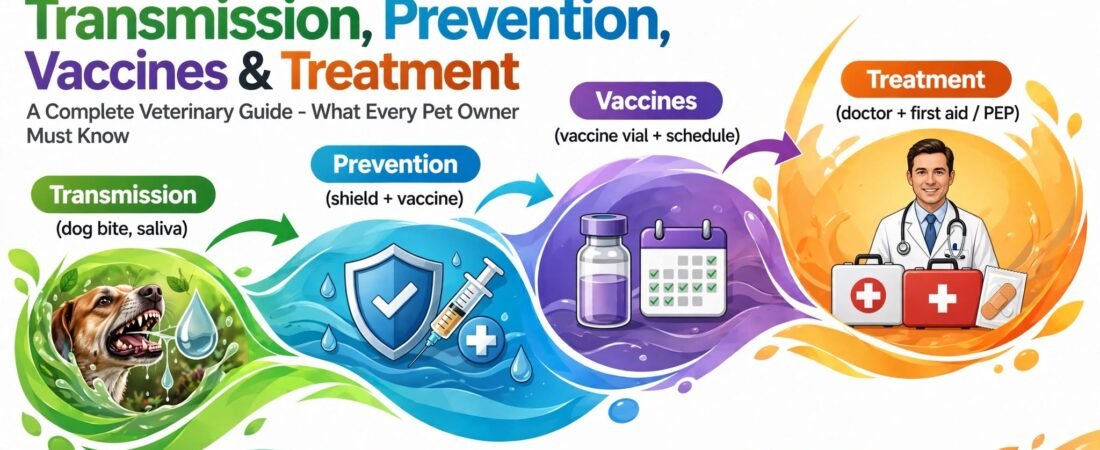
What is Rabies? (Quick Answer)
Rabies is a fatal viral disease transmitted through the saliva of infected animals, primarily via bites. It causes severe neurological damage, leading to hydrophobia (fear of water), paralysis, and death if untreated. The rabies virus attacks the central nervous system, and once clinical symptoms appear, the disease is almost 100% fatal. Prevention through immediate post-exposure prophylaxis (PEP) and vaccination is critical. Rabies is a preventable viral disease of mammals usually transmitted through the bite of an infected animal. Dogs require rabies vaccination every 1–3 years depending on the vaccine type and local regulations.
What is Rabies? Understanding the Disease
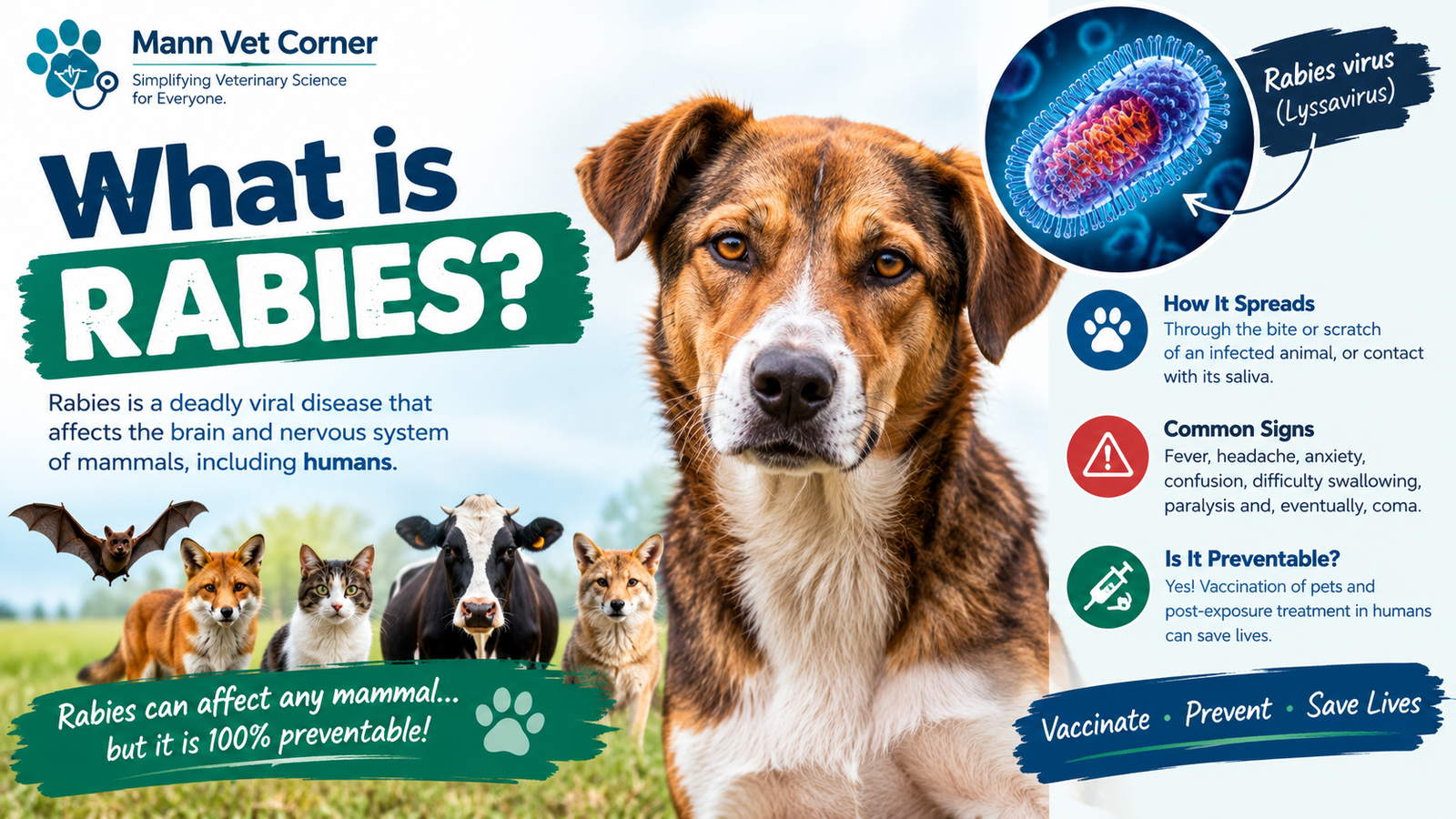
Rabies is a zoonotic viral disease caused by the rabies virus (genus Lyssavirus, family Rhabdoviridae). It is one of the most deadly infectious diseases in the world, with a fatality rate exceeding 99% once clinical symptoms develop. The disease affects the central nervous system and can present in two forms: furious rabies (characterized by aggression and hyperactivity) and paralytic rabies (characterized by progressive weakness and paralysis).
In veterinary and public health contexts, rabies remains a critical concern because it affects both domestic and wild animals globally, is transmissible to humans with nearly 100% case fatality rate, requires immediate medical intervention post-exposure, is preventable through vaccination and post-exposure prophylaxis (PEP), and demands strict regulatory compliance and reporting.
How Do Animals Get Rabies? Transmission Routes
Animals contract rabies through direct contact with the saliva of an infected animal. The primary transmission routes include:
Bite Wounds: The most common transmission route. The rabies virus lives in the saliva glands of infected animals and enters a new host through breaks in the skin. Even small puncture wounds can transmit the virus.
Saliva Contact with Mucous Membranes: Direct contact of infected saliva with eyes, nose, or mouth can lead to infection, though this is less common than bite transmission.
Aerosol Transmission: In rare cases, the virus can be transmitted through respiratory droplets, particularly in cave environments inhabited by infected bats.
Organ or Tissue Transplantation: Extremely rare cases have occurred when organs from infected donors were transplanted to recipients.
Rabies in Domestic Animals: Dogs, Cats & Livestock
Domestic animals, particularly dogs and cats, are responsible for up to 99% of human rabies deaths worldwide. Understanding rabies in domestic animals is critical for preventing human exposure. Should know on World Rabies Day.
Rabies in Dogs
Dogs are the primary vector for rabies transmission to humans. Incubation period ranges from 2–8 weeks (can range from 10 days to 1 year). Early signs include behavioral changes, fever, restlessness, hypersensitivity. Progressive symptoms include hypersalivation, jaw dropping, paralysis, and aggression. Dogs may exhibit furious or paralytic forms, with death typically occurring within 7–10 days of symptom onset.
Rabies in Cats
Cats are at higher risk of rabies exposure than dogs in many regions due to their outdoor hunting behavior. Clinical presentation includes hypersalivation, aggression, paralysis, and neurological dysfunction. Cats can transmit rabies through bites and scratches.
Rabies in Wild Animals: Raccoons, Bats, Opossums & Squirrels
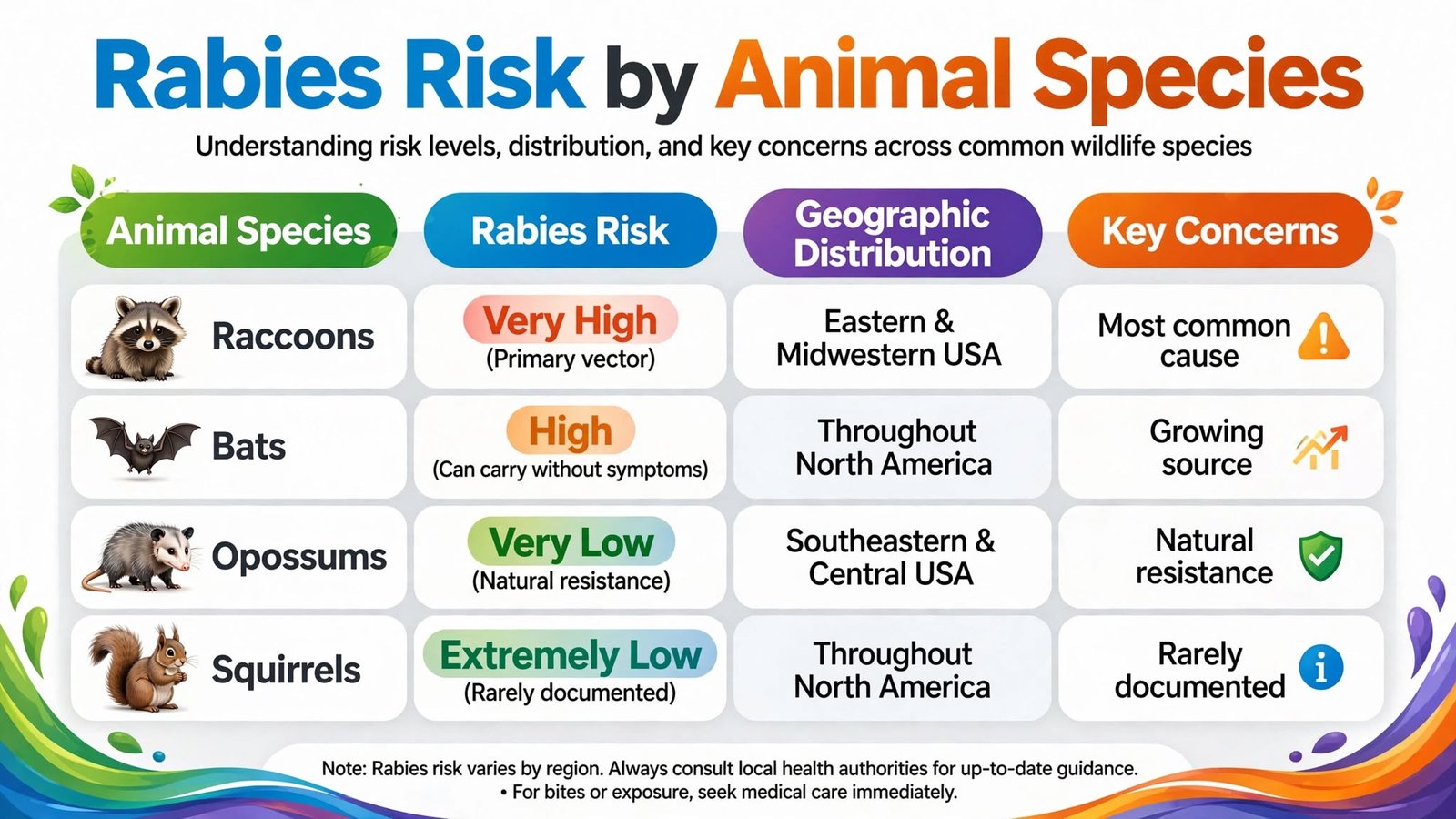
Wild animals serve as rabies reservoirs in North America. Understanding which species carry rabies is essential for preventing exposure.
Can Opossums Get Rabies?
Opossums have a remarkably low body temperature (approximately 94.6°F or 34.8°C) compared to other mammals. The rabies virus replicates inefficiently at lower temperatures, making opossums naturally resistant to rabies infection. While opossums can technically contract rabies, documented cases are exceptionally rare—fewer than 1% of tested wild animals in rabies surveillance programs.
Do Squirrels Carry Rabies?
Squirrels (including tree squirrels, ground squirrels, and flying squirrels) very rarely carry rabies. While squirrel-to-human bites do occur, documented transmission of rabies from squirrels to humans is virtually nonexistent in North America. Squirrels are not considered significant rabies vectors.
Rabies in Humans: Symptoms, Transmission & Progression
Human rabies is one of the most fatal diseases once clinical symptoms appear. Early recognition and post-exposure prophylaxis (PEP) are life-saving interventions.
Stages of Rabies in Humans:
Incubation Period (1–3 months): The virus travels along nerves from the bite site to the central nervous system. Prodromal Phase (2–7 days): Non-specific symptoms including fever, headache, malaise, and burning or tingling at the bite site. Neurological Phase: Patients develop either furious or paralytic rabies with progressive symptoms.
What Does Rabies Do to Humans? Symptoms & Progression
Furious Rabies (70–80% of cases):
Characterized by hyperactivity and restlessness, hallucinations and confusion, aggression and violent behavior, hydrophobia (fear of water), autonomic instability, aerophobia (fear of air), hypersalivation and foaming at the mouth, seizures, and death within 3–7 days.
Paralytic Rabies (20–30% of cases):
Features progressive muscle weakness beginning at the bite site, ascending paralysis, loss of sensation, urinary retention, and respiratory muscle paralysis. Death typically follows within 7–14 days.
What Does Rabies Cause? Hydrophobia Explained
Hydrophobia is a hallmark symptom of rabies and occurs in up to 80% of patients with furious rabies. It is not a fear of water in the psychological sense; rather, it is a neurological symptom caused by the rabies virus’s effects on the brainstem and spinal cord.
The rabies virus attacks the brainstem, particularly the medulla oblongata, disrupting normal swallowing and breathing reflexes. When patients attempt to swallow liquids—or even think about water—they experience severe pharyngeal muscle spasms, laryngeal constriction, and respiratory difficulty. This creates intense fear and avoidance of water.
Rabies Vaccines: Types, Schedules & Efficacy
Rabies vaccines are among the most effective public health interventions. When administered promptly after exposure (within 48 hours, ideally within 24 hours), they are nearly 100% effective at preventing rabies.
Post-Exposure Prophylaxis (PEP): The Milwaukee Protocol Regimen consists of vaccine doses given on days 0, 3, 7, and 14 (4-dose series), can be given intramuscularly (IM) or intradermally (ID), is often combined with rabies immunoglobulin (RIG), and has 99%+ efficacy when given promptly.
Available vaccines include HDCV (Human Diploid Cell Vaccine), PCECV (Purified Chick Embryo Cell Vaccine), PVRV (Purified Vero Cell Vaccine), with costs ranging from $400–$1,000+ per course.
Rabies Vaccine for Dogs: Types & Schedule
Rabies vaccination for dogs is one of the most important preventive health measures. Most U.S. states legally require dog rabies vaccination for public health protection.
How Often Do Dogs Need Rabies Vaccine Shots?
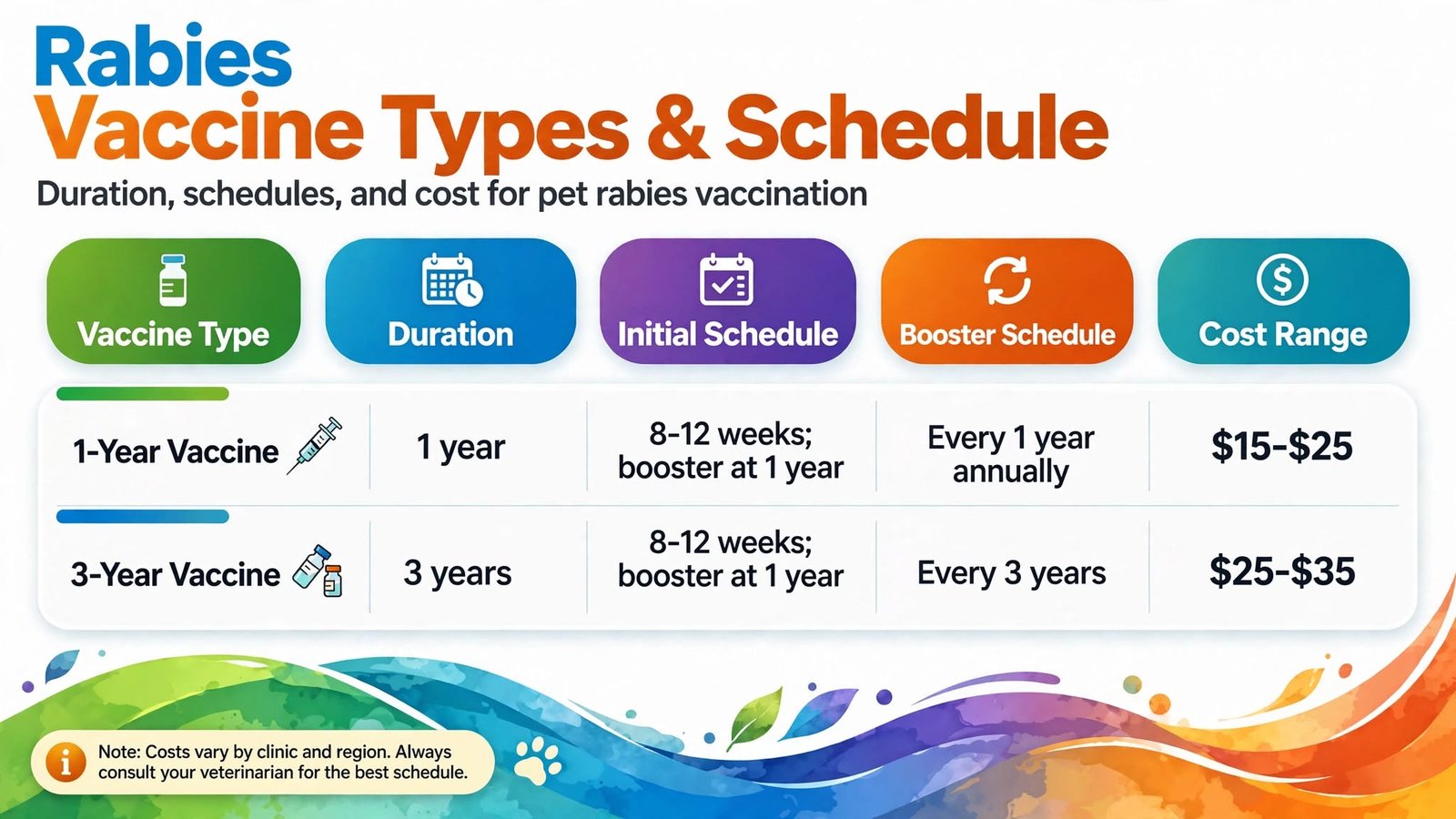
Initial Vaccination Schedule: Puppies receive their first rabies vaccine at 8–12 weeks of age. A booster is given 1 year later. This completes the initial series.
Ongoing Booster Schedule: After the initial series, your dog requires booster vaccinations every 1–3 years depending on the vaccine type. 1-Year Rabies Vaccines require boosters every 1 year. 3-Year Rabies Vaccines require boosters every 3 years (after 1-year booster is given). Always consult your veterinarian and check local legal requirements.
Prevention & Post-Exposure Safety Protocols
According to the CDC, rabies should be prevented before it gets worse in animals and humans.
Prevention Strategies: (1) Vaccinate your pets on the appropriate schedule; (2) Avoid wildlife contact and teach children to stay away; (3) Seal cracks and crevices in homes to prevent bat entry; (4) Report stray, injured, or unusual-acting animals to animal control; (5) Keep garbage secured to avoid attracting raccoons; (6) Keep pets supervised outdoors.
Post-Exposure Protocol: (1) Wash the bite or scratch immediately with soap and water for 15+ minutes; (2) Seek medical care immediately; (3) Provide details about the offending animal; (4) If possible, the animal should be captured and tested for rabies; (5) Rabies Immunoglobulin (RIG) is infiltrated around the wound; (6) Vaccine series begins (4 doses over 14 days); (7) Follow-up with medical care.
Frequently Asked Questions About Rabies
Q1: Can You Survive Rabies Without Vaccination?
A: Survival without post-exposure prophylaxis is virtually impossible once clinical symptoms appear. Vaccination within 48 hours of exposure is the proven lifesaving treatment.
Q2: How Long Does It Take for Rabies Symptoms to Appear?
A: The incubation period averages 1–3 months but can range from 10 days to 1 year. Shorter incubation periods occur with bites on the head or face.
Q3: Is Rabies Painful?
A: Yes. Hydrophobia involves severe pharyngeal muscle spasms. Paralytic rabies causes progressive pain and dysfunction.
Q4: What Do You Do If Bitten by a Rabid Animal?
A: (1) Wash the wound thoroughly with soap and water for 15+ minutes; (2) Apply disinfectant; (3) Seek medical care immediately; (4) Do not delay treatment. Time is critical.
Q5: Are Rabies Vaccines Safe?
A: Modern rabies vaccines are very safe. Side effects are typically mild. Serious adverse events are rare. The risk from rabies infection far exceeds vaccine risk.
Q6: What Is the Cost of Rabies Treatment?
A: PEP vaccines cost $400–$1,000+. Hospital costs can exceed $10,000–$50,000+. Prevention through vaccination is far more economical.
Rabies Treatment & Clinical Prognosis
Post-Exposure Prophylaxis (PEP) includes Rabies Immunoglobulin (RIG) infiltrated around the wound, a 4-dose vaccine series over 14 days, and supportive care including wound care, tetanus prophylaxis, and antibiotics for secondary infections.
Prognosis: Once clinical symptoms appear in humans, rabies is almost uniformly fatal (>99% fatality rate). Prevention through vaccination and post-exposure prophylaxis is the only effective strategy.
Conclusion
Rabies remains one of the most serious infectious diseases affecting both animals and humans. Prevention through vaccination and avoiding wildlife contact is the best strategy. Dogs require rabies vaccination every 1–3 years depending on vaccine type. Post-exposure prophylaxis is nearly 100% effective within 48 hours. For veterinary professionals and pet owners, staying informed about rabies epidemiology, vaccine schedules, and safety protocols is essential for protecting animal and human health.