

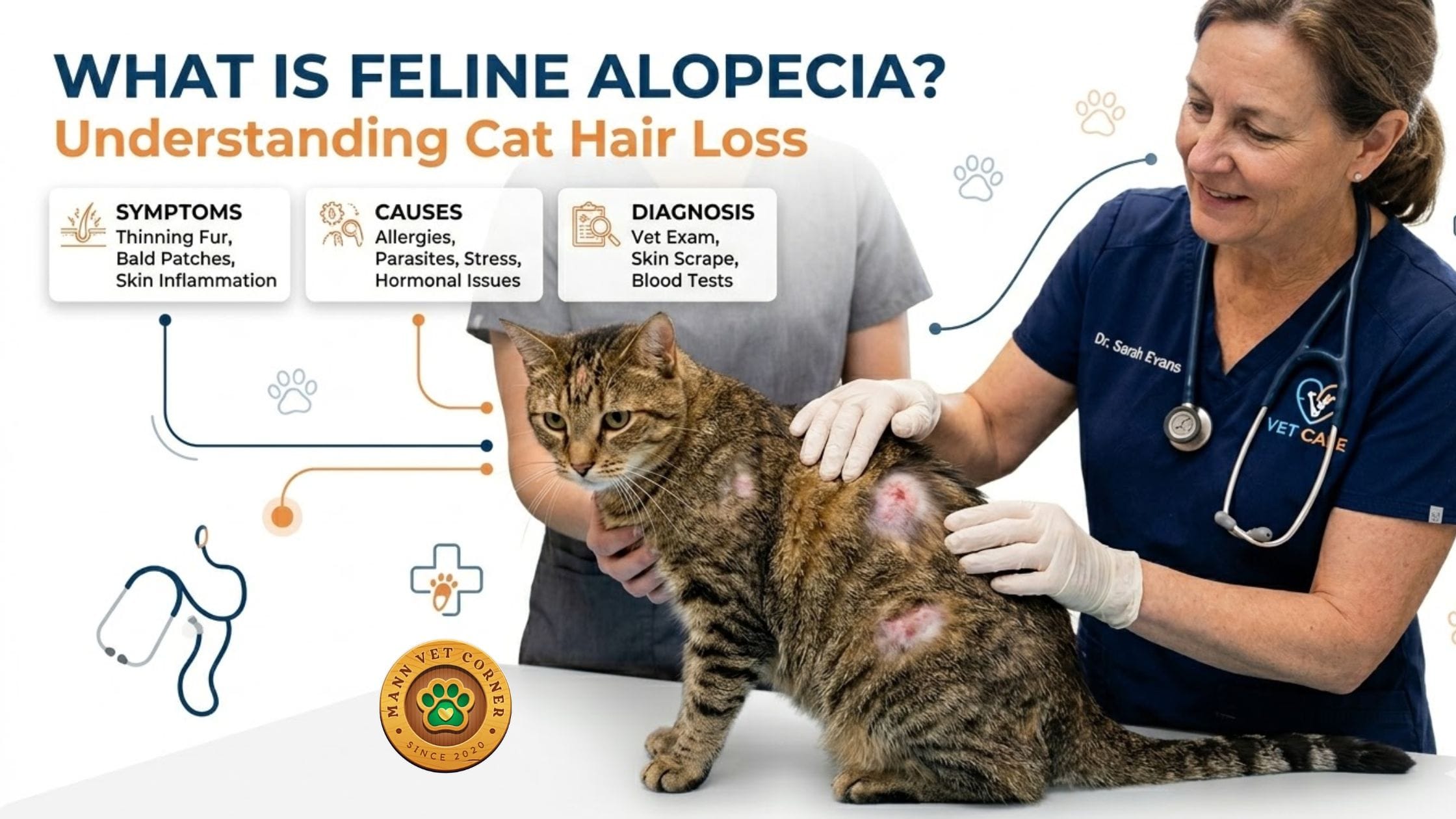
What Is Feline Alopecia? Understanding Cat Hair Loss
The word alopecia simply means hair loss. In cats, it describes any situation where fur falls out, thins, or fails to regrow in ways that are not part of the ordinary coat cycle. Feline alopecia can be partial (patchy thinning) or complete (fully hairless areas). It may appear anywhere on the body — the back, belly, flanks, tail base, or even around the face and paws.
Unlike dogs, cats are remarkably skilled at hiding discomfort. A cat dealing with intense itching will often groom herself obsessively when no one is watching, meaning owners sometimes notice the bald spots long before they observe any scratching. This makes early awareness of the signs of cat alopecia especially important.
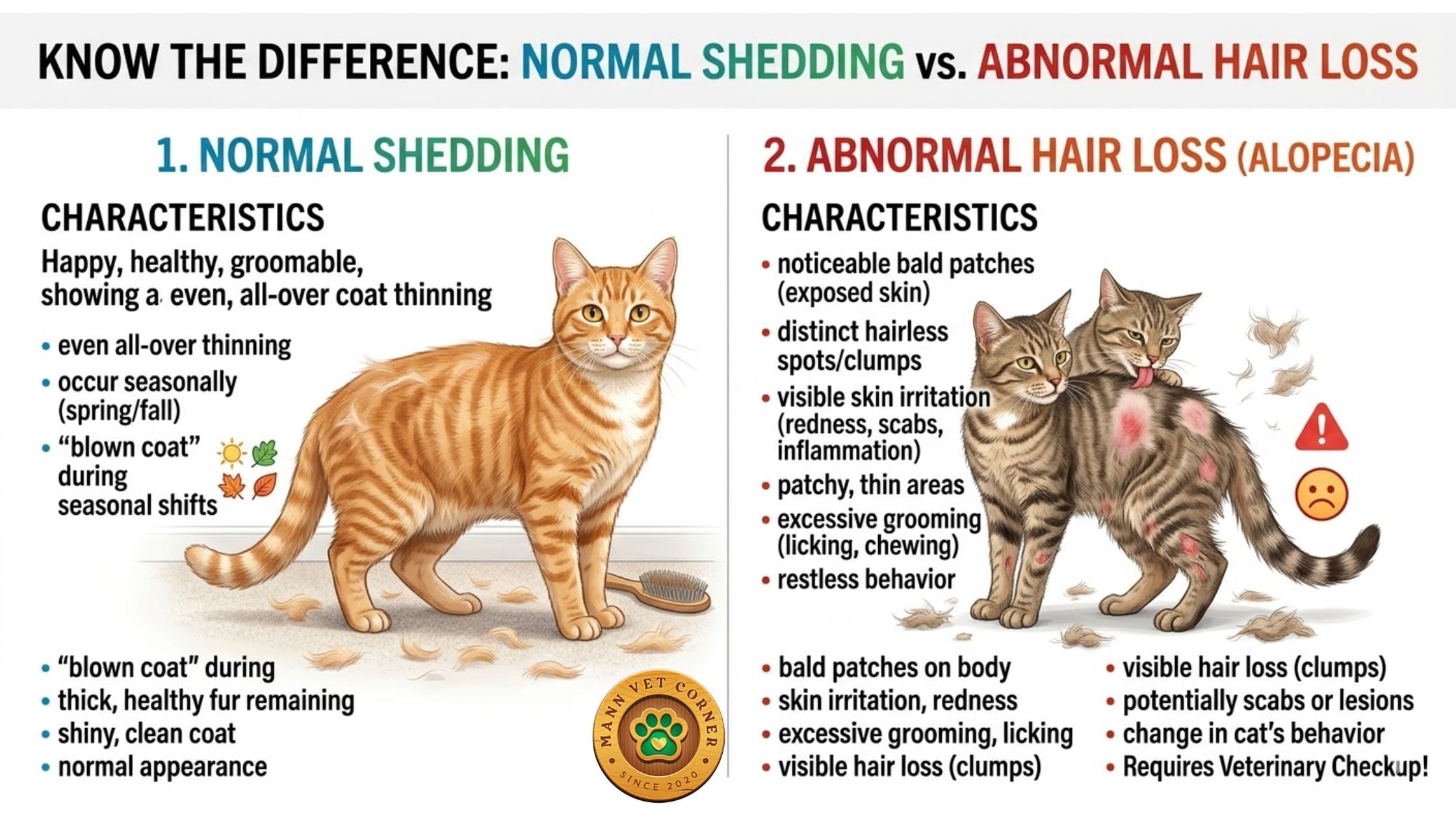
Normal Cat Shedding vs. Abnormal Hair Loss: Know the Difference
Before calling the vet, it helps to understand what healthy coat turnover looks like versus genuine cat hair loss problems.
“Normal shedding follows the seasons. Alopecia doesn’t — it creates visible gaps in the coat that don’t fill back in on their own.” — Veterinary Dermatology Consensus, Fulton County Veterinary Clinic
Normal seasonal shedding happens evenly across the whole coat, tends to peak in spring and autumn, leaves no bald patches, and produces loose fur rather than clumps. The skin underneath looks healthy and pink. Your cat acts completely normal.
Abnormal hair loss (alopecia), by contrast, creates distinct bald spots or thinning zones, may reveal red, flaky, crusty, or inflamed skin, and is often accompanied by scratching, biting, or restless behaviour. Left untreated, these patches spread — and the underlying condition keeps worsening.
6 Most Common Causes of Cat Hair Loss
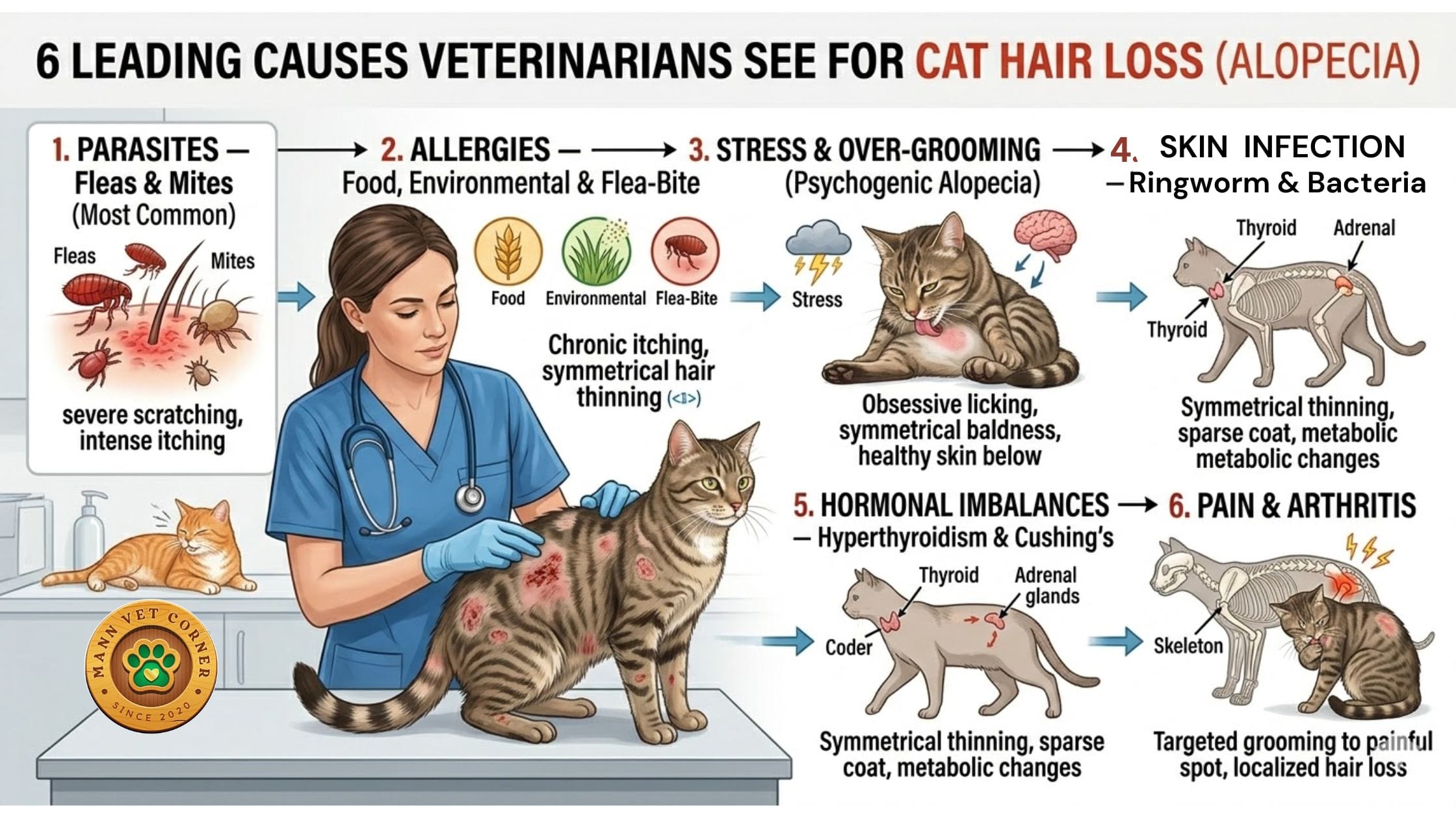
Understanding why cats lose hair is the first step toward effective treatment. Here are the six leading causes veterinarians see.
1. Parasites —🦟 Fleas & Mites (Most Common)
Fleas and mites are the single most common trigger of cat hair loss, especially around the lower back, base of the tail, and neck. Even one flea bite can spark a severe allergic reaction in sensitive cats — a condition called flea allergy dermatitis (FAD). Ear mites and mange mites affect different zones of the skin but cause equally intense itching.
2. Allergies —🌿 Food, Environmental & Flea-Bite
Cats develop allergies to food proteins (chicken, beef, fish, dairy), environmental allergens (pollen, dust mites, mold spores), and flea saliva. Allergic reactions inflame the skin, triggering intense itching that leads to hair loss. The location of the bald patches often hints at the allergen type — face and neck suggest food; belly and flanks suggest environmental triggers.
3. Stress & Over- 😰Grooming (Psychogenic Alopecia)
When cats feel anxious — from moving home, a new pet, a new baby, or even a change in routine — they may develop compulsive over-grooming. This psychogenic alopecia gradually strips the fur, most often from the belly, inner thighs, and front paws. The skin usually looks normal underneath, distinguishing it from infection-based hair loss.
4. Skin Infections —🦠 Ringworm & Bacteria
Ringworm (despite the name, a fungal infection caused by Microsporum canis) is a classic cause of circular bald patches in cats, particularly kittens and immunocompromised individuals. Bacterial skin infections (pyoderma) can follow scratching injuries. Both conditions are contagious — ringworm spreads readily to other pets and to humans.
5. Hormonal Imbalances —⚗️ Hyperthyroidism & Cushing’s
Hyperthyroidism (overactive thyroid — extremely common in older cats) and Cushing’s disease (excess cortisol) both disrupt the normal hair growth cycle. Hair becomes thin, brittle, and falls out in patches. These hormonal conditions require blood testing to confirm and specific medical management to treat.
6. Pain & Arthritis 🦴
A less obvious but real cause of localised hair loss is chronic pain. A cat with joint pain from arthritis may over-groom the aching area — a hip, a knee, or a spine segment — in an attempt to self-soothe. The bald patch appears precisely where the discomfort lies, making location a diagnostic clue for the vet.
Symptoms That Mean Your Cat Needs a Vet Now
Not every loose hair is cause for alarm. These specific warning signs of cat alopecia demand professional attention. Seeing even one of them is reason enough to book an appointment promptly.
- Visible bald spots or noticeably thinning patches — especially if they appear suddenly
- Clumps of fur falling out rather than the usual loose fibres
- Scabs, red, or inflamed skin beneath or around the thinning area
- Continuous scratching, biting, or chewing at the skin, day and night
- Sudden change in behaviour — lethargy, appetite loss, increased hiding
- Dandruff, flakiness, or an unusual skin odour accompanying the hair loss
Waiting too long worsens outcomes. An infection caught early may need a short course of medication; left untreated, it can spread and require far more intensive care. The same principle applies to allergies, parasites, and hormonal conditions — early cat alopecia diagnosis consistently leads to faster recovery.
How Veterinarians Diagnose Feline Hair Loss
There is no single test for alopecia — diagnosis is a detective process. Your vet will typically combine several approaches to find the root cause.
- ✔Full Physical Exam: The vet examines the pattern, location, and texture of hair loss, the condition of the skin, and looks for fleas, flea dirt, or mites with a fine-tooth comb and magnifying lens.
- ✔Skin Scraping & Cytology: A gentle scrape of the skin surface is examined under a microscope to identify mites, fungal spores, or bacteria.
- ✔Wood’s Lamp Test: About 50% of ringworm cases fluoresce under ultraviolet light — a quick, painless screening tool.
- ✔Blood Panel & Hormone Levels: Essential when hyperthyroidism, Cushing’s disease, or other systemic conditions are suspected — particularly in cats aged 8 and over.
- ✔Elimination Diet Trial: If food allergy is suspected, a strict 8–12 week hydrolysed protein or novel protein diet identifies the offending ingredient.
- ✔Skin Biopsy: Reserved for complex or unresolved cases, a small skin sample provides definitive tissue-level diagnosis.
Cat Hair Loss Treatment Options: What Works & Why
Treatment is always cause-specific. The table below maps each cause to its primary treatment approach, helping you understand what your vet may recommend.
| Cause | Primary Treatment | Expected Outcome |
|---|---|---|
| Fleas / Mites Parasites | Monthly spot-on flea preventatives; miticide treatments; household environmental sprays | Hair regrowth within 6–10 weeks once infestation is cleared |
| Food Allergy Allergy | 8–12 week elimination diet with hydrolysed or novel protein; then systematic reintroduction | Significant improvement once the triggering protein is removed from the diet |
| Environmental Allergy Allergy | Antihistamines, corticosteroids, or immunotherapy (allergy shots); reduce environmental allergens | Managed — not always cured; most cats achieve good long-term quality of life |
| Psychogenic Over-Grooming Behavioural | Environmental enrichment; pheromone diffusers; anti-anxiety medication (fluoxetine, clomipramine) if severe | Hair regrowth once stressors are identified and addressed; may require several weeks |
| Ringworm Fungal | Oral antifungal medication (itraconazole); antifungal shampoo; environmental decontamination | Full recovery in 4–8 weeks; strict hygiene essential as it is contagious to humans |
| Bacterial Infection Bacterial | Oral or topical antibiotics based on culture and sensitivity results | Resolution within 3–6 weeks of completing the full antibiotic course |
| Hyperthyroidism Hormonal | Daily methimazole medication, radioactive iodine therapy, or surgical thyroidectomy | Coat condition and hair regrowth improve significantly once hormone levels normalise |
| Arthritis / Pain Pain | Veterinary pain management (NSAIDs, gabapentin); joint supplements; environmental modifications | Grooming-related hair loss reduces as pain is controlled |
“Treat the cause, not just the symptom. Addressing the hair loss without finding its source leads to recurrence every time.”
3 Practical Home Care Tips for Cat Hair Loss Prevention
While veterinary diagnosis and treatment are essential, these evidence-based steps at home support your cat’s skin and coat health — and may prevent some causes of alopecia from developing in the first place.
- Keep Your Cat on a Year-Round Flea Preventative
Flea allergy dermatitis is the leading cause of feline hair loss — and entirely preventable. Use a vet-approved monthly spot-on or oral preventative, even for indoor cats. Fleas enter homes on clothing, shoes, and other pets. A single flea on a sensitive cat can trigger weeks of intense itching and hair loss. - Create a Calm, Enriched Environment to Reduce Stress
Since stress-induced over-grooming is a leading cause of belly and flank hair loss, managing your cat’s emotional environment is direct prevention. Maintain a stable daily routine. Provide vertical space, hiding spots, and interactive play. Use Feliway-type pheromone diffusers during household changes such as moving, redecorating, or introducing new animals. - Brush Regularly and Feed a Nutrient-Rich Diet
Regular brushing removes loose hair before it becomes matted or swallowed, reducing hairballs and keeping the coat even. A high-quality diet rich in omega-3 and omega-6 fatty acids, zinc, and biotin supports skin barrier function — the first line of defence against allergens and infection. Look for foods with named protein sources as the first ingredient.
Frequently Asked Questions
Why is my cat losing hair but seems fine otherwise?
Cats are masters at masking discomfort. Many hair-loss causes — including mild allergies, early-stage flea infestation, and hormonal changes — produce hair loss before overt signs of distress. If you notice thinning or bald patches even on a cat that appears healthy and happy, a veterinary check-up is still worthwhile. Early diagnosis is far simpler and less expensive to treat.
Can indoor cats still get fleas and lose hair because of them?
Absolutely — indoor cats are not immune to fleas. Fleas and flea eggs hitch rides into homes on clothing, shoes, blankets, and visiting pets. Once indoors, they breed rapidly. Indoor cats may actually be more sensitive to flea bites because they have had less lifetime exposure, making flea allergy dermatitis more severe. Year-round prevention is the safest approach regardless of your cat’s indoor/outdoor status.
About Care & Treatment
How long does it take for cat hair to grow back after treatment?
Regrowth timelines vary by cause. After resolving a flea infestation or bacterial infection, many cats begin showing noticeable regrowth within 4–8 weeks. Hormonal conditions like hyperthyroidism may take 2–3 months to show coat improvement once hormone levels normalise. Cats with psychogenic alopecia may take longer if the stress trigger has not been fully addressed. Have realistic expectations — hair follicles need time to re-enter the growth phase.
Is ringworm dangerous? Can I catch it from my cat?
Ringworm is a zoonotic condition, meaning it can pass from cats to humans. It most commonly causes a ring-shaped, itchy rash on human skin. Immunocompromised individuals, children, and the old peoples in higher risk. If your cat is diagnosed with ringworm, your vet will recommend a thorough environmental clean-up, and you should inform your own doctor if skin lesions develop. Ringworm is very treatable in both cats and people — the key is acting quickly and avoiding direct contact with affected areas until cleared.
What food helps with cat hair loss caused by allergies?
For food allergy-related hair loss, vets most commonly recommend a hydrolysed protein diet (where proteins are broken into fragments too small to trigger immune reactions) or a novel protein diet featuring a protein your cat has never eaten before — such as duck, venison, or rabbit. These must be fed exclusively for 8–12 weeks to get a clean result. Over-the-counter grain-free diets are not the same thing and are not adequate for proper elimination diet trials.




Leave a Reply