

Quick Answer: The Best Way to Control Fleas
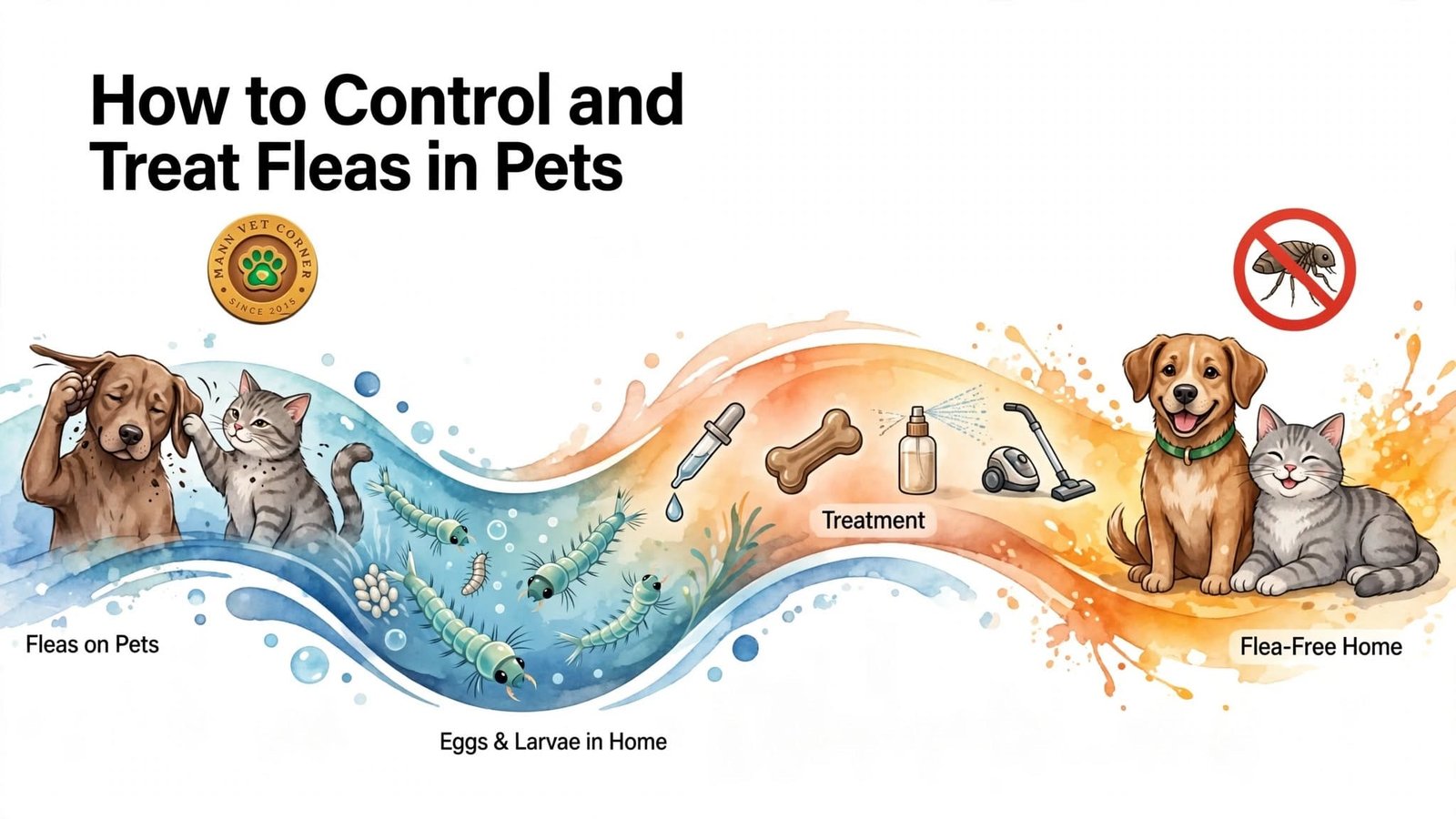
Flea treatments kill fleas by using active chemicals that either attack the flea’s nervous system to cause paralysis or disrupt their growth and life cycle. The most effective flea control combines three strategies:
- Monthly preventative treatments (topical or oral) that kill adult fleas on contact
- Insect Growth Regulators (IGRs) that stop eggs from hatching and prevent larvae development
- Environmental control by washing bedding, vacuuming, and treating your home
- Regular bathing and grooming to remove fleas and monitor pet health
Fast-acting oral medications can begin killing fleas in as little as 30 minutes, while topical treatments spread through your pet’s skin oils and don’t require fleas to bite your pet to work.
Why Flea Control Matters for Your Pet
If your pet is scratching, biting, or looking uncomfortable, fleas could be the culprit. These tiny parasites aren’t just annoying—they can cause serious health problems ranging from skin infections to flea allergy dermatitis and even anemia in severe infestations. As a pet owner, understanding how flea treatments work helps you choose the right protection for your furry friend and eliminate infestations before they become overwhelming.
The good news? Modern flea treatments are incredibly effective. With dozens of options available—from topical spot-on treatments to oral medications and environmental sprays—you can find a solution that works for your pet’s lifestyle, health needs, and budget. This guide walks you through everything you need to know about flea control.
How Do Flea Treatments Work? The Science Behind Flea Control
Flea treatments fall into two main categories based on how they kill or disable fleas:
Neurotoxic Treatments (Kill Adult Fleas)
These treatments target the flea’s nervous system, causing rapid paralysis and death. The active ingredients—such as pyrethrins, pyrethroids, or neonicotinoids—interfere with the flea’s ability to send nerve signals. The result? Fleas cannot move, feed, or reproduce. Many topical treatments work this way, meaning the flea dies on contact without ever biting your pet.
Systemic Treatments (Work from Within)
Oral medications and some injectable treatments enter your pet’s bloodstream. When a flea bites your pet to feed, it ingests the medication. This rapidly blocks the flea’s nervous system signals, leading to paralysis within minutes to hours. This method works against adult fleas and provides continuous protection because the medication stays in your pet’s blood system.
Types of Flea Treatments: Which One is Right for Your Pet?
Not all flea treatments are created equal. Understanding the differences helps you make an informed decision for your pet.
1. Topical Spot-On Treatments
How They Work:
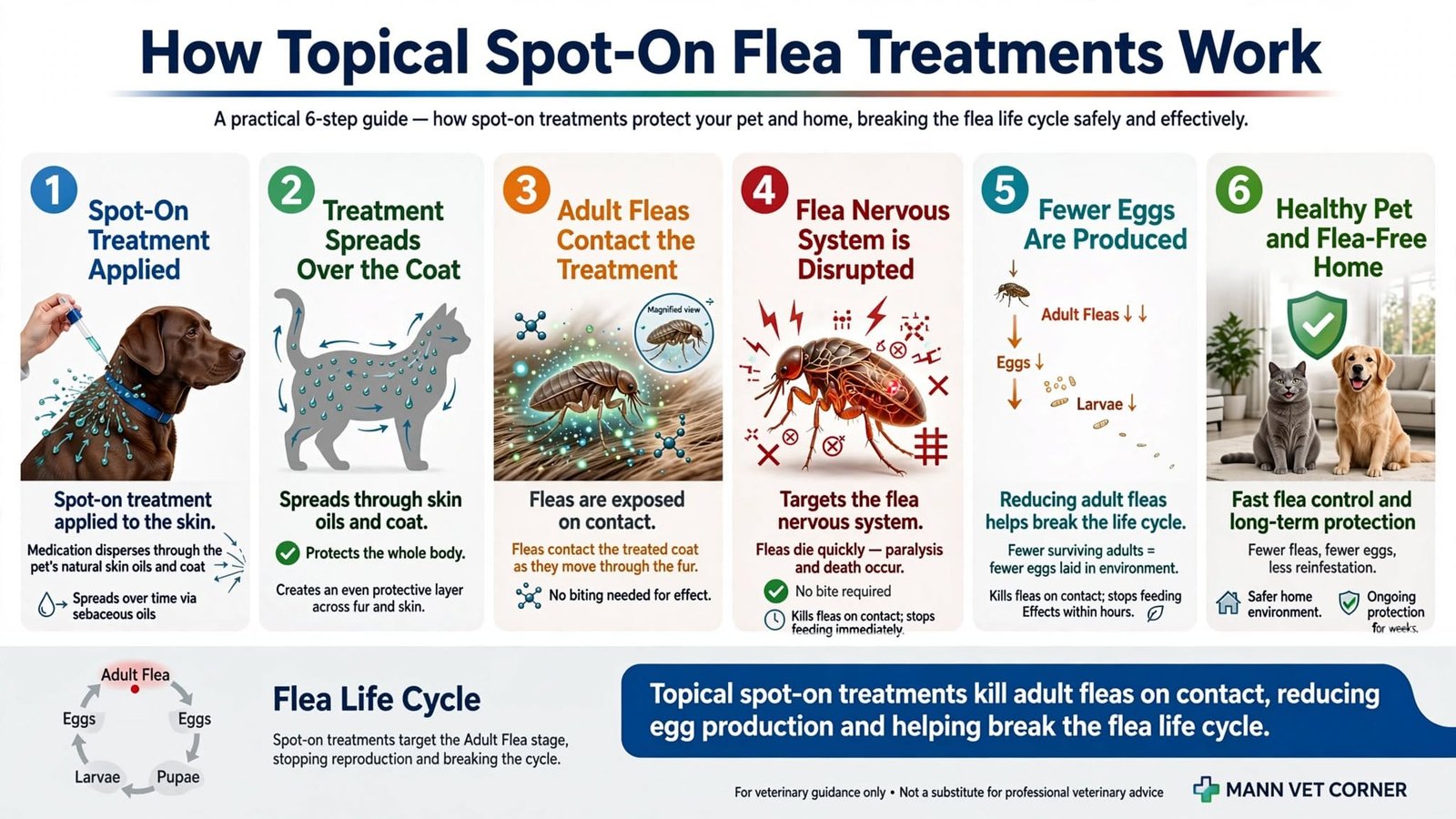
Applied to a small area of skin (usually the back of the neck between the shoulder blades), these liquid treatments spread through the oils in your pet’s skin and coat. Most kill fleas on contact by targeting their nervous system, meaning the flea doesn’t need to bite your pet to die. The protective layer spreads over the entire body within 24 hours.
Benefits:
- Easy to apply—one small dose lasts 4 weeks • Kills fleas on contact without waiting for a bite • Many products also prevent ticks, ear mites, and lice • Relatively affordable • Good for pets that are difficult to pill
Drawbacks:
- Some pets have skin sensitivity at the application site • Can wash off if your pet swims or bathes frequently • Less effective in very humid climates • Requires careful application to avoid contact with eyes or mouth
Popular Brands: Frontline Plus, Advantage II, Revolution, Bayer K9 Advantix
2. Oral Treatments (Pills and Chews)
How They Work:
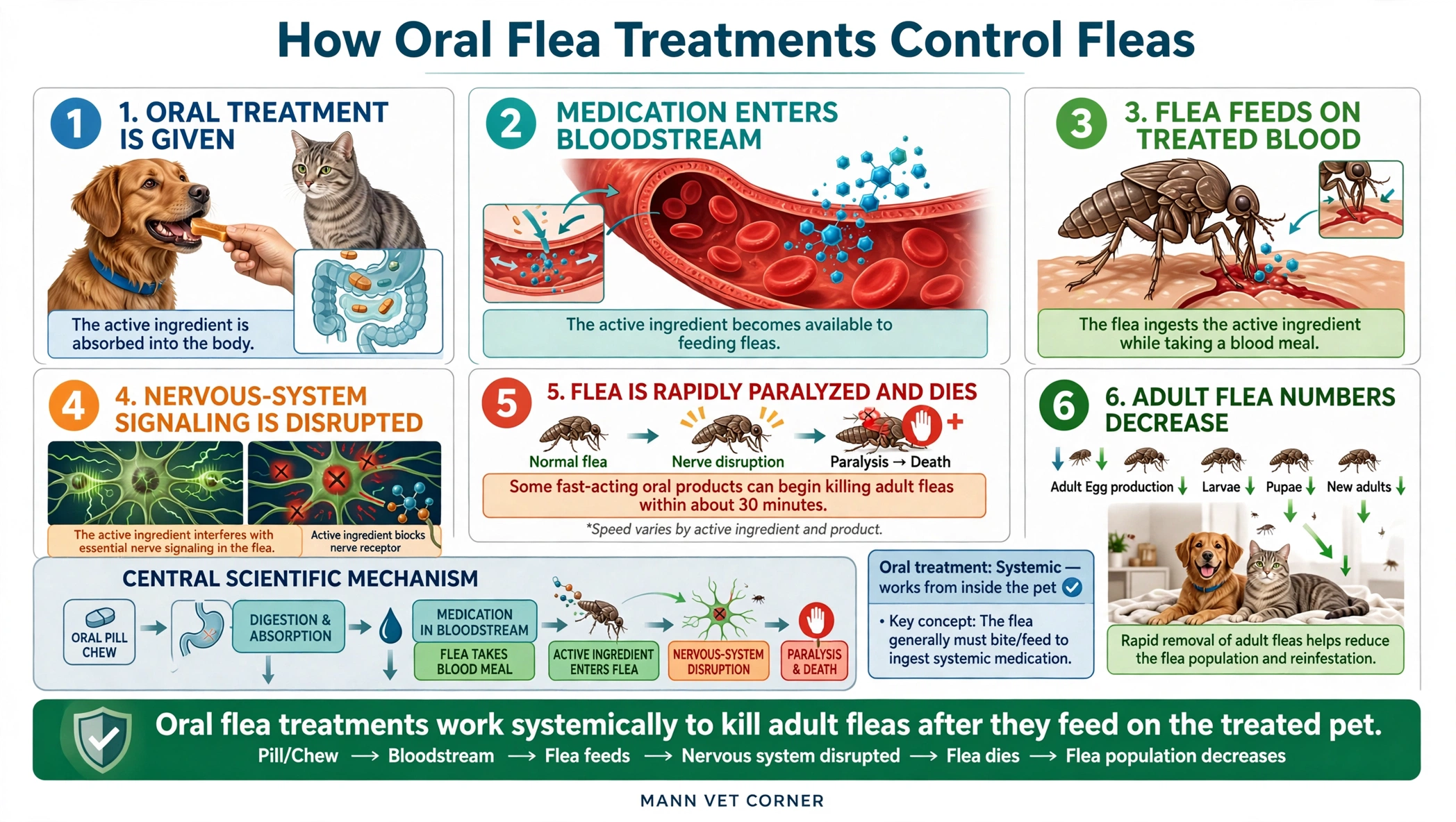
Given as a chewable tablet or pill, these medications enter your pet’s bloodstream and circulate throughout the body. When a flea bites to feed, it ingests the medication. The chemicals rapidly block the flea’s nerve signals, leading to quick paralysis and death. Some fast-acting pills can start killing adult fleas in as little as 30 minutes.
Benefits:
- Fast-acting—some start working in 30 minutes • Works from inside the body, no external application • Not affected by bathing or swimming • Consistent dose every time • Ideal for multi-pet households (no risk of cats licking treated dogs) • Many pet owners prefer the simplicity of a monthly pill
Drawbacks:
- Some pets are difficult to pill • Can be more expensive than topical treatments • Requires that your pet swallows the medication properly • Some pets may experience mild side effects like vomiting or diarrhea
Popular Brands: NexGard, Simparica, Comfortis (spinosad), Capstar (nitenpyram)
3. Insect Growth Regulators (IGRs)
How They Work:
IGRs are often added to spot-on treatments or home sprays. They don’t kill adult fleas directly. Instead, they work by mimicking insect hormones to disrupt the flea life cycle. They stop eggs from hatching and prevent larvae from forming a hard outer shell (exoskeleton), effectively stopping the next generation from developing. This breaks the cycle and prevents future infestations.
Benefits:
- Prevents future infestations by stopping egg and larvae development • Works on all life stages (eggs, larvae, pupae) • Non-toxic to mammals and birds • Often used in combination with adult flea killers for complete control • Breaks the reproduction cycle with a single application
Drawbacks:
- Doesn’t kill adult fleas—must be combined with other treatments • Takes longer to see results (needs to prevent egg hatching) • Requires environmental treatment (home spray) for complete control
Common IGR Ingredients: Pyrethrins, methoprene, pyrethroids

Flea Treatment Comparison Table
| Treatment Type | How It Works | Speed of Action | Duration |
| Topical Spot-On | Spreads through skin oils; kills on contact | 24-48 hours | 4 weeks |
| Oral Medications | Enters bloodstream; kills when flea bites | 30 minutes-2 hours | 4-12 weeks (varies) |
| IGRs (Growth Regulators) | Disrupts egg/larvae development; prevents reproduction | 3-7 days (eggs don’t hatch) | 4-8 weeks |
| Injectable (Long-Acting) | Systemic injection; bloodborne protection | 2-7 days | 6-12 months |
Choosing the Right Flea Treatment for Your Pet
The best flea treatment depends on several factors:
Consider Your Pet’s Age and Health
- Puppies and kittens under 8 weeks: Talk to your vet; some treatments aren’t safe for young animals • Senior pets or those with health conditions: Oral medications may be safer if skin sensitivity is a concern • Pregnant or nursing pets: Avoid certain active ingredients; consult your veterinarian
Think About Your Lifestyle
- Active swimmers: Avoid topical treatments that wash off; choose oral or waterproof formulas • Hard-to-pill pets: Topical treatments or chewables with flavoring work better • Indoor cats around dogs: Topical treatments can transfer; use oral instead • Frequent bathers: Oral treatments maintain consistent protection regardless of bathing
Evaluate Your Budget
- Budget-friendly: Older topical treatments like Advantage II (around $20-30/dose) • Mid-range: Prescription oral medications like NexGard ($15-25/dose) • Premium: Newer long-acting injectables that last 6-12 months ($200-400)
Consider Your Environment
- Mild climates with year-round flea risk: Year-round prevention is essential • Seasonal infestations: Preventive treatment during warm months (typically April-November) • Outdoor pets or farms: Combination of pet treatment + environmental control needed • Multi-pet households: Consistency matters; everyone needs the same prevention schedule
Complete Flea Control: Beyond Just Treating Your Pet
Treating only your pet isn’t enough for complete flea control. Fleas spend only 5% of their life on animals—95% live in your home, yard, and environment. A comprehensive approach includes:
Home Treatment
- Vacuum regularly (at least 2-3 times per week) to remove eggs and larvae • Wash all pet bedding weekly in hot water • Use home flea sprays or foggers with IGRs for severe infestations • Clean hard floors with appropriate disinfectants • Treat upholstered furniture where pets rest
Yard Treatment
- Keep grass trimmed short—fleas thrive in tall vegetation • Remove outdoor debris where fleas can hide • Use yard sprays or diatomaceous earth in high-traffic areas • Control wildlife (raccoons, opossums) that bring fleas to your property
Pet Hygiene
- Regular brushing to check for fleas and remove debris • Monthly flea baths with flea-killing shampoo during peak season • Inspect ears and skin folds where fleas hide • Monitor for signs of flea allergy dermatitis (excessive scratching, red skin, hair loss)
Common Flea Treatment Mistakes and How to Avoid Them
Mistake #1: Stopping Treatment Too Early
You see fewer scratches after one treatment and assume the problem is solved. However, a single treatment only kills adult fleas on your pet—it won’t stop eggs and larvae developing in your home. Continue monthly treatments year-round (or seasonally, depending on your climate) and treat your home thoroughly.
Mistake #2: Using the Wrong Dosage
Flea treatments are dosed by weight. Using a treatment designed for a 50-lb dog on a 20-lb dog can cause overdose problems, while underdosing wastes money and leaves fleas alive. Always follow package instructions based on your pet’s current weight.
Mistake #3: Mixing Treatments
Combining topical and oral flea treatments, or using multiple products without veterinary approval, can lead to overdosing and serious side effects. Stick to one primary treatment as prescribed by your vet.
Mistake #4: Forgetting About Other Pets
In multi-pet households, treating only one dog won’t work. Fleas transfer between animals, so all pets must be on the same prevention schedule. One untreated cat or outdoor pet can reinfest your entire household.
Mistake #5: Ignoring Environmental Treatment
Treating your pet without treating your home is like mopping floors while leaving the sink running. Vacuuming, washing bedding, and using IGR sprays indoors is crucial for breaking the flea cycle.
Frequently Asked Questions About Flea Treatment and Control
Q1: How fast do flea treatments work?
Speed depends on the type. Oral medications like NexGard can begin killing fleas in 30 minutes. Topical treatments typically start working within 24 hours. IGRs don’t kill adults but prevent eggs from hatching within 3-7 days. Environmental treatment may take 2-3 weeks to eliminate all life stages from your home.
Q2: Can I use flea treatment on pregnant or nursing pets?
Always consult your veterinarian before treating pregnant or nursing pets. Some active ingredients are safe during pregnancy and lactation, but others are not. Your vet will recommend treatments that protect your pet without harming developing puppies or kittens or contaminating breast milk.
Q3: Why do some pets keep getting fleas even after treatment?
Several reasons: (1) Not treating all pets in the household, (2) Stopping treatment too early or skipping months, (3) Severe environmental infestation requiring home treatment, (4) Re-exposure from wildlife or other animals, (5) Using the wrong dosage for your pet’s weight, (6) Treatment washing off due to frequent bathing or swimming.
Q4: Are flea treatments safe for cats and dogs?
Most modern flea treatments are safe when used as directed. However, some products designed for dogs are toxic to cats. Never apply dog flea treatment to a cat. Always use species-appropriate products and follow weight-based dosing. Discuss any health concerns with your vet before starting treatment.
Q5: Do I need to treat my home if I’m using a monthly flea prevention?
Yes. Even with monthly pet treatment, environmental control is crucial. Fleas spend 95% of their life off your pet (in your home and yard). Vacuum regularly, wash pet bedding, and consider using IGR sprays indoors during peak flea season for complete control.
Q6: What’s the difference between flea prevention and flea treatment?
Flea prevention is given monthly year-round to stop fleas before infestation occurs. Flea treatment is used when fleas are already present on your pet or in your home. Ideally, consistent prevention eliminates the need for treatment—an ounce of prevention beats a pound of cure.
Final Thoughts: Taking Control of Fleas
Fleas don’t have to ruin your pet’s comfort or your peace of mind. With modern treatments that kill adult fleas in 30 minutes and break the reproduction cycle with growth regulators, controlling fleas is more effective than ever. The key is choosing the right combination of treatments for your pet, your lifestyle, and your environment—and sticking with it consistently.
Talk to your veterinarian about the best year-round prevention plan for your pet. They’ll consider your pet’s age, health, and lifestyle to recommend the most effective option. With consistent preventive treatment and environmental control, you can keep your pet flea-free and comfortable all year long.





Leave a Reply