


Quick Answer
The lone star tick (Amblyomma americanum) is an aggressive, human-biting hard tick found across the eastern, southeastern, and midwestern United States. Recognized by a distinctive white spot on the backs of females, lone star ticks transmit serious illnesses including ehrlichiosis, alpha-gal syndrome (a red-meat allergy), STARI, tularemia, and Heartland virus. Unlike many ticks, they actively hunt hosts rather than waiting passively, earning the nickname ‘hunter ticks.’ Prevention relies on DEET-based skin repellents, permethrin-treated clothing, tick checks after outdoor activity, and habitat management. If bitten, remove the tick carefully with fine-tipped tweezers without twisting, then monitor for symptoms for up to two weeks.
Introduction
Lone star ticks represent one of North America’s most significant public health and agricultural concerns. With their distinctive aggressive hunting behavior and association with multiple serious pathogens, understanding lone star ticks has become essential for anyone spending time outdoors from livestock producers to hikers, farmers to pet owners.
What sets lone star ticks apart from other tick species is their active, host-seeking behavior. Rather than waiting passively for a host to brush against them, lone star ticks actively crawl toward movement and CO2 signatures, making human contact more likely than with less aggressive species. This behavior, combined with their expanding geographic range northward due to climate change and shifting deer populations, has positioned them at the center of emerging disease concerns.
This comprehensive guide covers everything you need to know about lone star ticks: how to identify them at every life stage, the diseases they transmit, prevention strategies tailored to different environments, proper removal techniques, and emerging public health trends.
Lone Star Tick Identification: Recognizing All Life Stages
Accurate tick identification is the first step in prevention and risk assessment. The lone star tick has distinct characteristics at each life stage, though the signature white lone star marking on females makes adult identification straightforward.
Adult Female Lone Star Ticks
The adult female is the most recognizable stage, featuring a reddish-brown to mahogany coloration with a single prominent white or cream-colored spot (or sometimes a few small spots) on the dorsal shield, the technical term for the hard, shield-like covering on the tick’s back. This distinctive marking is why the species earned its common name.
- Size: 4–6 mm unfed; up to 16 mm when fully engorged
- Body shape: Oval with slightly rounded posterior
- Leg structure: Eight legs with smooth appearance (no visible segmentation)
Adult Male Lone Star Ticks
Males are smaller and often mistaken for different species by untrained observers. Instead of a single white spot, males display multiple white streaks or spots distributed along the margins and central area of the dorsal shield, giving them a speckled appearance.
- Size: 2–5 mm (smaller than females)
- Color: Dark brown to blackish with white markings
- Ventral surface: Often displays white spots underneath
Immature Stages: Larvae and Nymphs
Larvae and nymphs are responsible for a significant portion of human tick encounters because they’re smaller, more easily overlooked, and incredibly numerous in peak season.
- Larvae: 0.5–1 mm, appear as tiny moving specks, reddish-brown color, six legs (not eight)
- Nymphs: 1–3 mm, light tan to reddish-brown, eight legs, often mistaken for other small species
Key Identification Tip: Among the most common hard ticks (Ixodes, Dermacentor, Rhipicephalus, and Amblyomma species), only adult female lone star ticks have a single white spot in the center of the dorsal shield. This single distinguishing feature can help non-experts make a confident identification.

Habitat, Behavior, and Geographic Distribution
Understanding where lone star ticks live and how they behave is crucial for avoiding encounters and assessing your personal risk.
Preferred Habitats
Lone star ticks thrive in diverse habitat types but show a clear preference for areas with abundant wildlife, particularly white-tailed deer. Their ideal environments include:
- Wooded areas and deciduous forests
- Thick brush and understory vegetation
- Ecotones (transitional zones between forests and grasslands)
- Cleared trails where deer movement concentrates
- Agricultural borders where pastures meet wooded areas
Hunter Tick Behavior
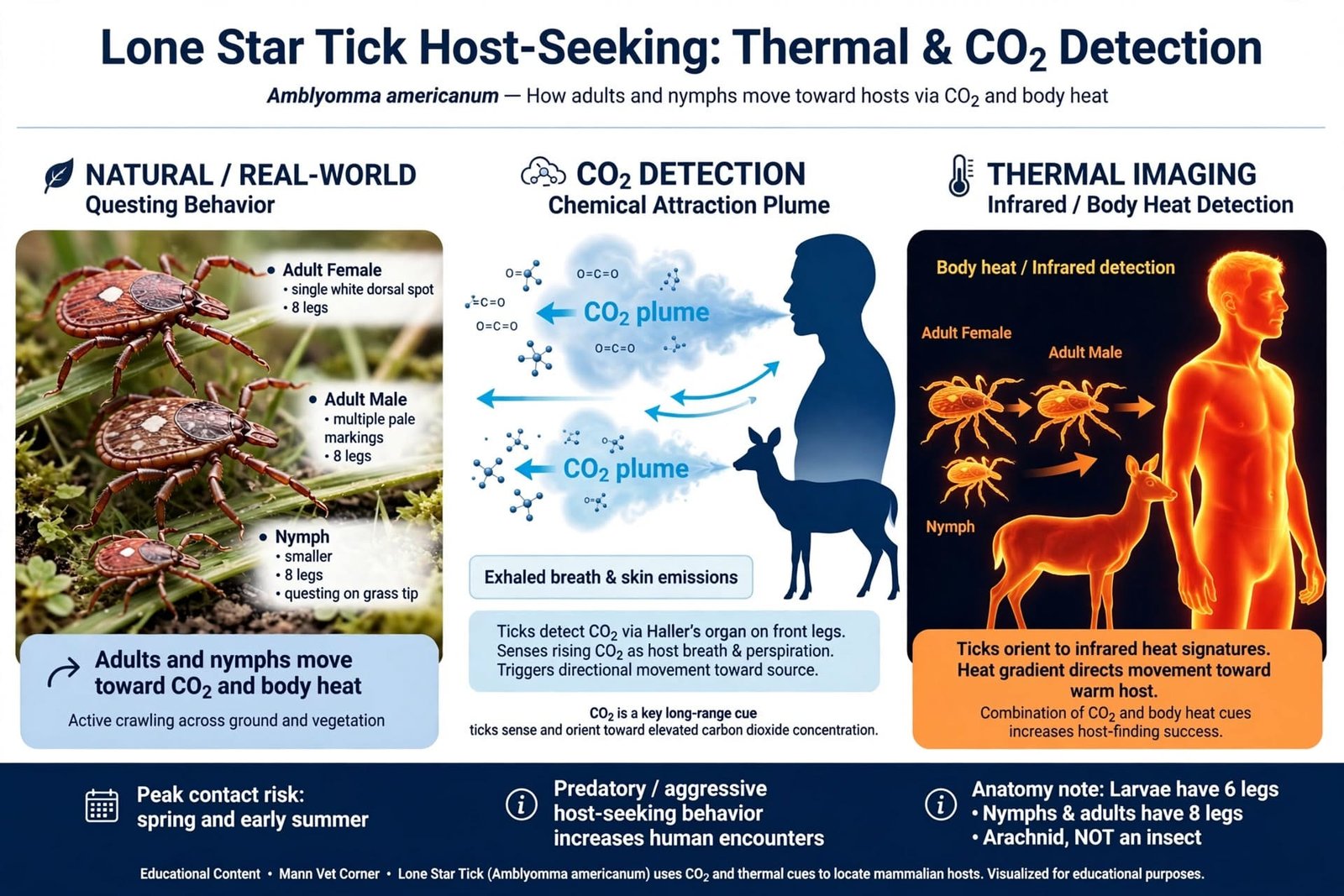
The aggressive behavior of lone star ticks distinguishes them from many other species. Rather than relying on the sit-and-wait strategy common to ticks like the blacklegged tick (Ixodes scapularis), lone star ticks actively hunt their hosts.
Adults and nymphs move toward sources of CO2 and body heat, actively crawling across ground and vegetation in search of a suitable host. This predatory behavior means lone star ticks are more likely to contact humans, especially during peak activity periods in spring and early summer.
Primary and Secondary Hosts
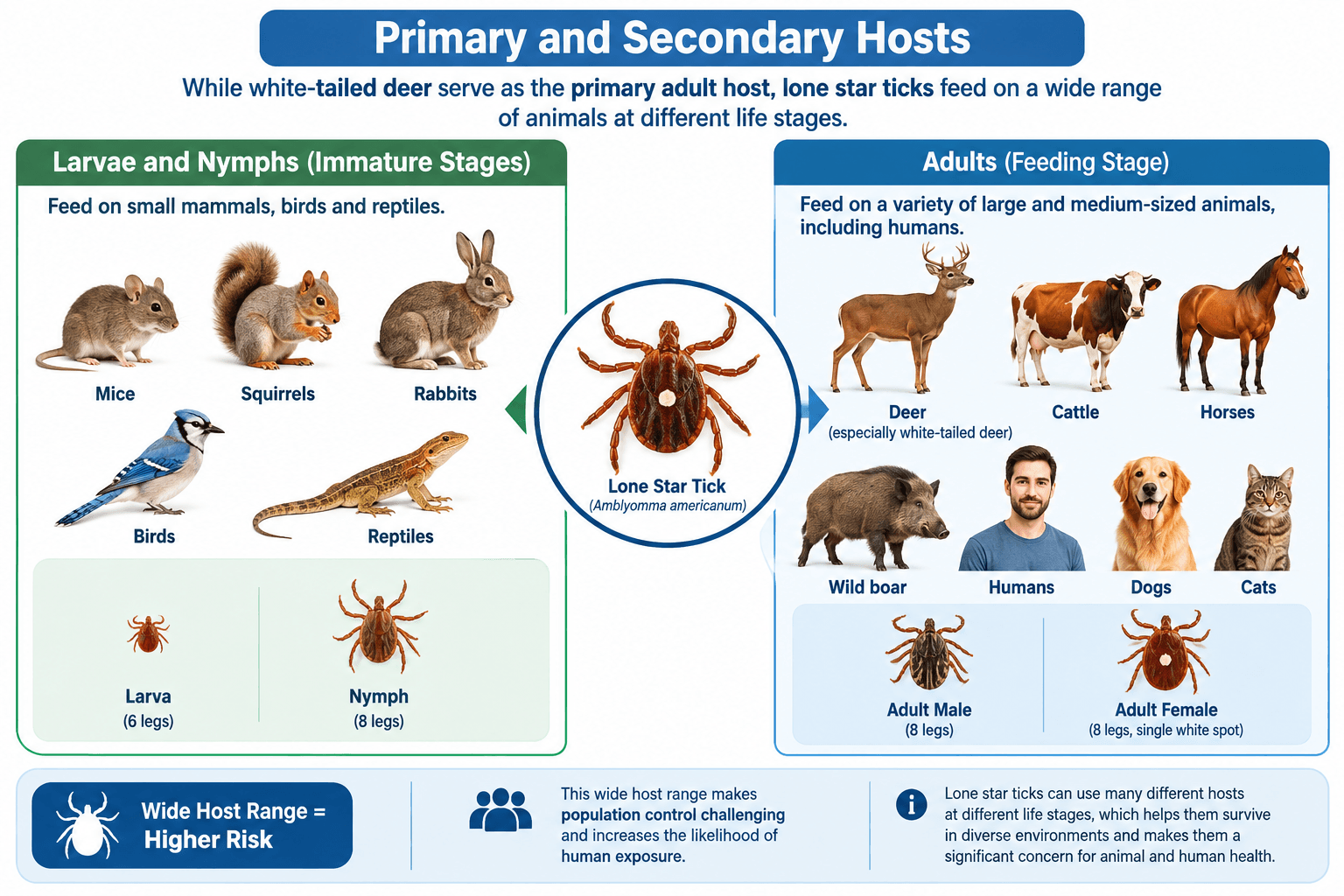
While white-tailed deer serve as the primary adult host, lone star ticks feed on a wide range of animals at different life stages:
- Larvae and nymphs: Small mammals (mice, squirrels, rabbits), birds, reptiles
- Adults: Deer, cattle, horses, wild boar, humans, dogs, cats
This wide host range makes population control challenging and increases the likelihood of human exposure.
Geographic Distribution and Expansion
Lone star ticks have been documented from the Atlantic Coast west to the Central Plains, and from the Great Lakes region south to Florida and Texas. Historically, their range was concentrated in the Southeast and Mid-Atlantic states.
However, recent decades have shown a consistent northward expansion. Sightings have been reported in previously tick-free areas including Wisconsin, Minnesota, and the Upper Peninsula of Michigan. This range expansion is driven by:
- Rising average temperatures allowing survival in cooler climates
- Increased white-tailed deer populations
- Greater human recreational activity in tick-prone areas
- Potential transport via migrating birds and livestock
Life Cycle Timeline
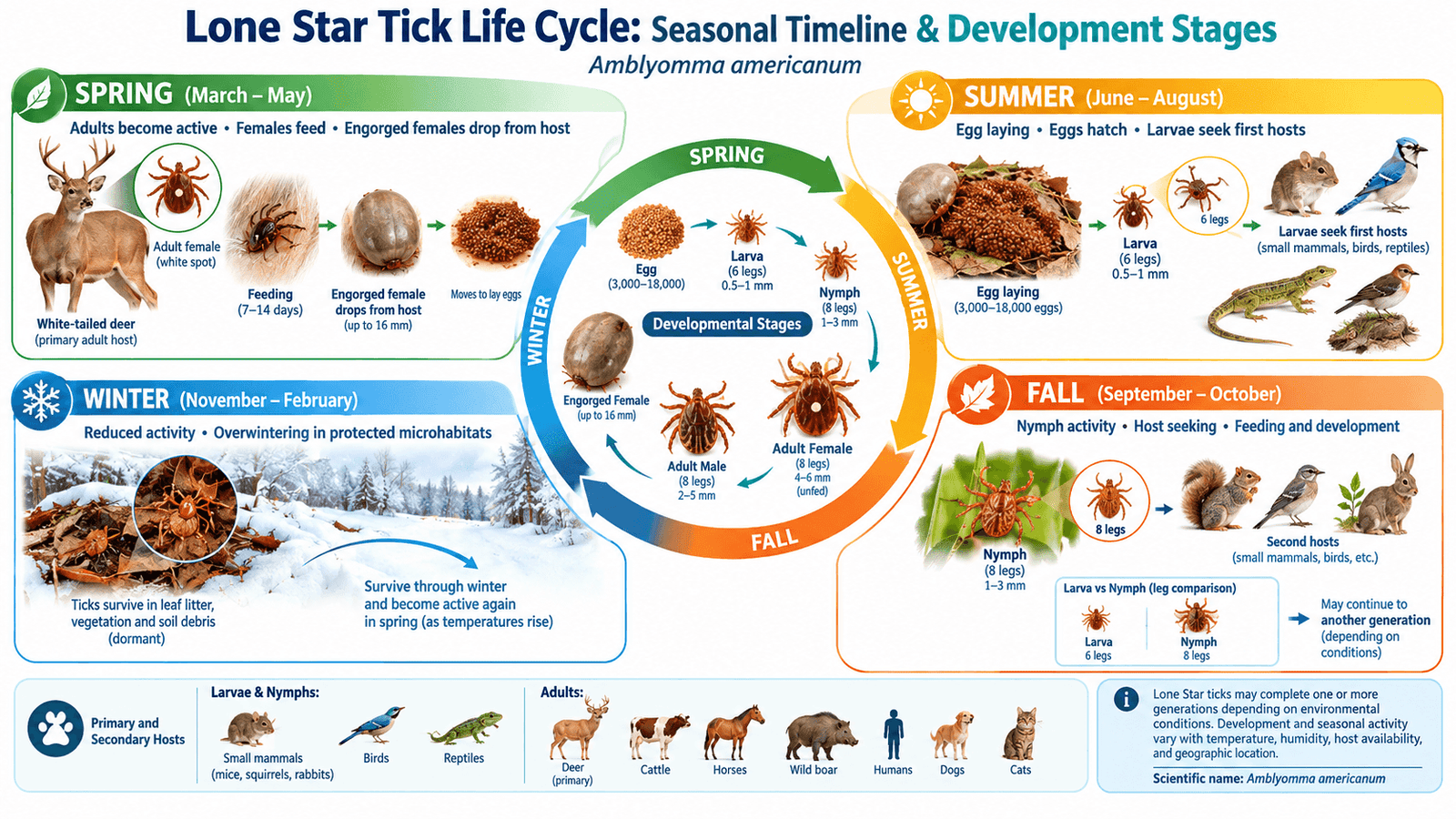
Lone star ticks typically complete one to two generations per year depending on climate. The cycle progresses as follows:
- Spring (March–May): Unfed female ticks become active, attach to hosts (especially white-tailed deer), feed for 7–14 days, then drop to lay eggs.
- Summer (June–August): Females lay 3,000–18,000 eggs in protected locations; larvae emerge and begin searching for first hosts (small mammals, birds).
- Fall (September–October): Nymphs become active and seek second hosts; some ticks attempt a second generation.
- Winter (November–February): Ticks dormant; some larvae and nymphs overwinter in protected microhabitats.
Diseases Transmitted by Lone Star Ticks
Unlike blacklegged ticks, which are notorious for transmitting Lyme disease, lone star ticks are responsible for a different suite of pathogens. Some of these diseases are well-established; others have only recently been recognized.
| Disease | Pathogen | Symptoms Onset | Key Symptoms |
| Ehrlichiosis | Ehrlichia chaffeensis, E. ewingii | 5-21 days | Fever, headache, muscle pain, nausea, rash (sometimes) |
| Alpha-Gal Syndrome (AGS) | Tick saliva antigens (alpha-gal) | 2-6 hours after eating | Hives, itching, angioedema, anaphylaxis; delayed reaction |
| STARI | Unknown (possibly Borrelia lonestari) | 3-30 days | Expanding rash similar to Lyme disease, fever (mild) |
| Tularemia | Francisella tularensis | 3-5 days | High fever, ulcer at bite site, swollen lymph nodes |
| Heartland Virus | Phlebovirus | 5-14 days | Fever, fatigue, low platelet/WBC, bleeding risk |
| Bourbon Virus | Thogotovirus | 7-10 days | High fever, severe headache, joint/muscle pain, rash |
Ehrlichiosis: The Most Common Transmission
Ehrlichiosis is the most frequently reported lone star tick-borne illness. Caused by gram-negative bacteria (Ehrlichia chaffeensis or E. ewingii), ehrlichiosis affects white blood cells and can range from mild to severe.
Symptoms typically appear 5–21 days after infection and include fever, severe headache, muscle aches, nausea,vomiting, and sometimes a rash. Most cases resolve with early antibiotic treatment (typically doxycycline), but untreated cases can progress to serious complications including kidney failure, respiratory distress, and sepsis.
Alpha-Gal Syndrome: The Meat Allergy
Alpha-gal syndrome (AGS) represents one of the most distinctive and concerning outcomes of lone star tick bites. This delayed hypersensitivity reaction develops when tick saliva triggers an immune response to alpha-gal, a sugar found in mammalian meat.
How It Develops: When a lone star tick feeds, its saliva contains alpha-gal molecules. In susceptible individuals, this triggers an IgE immune response. Upon subsequent consumption of mammalian meat (beef, pork, lamb, deer, even gelatin), the immune system recognizes the alpha-gal present in the meat and mounts an allergic response.
Reaction Timeline: Unlike typical food allergies, AGS reactions are delayed, typically occurring 2–6 hours after consuming red meat. This delay can make diagnosis challenging, as the connection between the meal and symptoms may not be immediately obvious.
Symptom Severity: Reactions range from mild (localized itching and hives) to severe (anaphylaxis requiring emergency epinephrine). Severity may vary based on the amount of meat consumed, the source of the meat, and individual immune factors.
Management: There is no cure for AGS. Management relies entirely on strict avoidance of alpha-gal-containing foods and carrying antihistamines and epinephrine auto-injectors for emergencies. Over time, alpha-gal antibody levels may decrease, and some individuals experience remission.
Prevalence: AGS cases in the United States have risen sharply since the 2000s, with particularly high prevalence in the Southeast where lone star ticks are abundant. It is estimated that hundreds of thousands of Americans may be affected.
Southern Tick-Associated Rash Illness (STARI)
STARI presents a rash very similar to Lyme disease but is transmitted by lone star ticks (and occasionally other species) rather than blacklegged ticks. The causative pathogen remains uncertain, though Borrelia lonestari has been implicated. STARI cases are less common than Lyme disease but are increasing in the Southeast and Mid-Atlantic regions.
Tularemia, Heartland Virus and Bourbon Virus
While less common than ehrlichiosis, lone star ticks also transmit tularemia (rabbit fever), Heartland virus, and Bourbon virus. Tularemia is particularly concerning because it’s highly infectious and can produce multiple severe clinical presentations. Heartland virus and Bourbon virus are newer discoveries and remain uncommon, but several deaths have been linked to these pathogens.
Prevention Strategies: Avoiding Lone Star Tick Bites
Preventing lone star tick bites requires a multi-layered approach. Because these ticks are aggressive hunters and increasingly common, prevention should be a priority for anyone spending time outdoors in affected regions.
Clothing and Physical Barriers
Your first line of defense is appropriate clothing and physical barriers:
- Wear long sleeves and long pants in tick-prone areas
- Tuck pants into boots or socks to eliminate gaps where ticks can crawl onto skin
- Choose light-colored clothing to spot ticks more easily
- Wear a hat if moving through tall vegetation or brush
Repellents: DEET and Permethrin
Chemical repellents are highly effective when used properly:
DEET-Based Repellents (for exposed skin):
- Apply insect repellents containing 20–30% DEET to exposed skin
- Reapply every 2–3 hours or after swimming
- Avoid applying DEET to broken skin or under clothing
- DEET is safe for children over 2 months when used as directed
Permethrin Treatments (for clothing and gear):
- Apply permethrin to clothing, boots, camping gear, and mosquito netting
- Permethrin kills ticks on contact and can last through multiple washings
- Allow treated clothing to dry completely before wearing
- Never apply permethrin directly to skin; it is for clothing only
Behavioral Prevention
- Stay on cleared, well-maintained trails to minimize contact with brush and vegetation
- Avoid hiking during peak tick season (late spring through early fall)
- Avoid handling wildlife or wearing fur/skin products from wild animals
- Keep pets on tick-prevention medications and inspect them regularly
Post-Outdoor Tick Checks
A thorough tick check within 2 hours of returning indoors can significantly reduce disease risk:
- Inspect all areas of skin, paying special attention to warm, moist areas (armpits, groin, behind ears, scalp)
- Run your hands over your body to feel for small bumps
- Check under and behind ears, the nape of the neck, and the hairline
- Place unwashed outdoor clothing directly into the dryer on high heat for 10 minutes to kill ticks
- Shower and wash hair after outdoor activity
Property and Habitat Management
For homeowners in high-risk areas:
- Maintain trim grass (less than 3 inches) in frequently used areas
- Remove leaf litter and clear dense brush around the perimeter of the property
- Create a 6–10 foot tick barrier between wooded areas and the home using mulch or gravel
- Reduce deer populations through fencing or wildlife management (consult local wildlife agencies)
- Treat pets and wildlife with appropriate acaricide products under veterinary or wildlife professional guidance
How to Safely Remove a Lone Star Tick
If you discover an attached tick, quick and correct removal is essential. Improper removal can increase disease transmission risk and cause infection.
Step-by-Step Removal Process
1. Prepare the area
- Clean the bite area gently with rubbing alcohol, antiseptic, or soap and water
2. Use proper tools
- Use fine-tipped tweezers or a tick removal tool (avoid bare fingers)
3. Grasp the tick securely
- Grasp the tick as close to the skin as possible, targeting the tick’s mouthparts
- Do NOT pinch the tick’s abdomen; this can cause regurgitation of infected saliva into the bite wound
4. Pull with steady, even pressure
- Pull upward and outward with smooth, steady pressure for 20–30 seconds
- DO NOT twist or jerk the tick
- DO NOT use heat, petroleum jelly, nail polish, or other substances to force removal
5. Dispose of the tick
- Place the tick in rubbing alcohol or flush it down the toilet
- Do NOT crush the tick with bare hands or store it in a sealed container (it may remain alive)
6. Disinfect the bite
- Wash the bite area thoroughly with soap and water or apply rubbing alcohol
- Apply antiseptic cream if desired
- Do NOT scratch the bite; keep it clean
What NOT to Do
- Do NOT use a lit cigarette or match (risk of burns; ineffective removal)
- Do NOT apply petroleum jelly or nail polish (suffocates but doesn’t remove; increases regurgitation)
- Do NOT squeeze, crush, or pinch the tick’s body (releases infected saliva)
- Do NOT jerk or twist the tick (can break off the mouthparts, leaving them embedded)
- Do NOT handle the tick with bare hands (exposes you to pathogens)
Post-Removal Monitoring
After removing a tick, monitor yourself for symptoms for up to two weeks. Seek medical attention if you experience:
- Fever or chills
- Severe headache or body aches
- Rash or expanding bulls-eye lesion (though rare with lone star ticks)
- Swollen lymph nodes
- Hives, itching, or signs of allergic reaction (especially 2–6 hours after eating meat)
Frequently Asked Questions About Lone Star Ticks
Q1: Do lone star ticks transmit Lyme disease?
A: No. Lyme disease is transmitted by blacklegged ticks (Ixodes scapularis), not lone star ticks. However, lone star ticks do transmit other serious pathogens including ehrlichiosis, alpha-gal syndrome, STARI, tularemia, and Heartland virus. Because STARI produces a rash similar to Lyme disease, some cases may initially be misdiagnosed.
Q2: What is alpha-gal syndrome exactly?
A: Alpha-gal syndrome (AGS) is a delayed hypersensitivity reaction triggered when lone star tick saliva causes your immune system to develop antibodies against alpha-gal, a sugar found in mammalian meat. Upon consuming red meat, this triggers an allergic response that typically appears 2–6 hours after eating. The reaction can range from mild (hives, itching) to severe (anaphylaxis). There is no cure; management requires dietary avoidance.
Q3: Can you get alpha-gal syndrome from a single tick bite?
A: Yes. Although the risk is higher with multiple bites, AGS can develop from a single tick bite. Not all lone star tick bites result in AGS; susceptibility appears to depend on individual immune factors and the amount of alpha-gal introduced.
Q4: How long does a tick need to be attached to transmit disease?
A: For most tick-borne pathogens, attachment time matters. Generally, 24–48 hours of attachment increases transmission risk for many pathogens. However, alpha-gal syndrome can be transmitted through saliva during feeding, which may occur within minutes. This is one reason frequent tick checks are important.
Q5: Are there any treatments for alpha-gal syndrome?
A: Currently, there is no specific medical treatment for AGS. Management is entirely based on dietary avoidance of alpha-gal-containing foods and carrying emergency medications (antihistamines, epinephrine auto-injectors). Research into desensitization therapies is ongoing, but none are currently approved. In some cases, alpha-gal antibody levels decrease over time, potentially allowing limited meat consumption.
Q6: If I remove a tick correctly, am I guaranteed not to get sick?
A: Proper and quick removal significantly reduces transmission risk for most pathogens, but does not eliminate it entirely, especially for alpha-gal syndrome which can be transmitted via saliva. Rapid removal within the first few hours of attachment is most effective. However, some pathogen transmission can occur even with quick removal, so post-bite monitoring for symptoms is still essential.
Q7: Are there vaccines for lone star tick-borne diseases?
A: There are currently no vaccines for lone star tick-borne diseases such as ehrlichiosis, alpha-gal syndrome, or STARI. Prevention focuses on avoiding tick bites through clothing, repellents, habitat management, and regular tick checks. Vaccines for some other tick-borne diseases (Lyme disease, tick-borne encephalitis) exist in some countries but are not widely available in the United States.
Q8: Can my pet get alpha-gal syndrome?
A: Alpha-gal syndrome is specific to humans. Pets can become infected with the same pathogens that cause ehrlichiosis and other diseases transmitted by lone star ticks, but AGS does not affect animals. However, pets should be kept on tick-prevention medications, as they can transport ticks into the home and can contract other tick-borne diseases.
Q9: What’s the difference between a lone star tick and a blacklegged tick?
A: Key differences include: (1) Appearance: Female lone star ticks have a single white spot; female blacklegged ticks do not. (2) Behavior: Lone star ticks actively hunt hosts; blacklegged ticks are ambush predators. (3) Diseases: Lone star ticks transmit ehrlichiosis and AGS; blacklegged ticks transmit Lyme disease. (4) Geography: Lone star ticks are more prevalent in the South and Southeast; blacklegged ticks are found in the Northeast and Upper Midwest.
Q10: Is the lone star tick population increasing?
A: Yes. Lone star tick populations and their geographic range are both expanding. This expansion is attributed to rising temperatures (allowing survival in cooler regions), increased white-tailed deer populations, expanded human recreational activity, and possibly climate and land-use changes. Cases of lone star tick-borne diseases have increased correspondingly.
Emerging Trends and Public Health Outlook
The lone star tick landscape has changed dramatically over the past two decades. Several key trends are shaping public health responses and research priorities:
Rising Alpha-Gal Syndrome Prevalence
Alpha-gal syndrome cases have exploded since 2000, with thousands of confirmed cases and likely many more undiagnosed. The surge correlates directly with increased lone star tick populations and expanded range. Public awareness has increased substantially following media coverage and celebrity cases.
Northward Range Expansion
Established populations of lone star ticks now exist in Wisconsin, Minnesota, and other northern states where they were virtually absent 20 years ago. This expansion threatens to bring tick-borne pathogens to populations with no prior exposure or awareness.
Recognition of Newly Transmitted Pathogens
Heartland virus (first identified in 2009) and Bourbon virus (identified in 2015) represent newly recognized lone star tick-borne pathogens. As surveillance improves, additional pathogens may be discovered.
Increased Research and Surveillance
The CDC and state health departments have expanded surveillance for lone star tick-borne diseases. Improved diagnostics and public reporting have led to better understanding of disease distribution and prevalence.
Conclusion: Managing Lone Star Tick Risk
The lone star tick (Amblyomma americanum) represents a significant and growing public health concern. Its aggressive host-seeking behavior, expanding geographic range, and association with multiple serious pathogens, particularly alpha-gal syndrome, make it a tick species that demands attention from anyone spending time outdoors in affected regions.
However, the risk can be substantially mitigated through a combination of preventive measures: appropriate clothing, DEET and permethrin treatments, behavioral modifications, regular tick checks, and prompt proper removal if bitten. Understanding tick identification, disease transmission, and the signs and symptoms of tick-borne illness empowers individuals to protect themselves, their families, and their livestock.
As climate change continues to expand tick ranges and human populations encroach further into wildlife habitat, lone star tick-borne diseases are likely to remain a public health priority. Staying informed, practicing prevention, and seeking prompt medical evaluation for symptoms are your best defenses against lone star tick-borne illness.





Leave a Reply