


Quick Answer
If your cat has an ear infection, you’ll need a veterinary diagnosis first—ear problems can stem from infections, mites, allergies, or foreign objects. Vet-prescribed treatments typically include ear drops, oral antibiotics, or topical medications. While home care supports recovery, most infections require professional treatment within 48-72 hours to prevent complications like hearing loss.
Table of Contents
- Cat Ear Infection Symptoms
- Common Causes of Cat Ear Problems
- Treat Cat Ear Infections
- Can You Treat Cat Ear Infections at Home?
- Cat Ear Infection Treatment Costs
- Emergency Warning Signs
- Prevention Strategies
- FAQs
Cat Ear Infection Symptoms : What Pet Parents Should Watch For
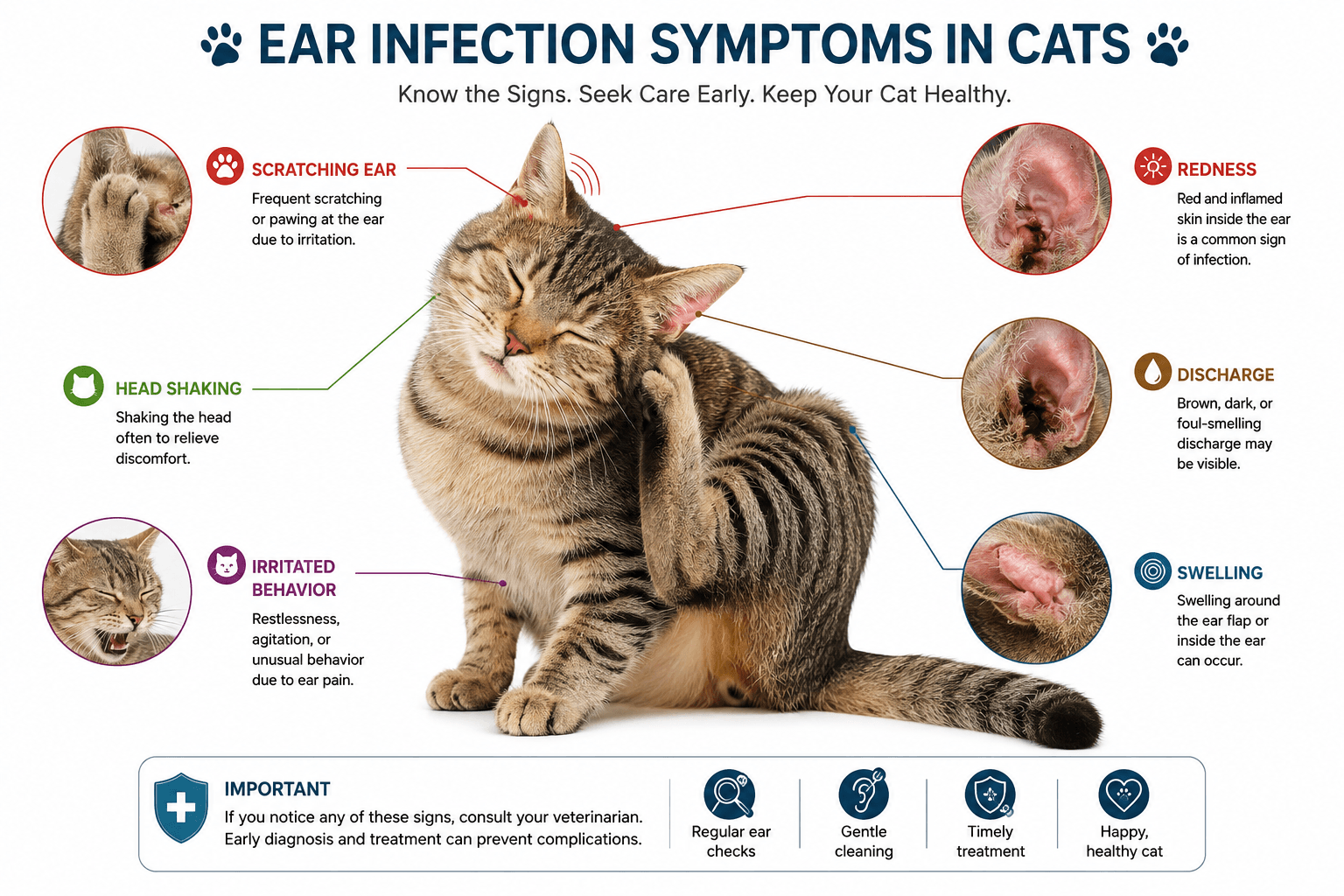
If you’ve noticed your cat shaking their head repeatedly, scratching at their ears constantly, or acting unusually withdrawn, they may have an ear infection or related ear problem.
Common Symptoms of Cat Ear Infections
Behavioural signs:
- Head shaking (especially after eating or sleeping)
- Excessive ear scratching or pawing
- Rubbing ears against furniture or your hands
- Holding head tilted to one side
- Sensitivity when ears are touched
- Hiding or decreased social interaction
- Signs of discomfort or pain
Physical signs you can see:
- Dark brown or yellowish discharge inside the ear
- Red or inflamed ear canal
- Swelling of the ear flap or inner ear
- Crusty or scabby areas around or inside the ear
- Hair loss around the ears (from excessive scratching)
- Foul or unpleasant ear odour
- Visible debris or “coffee grounds” appearance (suggests ear mites)
Systemic symptoms (affecting whole body):
- Loss of appetite
- Lethargy or unusual tiredness
- Balance problems or stumbling
- Head tilt that doesn’t resolve
- Hearing loss (in severe cases)
Important note: Cats show pain differently than dogs. Many cats hide symptoms until the infection becomes severe. If you notice any ear scratching lasting more than 2-3 days, schedule a vet appointment.
What Causes Cat Ear Infections? Understanding the Root Causes
Cat ear problems can develop from various causes, and identifying the underlying issue is critical for effective treatment. Unlike dogs, cats develop ear infections less frequently—but when they do, they’re often more serious.
Infectious Causes (Require Treatment)
Bacterial ear infections (50-60% of feline ear cases)
- Staphylococcus and Streptococcus bacteria
- Pseudomonas aeruginosa (common in chronic infections)
- Often develop after initial inflammation from allergies or mites
- Cause thick, purulent discharge with foul odour
- More common in cats over 5 years old
Yeast infections (30-40% of cases)
- Malassezia pachydermatis is the most common culprit
- Usually develops secondary to allergies
- Causes waxy, yellowish discharge
- Often itchier than bacterial infections
- Can occur alongside bacterial infections
Parasitic infections (Ear mites)
- Otodectes cynotis (ear mite)
- Most common in kittens and outdoor cats
- Creates dark, crumbly “coffee ground” debris
- Intensely itchy
- Highly contagious to other cats in the household
- Less common in adult indoor cats but can affect cats of any age
Fungal infections
- Ringworm (Malassezia or dermatophytes) on ear tips
- Causes red, crusty lesions
- Rare but zoonotic (can spread to humans)
Non-Infectious Causes
Allergies (very common underlying cause)
- Food allergies (often to chicken, beef, dairy, or wheat)
- Environmental allergens (pollen, dust mites, mould)
- Contact allergies (ear mite predisposition)
- Allergies cause inflammation that allows secondary bacterial/yeast infections
- Up to 80% of chronic cat ear infections have allergy as root cause
Physical causes:
- Foreign objects (grass seeds, insects, debris)
- Hair accumulation in ear canal (long-haired breeds)
- Ear polyps (benign but problematic growths)
- Hematomas (blood pocket from excessive scratching)
- Earwax buildup
Serious but rare causes:
- Squamous cell carcinoma (skin cancer on ear)
- Ceruminous gland adenocarcinoma (wax-producing gland cancer)
- Chronic otitis leading to narrowed ear canal
Why Cats Get Ear Infections More Often Than You’d Think
Cats have an L-shaped ear canal, which:
- Traps moisture and debris more easily than dogs
- Creates a warm, dark environment ideal for yeast/bacteria growth
- Makes self-cleaning more difficult
How to Treat Cat Ear Infections: Your Complete Treatment Guide
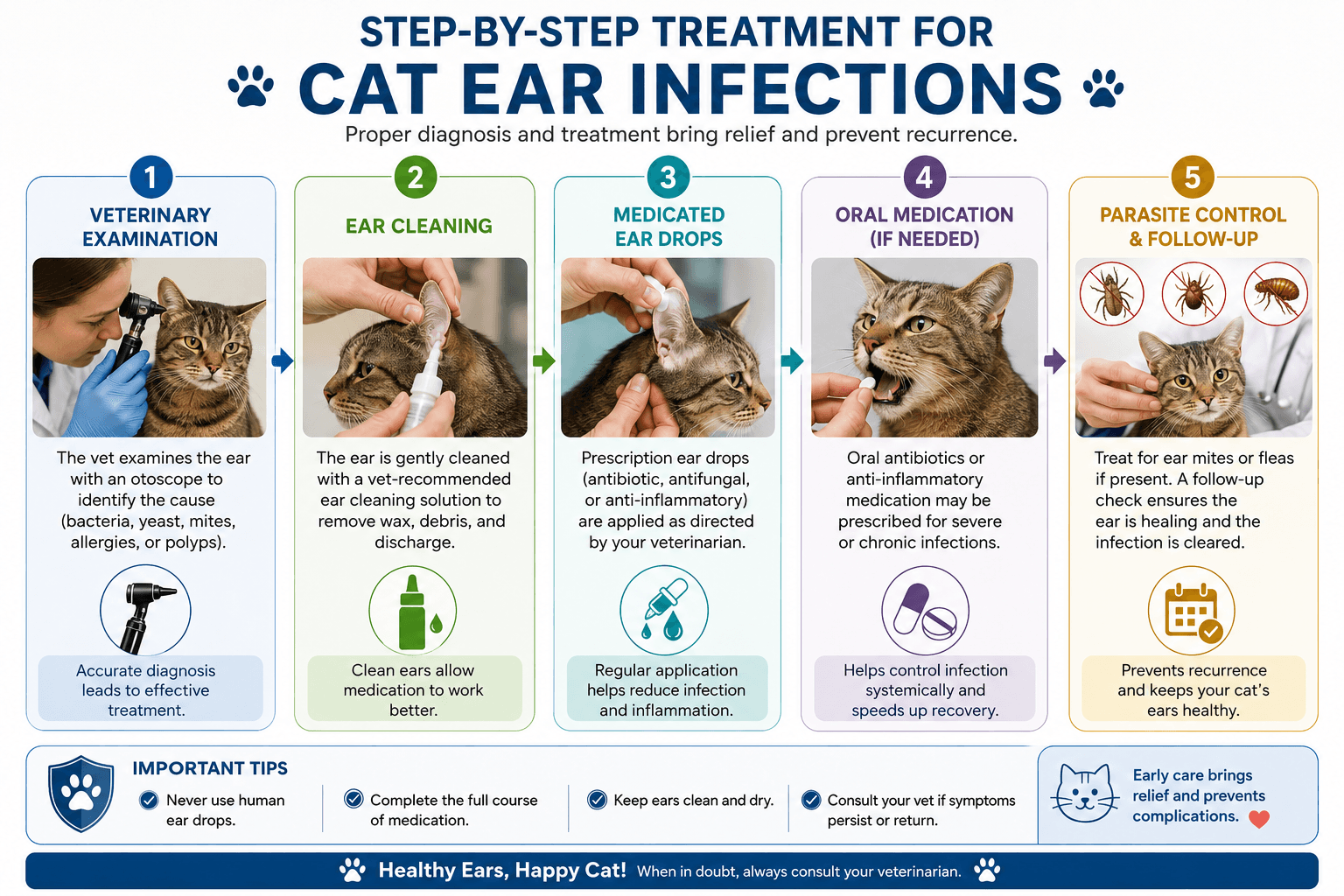
Step 1: Get a Proper Veterinary Diagnosis (Within 48 Hours)
This is non-negotiable. Treating the wrong condition wastes time and money, and can worsen the infection.
What your vet will do:
- Examine the ear canal with an otoscope
- Take a sample (swab) of ear discharge
- Perform cytology (microscopic examination) to identify bacteria, yeast, or mites
- Possibly recommend culture & sensitivity testing ($40-80) if infection is severe or recurring
- Check for underlying causes (allergies, polyps, etc.)
Cost expectation: $75-150 for initial diagnosis and exam
Step 2: Vet-Prescribed Treatment Options
Treatment depends entirely on what’s causing the problem:
For Bacterial Infections
Topical antibiotics (first-line treatment)
- Neomycin/polymyxin B/hydrocortisone ear drops (Cortisporin, Panalog)
- Applied 2-3 times daily for 7-14 days
- Cost: $15-30
- Best for: Uncomplicated bacterial infections
- Advantage: Works directly in the ear canal; minimal systemic absorption
Oral antibiotics (for severe or spreading infections)
- Amoxicillin-clavulanic acid (Clavamox): 125-250mg twice daily, 10-14 days
- Doxycycline: for Pseudomonas infections
- Cost: $20-50 for treatment course
- Duration: Usually 10-14 days, but sometimes longer
- Important: Complete full course even if symptoms resolve
Ear cleaning
- Veterinary ear cleaners (Virbac Epi-Otic, Otomax) dissolve debris
- Used before applying medication
- Cost: $10-25 per bottle
- How often: 1-2 times daily initially, then as directed
For Yeast Infections
Topical antifungals (most effective)
- Terbinafine or miconazole ear drops
- Enilconazole solution (Imaverol)
- Applied once daily for 7-10 days
- Cost: $20-40
- Often combined with hydrocortisone to reduce itching
Oral antifungals (for severe/systemic yeast)
- Itraconazole (Sporanox): 5mg/kg once or twice daily
- Fluconazole: alternative option
- Cost: $30-80 for treatment course
- Duration: 2-4 weeks typically
- Used when topical treatment fails or yeast is widespread
For Ear Mites (Otodectes)
Topical parasite preventatives (most effective)
- Revolution Plus (selamectin + sarolaner): applied once monthly
- Advantage II (imidacloprid + pyrethrins)
- Ivermectin ear drops: applied 2x weekly for 4 weeks
- Cost: $40-80 for full treatment course
- Advantage: Single application treats mites and prevents recurrence
Additional steps:
- Ear cleaning to remove mite debris
- Treat all cats in the household simultaneously
- Environment treatment may be needed (rare)
For Allergies (Root Cause Treatment)
Short-term symptom relief:
- Prednisolone or dexamethasone (oral corticosteroid): 0.5mg/kg daily, then taper
- Cost: $10-20
- Reduces inflammation and itching quickly
- Use only short-term; long-term steroids have side effects
Long-term management:
- Cetirizine (Zyrtec): 5-10mg once daily
- Chlorpheniramine: alternative antihistamine
- Cost: $10-30 monthly
- Helps prevent flare-ups
Dietary management (critical for food allergies):
- Hydrolyzed protein diets (Royal Canin Hydrolyzed, Hill’s Z/D)
- Limited ingredient diets (single protein + carbohydrate)
- Cost: $25-45 per month (premium)
- Duration: 8-12 weeks to assess improvement
- Requires strict adherence (no treats or human food)
Environmental allergen control:
- HEPA air filters
- Regular vacuuming (2-3x weekly)
- Dust mite-proof bedding covers
- Reduce exposure to potential allergens
Can You Treat Cat Ear Infections at Home? (Honest Answer)
What You CAN Do at Home (Supportive Care)
1. Administer prescribed medications correctly
- Warm ear drops to body temperature (hold bottle in hand for 30 seconds)
- Gently massage ear base for 30 seconds after application
- Keep ear dry; avoid water during treatment
- Complete full course even if symptoms improve
2. Clean ears as directed by your vet
- Use vet-prescribed cleaners only (not alcohol, hydrogen peroxide, or vinegar—these damage ear tissue)
- Use cotton balls or gauze pads (never cotton swabs—risk of damage)
- Never force debris out; let cleaner dissolve it
- Frequency: Usually 1-2 times daily during acute phase
3. Prevent further scratching
- Consider an Elizabethan collar (“cone”) if cat won’t stop scratching
- Trim nails short to minimize damage
- Redirect scratching to toys/scratching posts
4. Manage allergies
- Switch to prescribed diet
- Remove potential food allergens
- Keep environment clean
- Use antihistamines as prescribed
5. Monitor symptoms closely
- Check ears daily for discharge changes
- Note if scratching increases or decreases
- Watch for spread of infection to second ear
- Track treatment response
What You CANNOT Do at Home (and Why)
❌ Don’t attempt to diagnose – Infections look similar but need different treatments
❌ Don’t use home remedies – “Apple cider vinegar ear rinses” can worsen infections and damage the delicate ear canal
❌ Don’t use over-the-counter ear drops – Most are designed for dogs, not cats; wrong pH and concentration
❌ Don’t delay vet visit – Infections worsen rapidly in cats; delay risks permanent hearing loss
❌ Don’t use old medications – Conditions change; old prescriptions won’t work
Timeline: When You’ll See Improvement
- Days 1-3: Itching may increase slightly as medication kills pathogens (normal inflammatory response)
- Days 3-5: Discharge decreases; scratching begins to reduce
- Days 7-10: Most symptoms should significantly improve
- Days 14+: Complete resolution expected if compliance is good
If no improvement by day 7: Return to vet for recheck. Infection may be treatment-resistant or diagnosis was incorrect.
How Much Does Cat Ear Infection Treatment Cost?
Costs by Country (Approximate)
Cost-Saving Tips
- Get pet insurance – Many plans cover 80-90% of ear infection treatment
- Use generic antibiotics – Ask vet about amoxicillin-clavulanate generics
- Regular preventive care – Catches infections early (cheaper than advanced infection)
- Allergy management – Prevents recurring infections (saves $$$$ long-term)
- Online pharmacies – Compare prices for prescribed medications on Chewy, Vetster, etc.
When Costs Escalate
- Chronic infections (recur despite treatment): Additional diagnostics, possibly ENT specialist referral
- Resistant bacteria (rare): Culture/sensitivity testing, stronger antibiotics, possibly fluoroquinolones (expensive)
- Complications: Surgery for hematoma drainage (~$800-1500), polyp removal (~$500-1200), or if ear canal becomes permanently narrowed
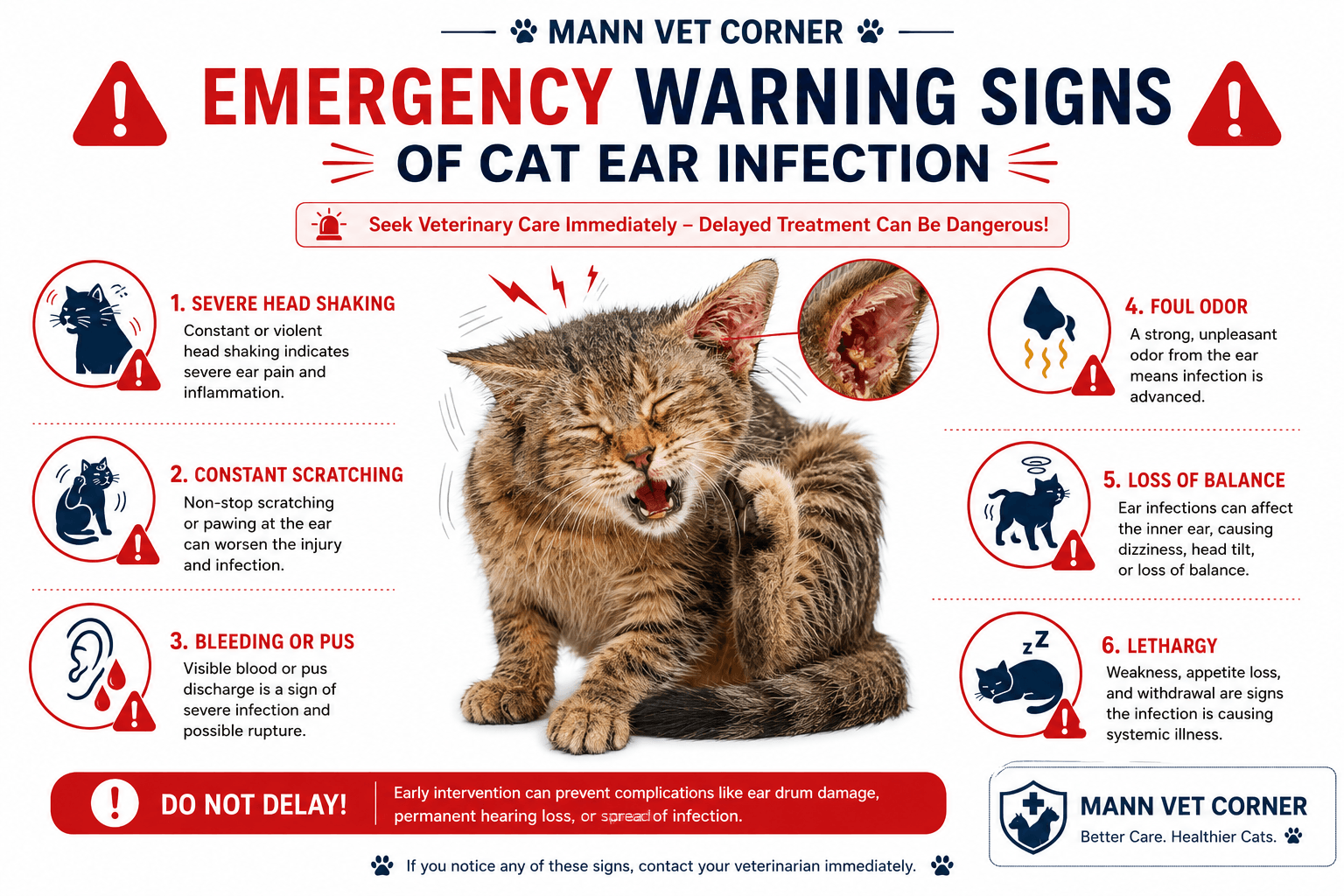
Emergency Warning Signs: When to Rush to the Vet
URGENT (Within 6-12 hours)
🚨 Severe symptoms that suggest complications:
- Sudden hearing loss or deafness
- Sudden onset head tilt that worsens
- Difficulty eating due to ear pain
- Discharge with blood
- Fever (temperature >103°F/39.4°C) with ear infection
- Pawing frantically at ear with visible injury or bleeding
- Swelling that closes the ear canal
ROUTINE (Within 48 hours)
- Any ear scratching lasting more than 2-3 days
- Discharge noticed for first time
- New odor from ears
- Head shaking that intensifies
ONGOING BUT NOT EMERGENCY
- Chronic head shaking despite treatment
- Recurring infections (occurs 2+ times yearly)
- Allergies causing ear flare-ups
- Persistent odor even with treatment
How to Prevent Cat Ear Infections: Proactive Pet Parent Strategy
Prevention is dramatically cheaper and easier than treatment. Most ear infections are preventable.
Prevention Strategy #1: Regular Ear Checks (5 minutes/month)
What to do:
- Look inside each ear with a flashlight in good lighting
- Normal: Pink ear canal, small amount of light tan waxy material
- Abnormal: Redness, discharge, debris, odor, swelling
- Do this monthly starting when kitten, continue through senior years
Cost: Free Time: 2-3 minutes Benefit: Catches problems at stage 1 (easiest/cheapest to treat)
Prevention Strategy #2: Monthly Preventive Treatments
For high-risk cats (outdoor, multi-cat households, allergy history):
Topical parasite preventatives:
- Revolution Plus (selamectin + sarolaner)
- Advantage II
- Applied monthly even if no current infection
- Prevents ear mites before they start
- Cost: $40-80 monthly
- Also prevents fleas, ticks
For allergy-prone cats:
- Antihistamine monthly ($10-25)
- Regular dietary management
- Environmental control
- Seasonal steroid bursts if needed
Prevention Strategy #3: Ear Hygiene Protocol
When to clean ears (preventively):
- After baths or water exposure
- Monthly for cats prone to wax buildup
- Weekly for long-haired breeds
- Only if signs of buildup visible
How to clean safely:
- Use vet-approved cleaner (Virbac Epi-Otic, Otomax)
- Never use cotton swabs or force anything into canal
- Apply cleaner, gently massage ear base
- Let cat shake (normal and helpful)
- Wipe outer ear with cotton ball
- Repeat on other ear
NEVER use:
- Alcohol
- Hydrogen peroxide (damages healthy ear tissue)
- Vinegar (changes pH, encourages yeast)
- Water
- Baby oil or other household products
Prevention Strategy #4: Allergy Management
This prevents 60-70% of recurring infections.
Food allergy protocol:
- Feed hydrolyzed protein or limited ingredient diet
- No table scraps or treats with common allergens
- Maintain diet consistently for 8-12 weeks to assess improvement
- If improvement, continue indefinitely
Environmental control:
- HEPA air filter in bedroom/living areas
- Vacuum 2-3 times weekly
- Wash cat bedding weekly in hot water
- Reduce dust and mold exposure
Medication management:
- Antihistamines during high-pollen seasons
- Probiotic supplements (emerging research shows benefit)
- Omega-3 fatty acids (reduce inflammation)
Prevention Strategy #5: Regular Veterinary Checkups
Schedule:
- Kittens: Every 3-4 weeks until 16 weeks old
- Adults: Annually minimum
- Cats with ear history: Every 6 months
- Senior cats (10+): Every 6 months
Why: Vets catch early signs pet parents miss. Early treatment = simple, cheap solutions.
Prevention Strategy #6: Reduce Risk Factors
Keep indoors (if possible):
- Eliminates exposure to grass seeds, insects, environmental allergens
- Reduces foreign object risk
- Reduces ear mite exposure
Control fleas/parasites:
- Parasites cause inflammation leading to infections
- Monthly flea prevention also prevents ear mite flare-ups
Manage humidity:
- Keep environment at 30-50% humidity
- High humidity encourages yeast growth
- Use dehumidifier in wet climates
Frequently Asked Questions About Cat Ear Infections
Can I treat my cat’s ear infection at home without a vet?
No. Ear infections in cats require professional diagnosis and treatment. While you can support recovery at home with prescribed medications, you cannot diagnose the cause yourself. Attempting home treatment delays necessary care and risks permanent hearing loss. Cats have complex ear anatomy and serious infections can progress rapidly.
How long does it take to treat a cat ear infection?
Simple infections: 7-14 days of treatment, with symptoms improving by day 5-7.
Yeast infections: 7-10 days topical treatment; may require 2-4 weeks if oral medication needed.
Ear mites: Minimum 4 weeks to break life cycle; monthly prevention continues.
Chronic/allergic infections: Ongoing management required; may take weeks to identify root cause.
Most infections show 50% improvement by day 5. Complete resolution typically takes 14-21 days.
What’s the difference between ear mites and ear infections?
| Characteristic | Ear Mites | Bacterial Infection | Yeast Infection |
|---|---|---|---|
| Appearance | Dark, crumbly “coffee grounds” | Thick yellow/brown pus | Waxy, yellowish discharge |
| Smell | Minimal | Foul, unpleasant odor | Musty, yeasty smell |
| Itching intensity | Extreme (frantic scratching) | Moderate to severe | Moderate (but persistent) |
| Contagious to other cats | Yes, highly | No | No |
| Treatment | Parasite prevention, 2-4 weeks | Antibiotics, 7-14 days | Antifungals, 7-14 days |
| Most common in | Kittens, outdoor cats | Adult cats, any age | Cats with allergies |
Can ear mites spread to humans?
Ear mites (Otodectes cynotis) are species-specific and do not infect humans. However, they can cause temporary irritation if they crawl on human skin. Ringworm (fungal infection on cat ears) can spread to humans—practice good hygiene when treating affected cats.
Is my cat’s ear infection a medical emergency?
Yes, if any of these apply:
- Sudden hearing loss
- Sudden severe head tilt
- Fever with ear infection
- Bleeding from ear
- Ear appears closed due to swelling
- Extreme pain response
Urgent but not life-threatening (within 24-48 hours):
- Any new ear discharge
- New ear odor
- Itching lasting 2+ days
- Visible infection signs
Otherwise: Schedule routine appointment within 1 week.
Why does my cat keep getting ear infections?
Underlying causes to investigate:
- Allergies (most common) – Food, environmental, or contact allergies trigger inflammation
- Incomplete initial treatment – Medication stopped too early; antibiotic resistance develops
- Unsuitable ear environment – High humidity, poor air circulation, waxy buildup
- Parasites not fully eliminated – Need to complete full treatment course
- Multiple cats in household – Continuous reinfection from other cats
- Undiagnosed polyp or foreign body – Physical obstruction prevents healing
- Narrowed ear canal – From chronic inflammation; traps debris and moisture
- Underlying immune condition – Rare; worth investigating with vet
Solution: Ask your vet about referral to veterinary dermatologist if infections recur despite treatment.
What’s the best food for cats with ear infections?
During acute infection: Whatever your cat will eat; appetite often reduced due to pain.
For preventing recurring infections:
- Hydrolyzed protein diets (Royal Canin Hydrolyzed, Hill’s z/d, Purina EN)
- Limited ingredient diets (single protein + carb; great for food allergies)
- High omega-3 content (supports anti-inflammatory)
Foods to avoid if food allergies suspected:
- Chicken (most common allergen in cats)
- Beef and dairy
- Corn, wheat, soy
Implementation: Switch gradually (25% new food daily for 7 days) to avoid digestive upset. Assess improvement over 8-12 weeks.
How do I apply ear drops to a cat without stress?
Step-by-step guide:
- Prepare – Warm drops in hand for 30 seconds; gather helper if possible
- Position – Sit beside cat; gently tilt head so affected ear faces up
- Restrain gently – Hold head still but don’t force; enlist helper to comfort
- Apply drops – Squeeze prescribed number directly into ear canal
- Massage – Gently rub base of ear for 30 seconds (cat should hear squishing sound)
- Let go – Allow cat to shake (this distributes medication)
- Praise – Offer treat to create positive association
Pro tips:
- Do treatment during relaxed times (after meal, before sleep)
- Never chase cat to administer medication
- Two people easier than one
- Same person for each treatment (consistency helps)
- If cat extremely resistant, ask vet about oral antibiotics instead
Can I use dog ear medication on my cats?
No. Don’t use dog ear products on cats. Differences include:
- Different ear canal pH and anatomy
- Different drug concentrations for body weight
- Formulations may include ingredients harmful to cats
- Risk of toxicity or adverse reactions
Always use prescriptions written specifically for cats.
What if my cat’s ear infection isn’t improving after 7 days of treatment?
Possible reasons:
- Wrong diagnosis – Infection type misidentified
- Resistant bacteria – Needs culture/sensitivity testing ($40-80)
- Poor medication compliance – Medication not being applied correctly
- Underlying allergy unaddressed – Ongoing inflammation prevents healing
- Concurrent infections – Bacterial AND yeast present simultaneously
- Polyp or foreign body blocking treatment
Action:
- Return to vet for recheck (don’t wait for day 14)
- Request culture & sensitivity testing
- Discuss possible underlying allergies
- Ask about dermatology referral if recurring issue
- Consider oral antibiotics if topical not working
Are there preventive antibiotics for chronic ear infections?
Not in the traditional sense. Continuous antibiotic use increases resistance and isn’t recommended.
Better approaches:
- Address root cause (allergies, parasites, polyps)
- Monthly parasite prevention (prevents mite-triggered infections)
- Allergy management (diet change, environmental control)
- Regular ear cleaning if predisposed
- Seasonal antihistamines during high-risk periods
- Probiotic supplements (emerging evidence)
If infections still recur: Dermatology specialist referral recommended; may identify underlying immune or anatomical issues.
Key Takeaways for Pet Parents
✓ Act quickly – Ear infections worsen rapidly in cats; 48-hour vet visit prevents complications
✓ Get proper diagnosis – Treatment depends entirely on cause; wrong treatment wastes money
✓ Complete full treatment – Even if symptoms improve, finish prescribed course
✓ Manage allergies – Prevents 60-70% of recurring infections
✓ Prevention costs less – Monthly parasite prevention + regular checks << treatment costs
✓ Monitor closely – Cats hide pain; you’re the first line of defense
✓ Partner with vet – Chronic cases need professional guidance, possibly specialist referral.




Leave a Reply