

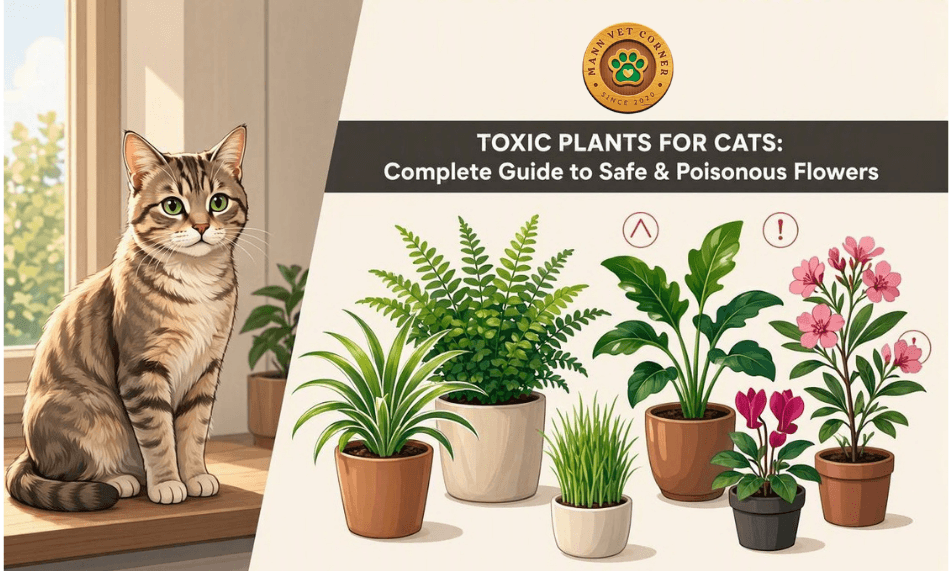
While some flowers and houseplants are perfectly safe for cats, many others pose serious health risks including a few that can cause life‑threatening poisoning. Therefore, if you keep cats in your home, knowing which plants to avoid becomes one of the most crucial safety decisions you can make.
The biggest danger comes from true lilies and daylilies, which can cause severe kidney injury in cats even with minimal exposure. Lilies may be notorious, but they aren’t the only danger. In fact, this complete guide explains which flowers are safe, which are toxic, how to recognize poisoning symptoms, and most importantly—what steps to take if your cat ingests a harmful plant.
Quick Answer (Featured Snippet Optimized)
Roses, spider plants, orchids, and sunflowers are generally non-toxic to cats. Carnations and snake plants can cause mild gastrointestinal upset. True lilies and daylilies are especially dangerous—even small amounts can cause severe kidney injury. Other highly toxic plants include daffodils, azaleas, oleander, sago palm, and dieffenbachia. Always remove unknown plants from your home and seek emergency veterinary care if your cat eats lilies.
Plant Safety Reference
<td>Generally safe; thorns may cause injuryRemove thorns; watch for stomach upset if large amounts eaten<td>Remove petals; monitor if large amount consumed><td>GI upset, vomiting, diarrhea, drooling<th scope=”col”>Risk Level<td>NoNoneet, dermatitis, tremors in severe cases<td>YesMild-Moderate<td>Monitor; contact vet if persistent</thead>g>Spider Plants</strong>NoNoneGenerally safe; may cause mild GI upset in large quantitiesMonitor; unlikely to cause serious harm/td></tr><td>Yes<td>Mild-ModerateChrysanthemums</strong>YesMild-Moderate<td>Drooling, difficulty swallowing, GI irritation, oral pain<td>Dracaena
| Plant / Flower</th> | Toxic to Cats? | Possible Effects | scope=”col”>What to Do | ||||
|---|---|---|---|---|---|---|---|
| <strong>Roses | |||||||
| <stron | |||||||
| Orchids | No | None | Generally safe (common varieties like Phalaenopsis)</td> | Ensure correct species identification< | |||
| <strong>Sunflowers | No | None</td> | Generally safe; watch for pesticide residue | Carnations | Mild</td> | GI irritation, vomiting, diarrhea</td | Monitor; contact vet if severe signs develop |
| Snake Plants | Yes | Mild | Gastrointestinal upset, drooling, nausea | Monitor; contact vet if signs persist | |||
| Tulips | Yes | GI upset, drooling, diarrhea; bulbs more toxic</td> | Remove plant; contact vet if signs worsen | ||||
| Hyacinths | Yes | Mild-Moderate | GI irritation, drooling, tremors; bulbs most toxic | Seek veterinary advice; remove bulbs immediately | |||
| Yes</td> | Mild-Moderate | GI ups | Monitor; consult vet if persistent | ||||
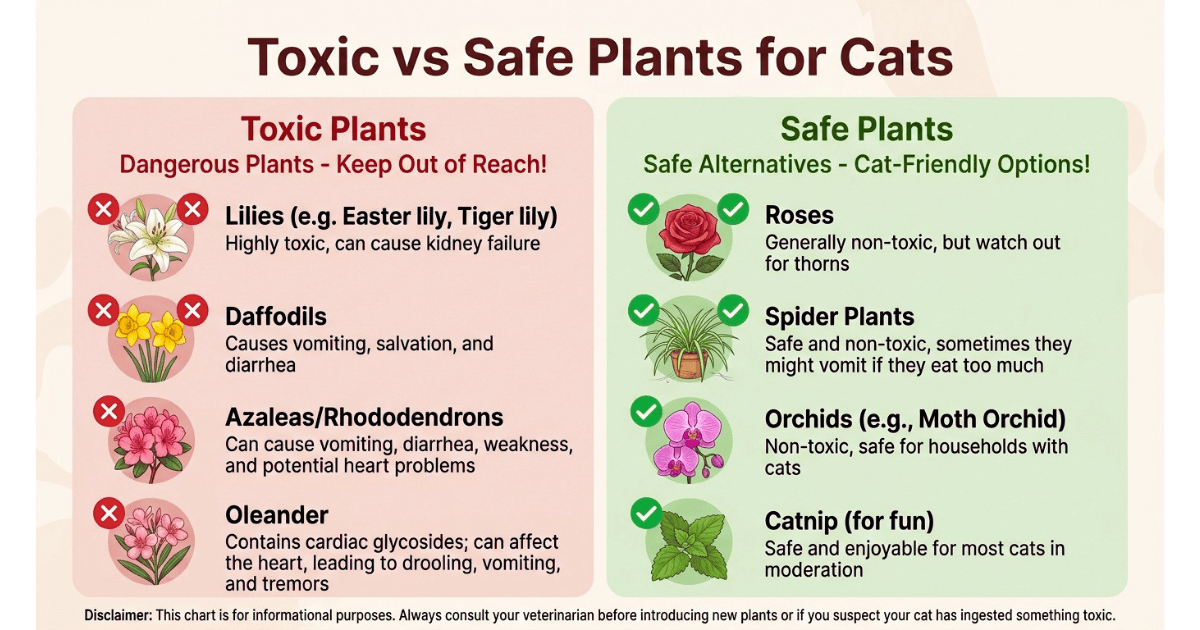
| Daffodils | Yes | Moderate-Severe | Severe GI upset, arrhythmias, tremors, heart issues | Seek emergency vet care immediately | |||
| Azaleas/Rhododendrons | Yes | Severe | GI upset, drooling, vomiting, weakness, cardiac arrhythmias | Seek emergency veterinary care immediately | |||
| Oleander | Yes | Severe | Cardiac arrhythmias, GI upset, tremors, potentially fatal | Seek emergency veterinary care immediately | |||
| Sago Palm | Yes | Severe-Fatal | Severe liver damage, vomiting, weakness, liver failure | Seek emergency veterinary care immediately | |||
| Cyclamen | Yes | Moderate-Severe | Severe GI upset, drooling, diarrhea; roots most toxic | Seek emergency veterinary care | |||
| Kalanchoe | Yes | Moderate-Severe | Vomiting, diarrhea, weakness, cardiac arrhythmias | Seek emergency veterinary care | |||
| Dieffenbachia | Remove plant; contact vet if severe | ||||||
| True Lilies (Lilium spp.) | Yes | Severe-Fatal | Acute kidney injury, kidney failure, death | EMERGENCY: Immediate veterinary care required | |||
| Daylilies (Hemerocallis spp.) | Yes | Severe-Fatal | Acute kidney injury, kidney failure, death | EMERGENCY: Immediate veterinary care required |
Important Note: “Non-toxic” does not mean cats should eat these plants. Pesticides, fertilizers, floral preservatives, and other chemicals may create additional risks even on safe plants. Always verify the exact species before bringing any plant into a home with cats.
Specific Questions: Individual Plant Sections
Are Roses Toxic to Cats?
Short Answer: No, roses are not toxic to cats.
True roses (Rosa species) are generally considered safe for cats. They rank among the safest cut flowers and ornamental plants for homes with felines. However, there are practical safety considerations:
Physical Hazards:
- Rose thorns can cause painful cuts and puncture wounds
- Thorns may become embedded in mouth tissue or paws
- Larger wounds could require veterinary attention
Chemical Concerns:
- Cut roses often come treated with pesticides or floral preservatives
- These chemical residues may cause mild digestive upset
- Organic or pesticide-free roses eliminate this risk
<strong>Digestive Upset:
- Eating large quantities of any plant material—including rose petals or stems—can cause stomach upset
- Signs include vomiting, diarrhea, or reduced appetite</li>
Safety Tips: Remove thorns before placing roses in your home, discard chemical-treated water frequently, and prevent your cat from chewing on stems or petals.
Are Spider Plants Toxic to Cats?
Short Answer: No, spider plants are not toxic to cats.
Spider plants (Chlorophytum comosum) are among the safest houseplants for cat owners. They’re non-toxic, affordable, easy to grow, and forgiving—making them an excellent choice for homes with curious cats.
Why Cats Love Spider Plants: Cats are often attracted to spider plants because of their grass-like leaves and the way they move. This attraction is normal behavior and doesn’t mean the plant is harmful.
Minor Digestive Concern: If a cat eats large quantities of spider plant material, mild gastrointestinal upset is theoretically possible, though this is uncommon. Symptoms might include:
- Mild vomiting
- Loose stool
- Temporary loss of appetite
Normal Outcome: These symptoms resolve without treatment and cause no long-term harm.
Pro Tip: If your cat obsessively chews spider plants, consider providing cat grass as an alternative outlet for this natural grazing behavior.
Are Carnations Toxic to Cats?
Short Answer: Yes, carnations are mildly toxic to cats.
Carnations (Dianthus species) contain compounds that can cause gastrointestinal irritation in cats. The level of toxicity is generally mild to moderate, meaning that exposure is unlikely to be life-threatening but should still be avoided.
Possible Signs of Carnation Poisoning:
- Mild to moderate gastrointestinal upset
- Vomiting
- Diarrhea
- Loss of appetite</li>
- Mild drooling</li>
Severity Varies: The risk depends on how much of the plant the cat consumed and whether the flower was treated with pesticides or preservatives.
What to Do: If your cat has eaten carnations, monitor for signs of gastrointestinal upset. Contact your veterinarian if vomiting, diarrhea, or loss of appetite persists for more than a few hours.
Are Orchids Toxic to Cats?
Short Answer: No, most commonly kept orchids are not toxic to cats.
Orchids, particularly the popular Phalaenopsis (moth orchid) and Dendrobium varieties, are generally safe for cats. They’re an excellent choice for cat owners seeking an elegant houseplant.
Safety Note on Species Identification:</strong> “Orchid” encompasses thousands of species. While the common varieties sold in nurseries are safe, it’s important to confirm the exact species before bringing any orchid into your home.
Practical Concerns:
- Orchids are delicate plants that cats may damage by chewing or knocking over
- Potting media and fertilizers may cause mild upset if ingested
- Physical damage to roots during repotting can weaken plants</li>
Recommendation: Place orchids in locations that are difficult for cats to access, both to protect the plant and to prevent your cat from ingesting soil or fertilizer.
Are Snake Plants Toxic to Cats?
Short Answer: Yes, snake plants are mildly to moderately toxic to cats.
Snake plants (Sansevieria trifasciata), also called mother-in-law’s tongue, contain saponins—compounds that irritate the gastrointestinal tract. While not life-threatening, they should be kept away from cats.
Typical Signs of Snake Plant Poisoning:
- Gastrointestinal upset
- Vomiting
- Diarrhea
- Drooling
- Nausea
- Mouth irritation
Severity: Symptoms are usually mild to moderate and resolve with supportive care. Severe poisoning is rare.
What to Do:</strong> Remove the plant from your cat’s reach. If signs develop, contact your veterinarian. Provide supportive care such as fluid therapy if your cat becomes dehydrated from vomiting or diarrhea.
Prevention: Choose cat-safe alternatives like spider plants, Boston ferns (non-toxic varieties), or air plants.
Are Sunflowers Toxic to Cats?
Short Answer: No, sunflowers are not toxic to cats.
Sunflowers (Helianthus annuus) are generally safe for cats. Cut sunflowers and sunflower plants pose no significant toxicity risk, making them a bright, cheerful option for cat-friendly homes.
Chemical Concerns:
- Commercial cut sunflowers are often treated with pesticides
- Floral preservatives and dyes may cause mild digestive upset
- Organic, untreated sunflowers eliminate these risks
ir=”ltr”>Practical Considerations:
- Sunflower stems are tough and may cause mouth irritation if chewed aggressively
- Large amounts of plant material might cause temporary digestive upset
- Seeds are generally safe but should not become a dietary staple
Safety Tip: Choose organic, pesticide-free sunflowers and remove them from vases after 5–7 days to prevent bacterial growth.
What Flowers Are Toxic to Cats?
High-Risk Toxic Flowers: Quick Reference
<td><strong>TulipsMild-Moderate
| Flower | Danger Level | Critical Info |
|---|---|---|
| True Lilies (Lilium) | SEVERE-FATAL | All parts are dangerous; causes kidney failure |
| Daylilies (Hemerocallis) | SEVERE-FATAL | All parts are dangerous; causes kidney failure |
| Daffodils | Moderate-Severe | Bulbs most dangerous; can cause cardiac issues |
| Azaleas | Severe | Can cause cardiac arrhythmias; potentially fatal |
| Oleander | Severe | Highly toxic; cardiac poison |
| Bulbs more dangerous than flowers | ||
| Hyacinths | Mild-Moderate | Bulbs most toxic; can cause tremors |
| Chrysanthemums | Mild-Moderate | Contains pyrethrin; can cause neurological signs |
What Plants Are Toxic to Cats?
Houseplants and Garden Plants: Organized by Severity
Extremely Dangerous (Severe-Fatal Toxicity)
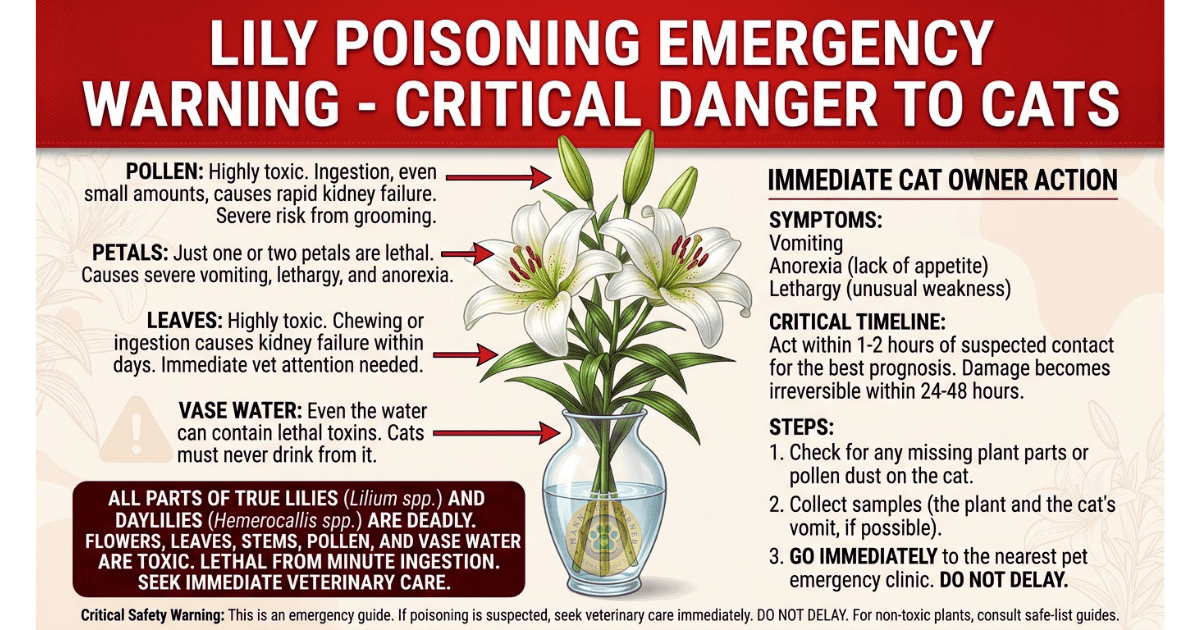
True Lilies (Lilium species) and Daylilies (Hemerocallis species):
- All parts of the plant are poisonous
- Exposure through ingestion, pollen contact, or vase water can cause kidney injury
- Even small amounts are dangerous
- Symptoms may be delayed
- Early veterinary intervention is critical
Sago Palm (Cycas revoluta):
- Extremely toxic; primarily affects the liver
- Very small amounts can cause severe liver damage
- Rarely recoverable even with aggressive treatment
- Must keep completely away from cats
Oleander:
- All parts contain cardiac glycosides
- Can cause fatal heart arrhythmias
- Extremely dangerous
Azaleas and Rhododendrons:
- Contain grayanotoxins
- Can cause cardiac arrhythmias, severe GI upset, weakness
- Potentially fatal without treatment
Toxic (Moderate Toxicity)
Daffodils:
- Bulbs are most dangerous
- Can cause severe GI upset, arrhythmias, tremors
- Requires veterinary treatment
Cyclamen:
- Roots are most toxic
- Causes severe GI upset and cardiac issues
- Requires emergency care
Kalanchoe:
- Cardiac glycosides present
- Causes arrhythmias and weakness
- Requires veterinary treatment
Dieffenbachia:
- Calcium oxalate crystals cause oral pain and swelling
- Difficulty swallowing possible</li>
- Rarely life-threatening but requires vet care
Dracaena:
- Saponins cause GI upset
- Mild to moderate toxicity
- Supportive care usually sufficient
Irritating / Mildly Toxic
Carnations, Tulips, Hyacinths, Snake Plants, Chrysanthemums:
- Cause gastrointestinal irritation
- Mild to moderate toxicity
- Rarely require emergency care
- Monitor for persistent signs
 alt=”” width=”1200″ height=”630″ />
<h2 dir=”ltr”>Why Are Lilies So Dangerous to Cats?
The Lily Crisis
Lilies represent the single most dangerous flower for cats. Understanding why is essential for any household with felines.
<strong>What Makes True Lilies and Daylilies Different?
True lilies (Lilium species) and daylilies (Hemerocallis species) contain compounds that are extremely toxic to cats but harmless to dogs and humans. The exact nature of these compounds is still not completely understood by veterinary toxicologists, but the effects are devastating and well-documented.
How Lily Poisoning Works:
Lily toxins target the kidneys. Within hours of exposure, the toxins accumulate in kidney tissue and begin causing cellular damage. This leads to:
- Acute Kidney Injury (AKI): The kidneys rapidly lose function
- Electrolyte Imbalances: Dangerous levels of potassium and other minerals
- Uremic Toxins: Waste products accumulate in the blood</li>
- Kidney Failure
- : Without treatment, complete failure occurs within 3–4 days
</ol>
Why Cats Are So Vulnerable:
Scientists believe cats lack certain detoxification enzymes that protect other species. This genetic difference makes them uniquely susceptible to lily toxins.
Routes of Exposure:
- Eating flowers: Consuming petals or blooms
- Eating leaves: Chewing or ingesting leaves
- Chewing stems: Direct contact with toxic plant material
- Pollen on fur: Grooming contaminated pollen off their coat
- Contaminated water: Drinking water from a vase containing lilies
</ul
>
Even minimal exposure matters. A single petal or a small amount of pollen can trigger kidney damage.
The Critical Window:
Early intervention is the difference between life and death. Treatment works best if started within 6–18 hours of exposure, before serious kidney damage occurs. Do not wait for symptoms to develop.
Distinction from Other “Lilies”:</p>
Many plants hav
e “lily” in their common name but are not true lilies:
<ol dir=”ltr”>
- style=”list-style-type: none;”>
- Lily of the Valley: Tox
- style=”list-style-type: none;”>
ic but different plant family
- Peace Lily: Mildly toxic; less dangerous than true lilies
- Calla Lily: Mildly toxic
- Lily pads: Generally non-toxic
This is why correct plant identification is critical. A plant labeled only as “lily” may or may not be a true lily.</p>
<hr />
Symptoms of Plant Poisoning in Cats
- <h3 dir=”ltr”>Recognition Checklist: When to Worry
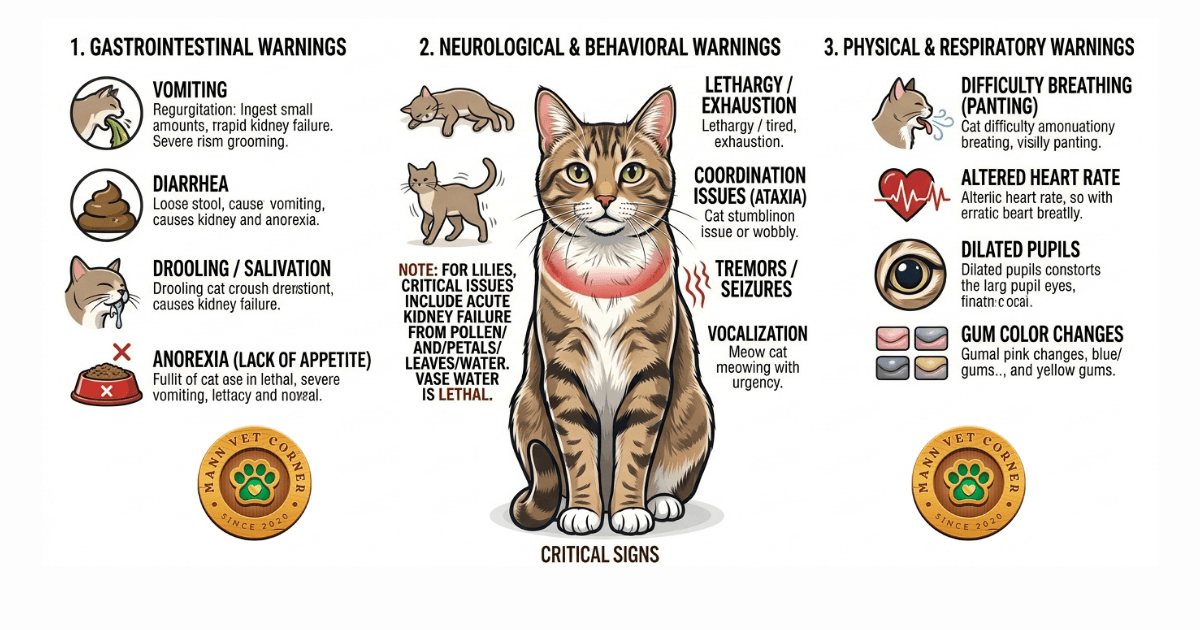
Early recognition of poisoning can save your cat’s life. Watch for these signs:
Gastrointestinal Signs:
- Vomiting (with or without blood)
- Diarrhea (sometimes bloody)
- Loss of appetite or refusal to eat
- Drooling or excessive salivation</li>
- Pawing at the mouth
- Difficulty swallowing
- Abd
- ominal pain or distension
Neurological Signs:
- Tremors or shaking
- Weakness or lethargy
- Disorientation or confusion
- Seizures (in severe poisoning)
- Lack of coordination
Respiratory/Cardiac Signs:</p>
- <
</
ol>
li style=”list-style-type: none;”>
- <
- li>Difficulty breathing or rapid breathing
- Pale or bluish gums
- Increased heart rate or i
rregular heartbeat</ul>
Urinary Sig
ns</strong> (especially concerning for lily poisoning):</strong>
- Increased or decreased urination
- Changes in urine color
- Inappropriate elimination outside litter box
<strong>General Signs:
- yle=”list-style-type: none;”>
- dir=”ltr”>
- Lethargy or depression
- Hiding
- Lack of grooming
- Collapse (in severe cases)
- yle=”list-style-type: none;”>
Critical Fact About Lily Poisoning:
Absence of early symptoms does not mean your cat is safe. Kidney damage may be occurring even while your cat appears normal. This is why immediate veterinary evaluation is essential after any suspected lily exposure</strong>, regardless of whether symptoms are present.
Emergency: What to Do If Your Cat Eats a Poisonous Plant
Immediate Action Plan
If you suspect your cat has eaten a toxic plant—especially lilies—follow this protocol steps:</strong>
1: Remove the Source
- Immediately remove the plant from your cat’s reach
- If your cat is still eating the plant, gently separate them
<li>Contain the plant safely so it’s not eaten again
2: Identify the Plant
- =”list-style-type: none;”>
- Try to determine exactly which plant was eaten<
/li>
- Take a clear photo or save a sample of the plant or label
- Note which part was consumed (flower, leaf, stem, bulb, roots)
- Estimate approximately how much was eaten if possible
- =”list-style-type: none;”>
</ol
>
3: Contact a Veterinarian or Poison Control Immediately
- For suspected lily exposure: Seek emergency veterinary care immediately. Do not wait.
- For other plants: Call your veterinarian or localpoison control
- Have ready: Plant name, parts eaten, estimated amount, time of exposure, cat’s weight, any symptoms observed
Poison Control Resources:
- yle=”list-style-type: none;”>
- ASPCA Animal Poison Control Center: (888) 426-4435
<l
i>Pet Poison Helpline: (855) 764-7661
- Contact your emergency veterinary clinic if after hours
- yle=”list-style-type: none;”>
4: Do NOT Induce Vomiting at Home
- Inducing vomiting can cause additional damage
- Only do this if specifically instructed by a veterinarian or poison control professional
- Never induce vomiting if your cat is having difficulty breathing or is unconscious
</li>
5: Transport to Veterinary Care
- Move your cat to your veterinarian or emergency clinic as quickly as possible</li>
- Keep your cat calm and warm during transport
- Bring the plant sample, label, or photo if available
6: Provide Complete History
- Tell your veterinarian exactly when exposure occurred
- Describe what part of the plant was eaten
- Mention any symptoms you’ve observed
- Provide your cat’s complete medical history
</u
l>
</o
l>
Emergency Warning Box
🚨 LILY EXPOSURE = EMERGENCY 🚨
If your cat has consumed ANY part of a lily or daylily (including petals, leaves, stems, pollen, or vase water), seek emergency veterinary care immediately—even if your cat seems fine.
True lilies and daylilies can cause fatal kidney failure in cats. Early treatment (within 6–18 hours) offers the best chance of survival. Do not wait for symptoms to develop.
How Veterinarians Diagnose Plant Poisoning
Diagnostic Process
dir=”ltr”>History and Physical Exam:
- ir=”ltr”>
- Your veterinarian will ask detailed questions about exposure timing, plant identity, and symptoms
- Physical examination checks for signs of poisoning (tremors, abnormal heart rate, mouth irritation, etc.)
Plant Identification:
- <ol dir=”ltr”>
- ir=”ltr”>
- Correct identification is crucial for determining next steps
- Bring the plant, a clear photo, or the original label if available
</ol
>
Blood Tests:
- Complete blood count (CBC) to check for infection or anemia
- Chemistry panel to assess organ function
- Kidney function tests (creatinine, BUN) to detect kidney damage—especially important for lily exposure</li>
- Electrolyte panel to check for dangerous imbalances</li>
Urinalysis:
- ir=”ltr”>
- Checks kidney function through urine markers
- May reveal kidney damage before blood tests show abnormalities
Additional Diagnostics (as needed):
- Abdominal ultrasound to visualize organs
- Electrocardiogram (ECG) to check heart rhythm
- Blood pressure monitoring
- Packed cell volume (PCV) and total protein to assess hydration
Monitoring:
- e=”list-style-type: none;”>
- Ongoing assessment of kidney function and electrolytes
- 24–48 hour monitoring is typical for suspected lily exposure
- Repeat bloodwork to track organ function over time
<
/ul>
- e=”list-style-type: none;”>
Treatment of Plant Poisoning in Cats
Veterinary Treatment Approach
Treatment depends on:
- <l
i>Type of plant ingested
- Amount consumed</li>
- Time elapsed since exposure
- Cat’s age and overall health
- Severity of symptoms
Common Treatment Strategies
Decontamination (if done within 2–3 hours):
- Activated charcoal may be given to bind toxins in the GI tract
- Used selectively based on plant type and risk
IV Fluid Therapy:</p>
- Aggress
- ive fluid
therapy helps flush toxins through the kidneys
- Maintains hydration and supports kidney function
- Usually required for moderate to severe poisoning
Anti-Nausea Medication:
- <l
</li>
i>Reduces vomiting and improves appetite</
p>
- =”ltr”>
- =”ltr”>
- Helps maintain nutrition during recovery
Kidney Support:</strong>
- Monitoring of kidney enzymes and function
- Adjusting treatment based on response
- May require hospitalization for 24–72+ hours
Electrolyte Management:
- Correcting dangerous imbalances (especially potassium)
- Critical for heart function and overall stability
<strong>Supportive Care:</strong></p>
- Pain relief if needed
<l
i>Nutritional support (feeding tube if necessary)
- Temperature regulation
- Monitoring and management of complications
There is no single “antidote” for plant poisoning. Treatment is supportive and targeted to the specific toxin and the cat’s response.
Prognosis
<strong>Factors Affecting Outcome:
- Early intervention: Cats treated within 6–18 hours of lily exposure have much better survival rates
- Plant type: Severity varies dramatically (lilies are most dangerous; carnations are mild)
- Amount ingested: Larger amounts = worse prognosis
- Age/health: Kittens and senior cats with health issues have worse outcomes
- Speed to treatment: Every hour matters</li>
Lily Poisoning Prognosis:
- With treatment started within 6–18 hours: ~90% survival rate
- With treatment after 18–24 hours: ~50% survival rate
- Without treatment: Fatal in most cases (3–4 days)
Cat-Safe Flowers and Plants
Non-Toxic Options for Cat Owners
If you love having fresh flowers and plants in your home, these options are safer choices:
Non-Toxic Cut Flowers:</strong>
- Roses (remove thorns)
- Sunflowers
- Zinnias
- Gerber daisies
- Snapdragons
- Asters
- Statice/limonium
Non-Toxic Houseplants:
- Spider plants
- Boston ferns
- African violets
- Bamboo palms
- Parlor palms
- Prayer plants
<li>Haworthia
- Echeveria (succulent)</li>
- Peperomia
- Ponytail palm<
- /li>
Important Reminder:
<p dir=”ltr”>”Non-toxic” does NOT mean:
- dir=”ltr”>
- Your cat should be encouraged to eat them
- They’re completely harmless if large quantities are consumed
<li>They’re safe if treated with pesticides or preservatives
- All species within a plant type are automatically safe
Always verify the exact species before bringing any new plant home.
How to Make Your Home Safer for Cats
Prevention Strategy: Creating a Cat-Safe Environment
<strong>Plant Selection:
- Research plant identity before purchasing
- Confirm both scientific and common names
- Avoid any plant you can’t positively identify
- Choose from verified cat-safe plant lists when possible
Strategic Placement:
- Keep all plants out of reach on high shelves
- Use hanging planters that cats cannot access
- Store bulbs and seeds securely
- Keep potting soil and fertilizers in closed cabinets
<strong>Flower Arrangements:
- <li>Avoid bringing unknown flowers into your home
- Remove all lilies and daylilies immediately—never keep them in a house with cats
- Tell visitors not to bring lilies or other toxic flowers as gifts
- Discard fallen petals and leaves daily
Garden Safety:
- Fence or gate garden areas cats can access
- Remove toxic plants from gardens where cats roam
- Supervise outdoor time in warmer months
<
li>Cover garden beds or mulch areas where cats dig
“ltr”>Chemical Safety:
- Store fertilizers, pesticides, and herbicides securely
- Remove floral preservatives from vase water daily
- Choose organic, pesticide-free flowers when possible
- Never use lily-containing floral arrangements
<strong>Education:
- Talk to friends and family about your cat’s safety needs
- Politely decline toxic flower gifts
- Share information with veterinary clinics and groomers
AEO FAQ Section (Answer Engine Optimization)
Frequently Asked Questions About Toxic Plants and Cats
ir=”ltr”>1. Are roses toxic to cats?</h4>
No, roses are
not toxic to cats. True roses are generally safe. However, remove thorns to prevent injuries, and watch for mild digestive upset if your cat eats large amounts. Cut roses may have pesticide residue, so choose organic varieties when possible.</h4>
2. Are spider plants toxic to cats?
No, spider plants are not toxic to cats. They’re one of the sa
fest houseplants for homes with felines. Cats are often attracted to spider plants because of their grass-like leaves. Mild gastrointestinal upset is theoretically possible with large consumption, but serious poisoning is extremely rare.
3. Are carnations toxic to cats?
Yes, carnations are mildly toxic to cats. They contain compounds that can cause gastrointestinal irritation, vomiting, and diarrhea. Severity is typically mild to moderate. Monitor your cat for signs and contact your veterinarian if symptoms persist.
4. Are orchids toxic to cats?</h4>
No, most common orchids (like Phalae
nopsis/moth orchids) are not toxic to cats. They’re safe choices for cat-friendly homes. Always confirm the exact species before bringing orchids into your home, and place them in locations your cat cannot easily access.</p>
5. Are snake plants toxic to cats?
Yes, snake plants are mildly to moderately toxic to cats. They contain saponins that irritate the gastrointestinal tract, causing , diarrhea, and drooling. While not life-threatening, they should be kept away from cats. Monitor for symptoms and contact your vet if signs develop.</a>
6. Are sunflowers toxic to cats?
- <p
dir=”ltr”>No, sunflowe
- r
s are not toxic to cats. They’re generally safe. However, commercial sunflowers may have
- p
esticide treatment, so choose organic varieties. Remove tough stems and watch for digestive upset if y
- e=”list-style-type: none;”>
- our cat consumes large amounts
of plant material.
7. What flowers are poisonous to cats?
Highly poisonous flowers include true lilies, daylilies, daffodils, azaleas, oleander, tulips, hyacinths, and chrysanthemums. True lilies and daylilies are the most dangerous, potentially causing fatal kidney injury. Daffodils, azaleas, and oleander can cause severe cardiac arrhythmias. Always remove flowers you cannot positively identify.
8. What houseplants are toxic to cats?
Common toxic houseplants include snake plants, dieffenbachia, dracaena, cyclamen, kalanchoe, sago palm, and lilies. Severity ranges from mild (snake plants, dieffenbachia) to potentially fatal (sago palm, lilies). Research plant identity before bringing houseplants into your home.
>9. Are lilies poisonous to cats?
Yes—critically. True lilies (Lilium</em> species) and daylilies (Hemerocallis species) are extremely toxic to cats. All parts of the plant are dangerous: flowers, leaves, stems, pollen, and vase water. Even minimal exposure can cause severe kidney injury and fatal kidney failure. Seek emergency veterinary care immediately if your cat has any lily contact.
10. Can lily pollen poison a cat?
Yes. Lily pollen is extremely dangerous to cats. If your cat grooms pollen off their fur after contact with lilies, the toxins can still be ingested and cause kidney damage. This is why lilies should never be in homes with cats—not on tables, shelves, or anywhere accessible.
11. What are the first signs of plant poisoning in cats?
Early signs include drooling, vomiting, ass=”pretty-link pretty-link-tinymce” href=”https://mannvetcorner.com/qz8n” rel=”nofollow”>diarrhea, loss of appetite, pawing at the mouth, or difficulty swallowing. Some plants cause tremors, weakness, or lethargy. Respiratory or cardiac signs (difficulty breathing, pale gums) indicate severe poisoning. Contact your veterinarian immediately if you observe any of these signs after suspected exposure.
12. Can a cat survive plant poisoning?
Survival depends on the plant type, amount ingested, and speed of treatment. Mild poisonings (carnations, snake plants) usually have good outcomes with monitoring. Severe poisonings (lilies, sago palm, oleander) require emergency treatment. Lily poisoning has ~90% survival rate if treated within 6–18 hours, but ~0% without treatment.
13. What should I do if my cat eats a poisonous plant?
Remove the plant, identify it, and contact your veterinarian or poison control immediately. For lily exposure, seek emergency care without delay. Do NOT induce vomiting at home unless instructed by a vet. Provide the plant sample/photo and complete history to your veterinarian.
14. What flowers are safe for cats?
Safe flowers include roses (remove thorns), sunflowers, zinnias, snapdragons, gerber daisies, asters, and limonium/statice. Safe houseplants include spider plants, Boston ferns, African violets, parlor palms, and prayer plants. Always verify the exact species before bringing any plant home.
15. Should I induce vomiting if my cat eats a plant?</h4>
No, do not induce vomiting at home. Vomiting can cause additional damage and is on
- l
</
ol>
y helpful if done within 2–3 hours of ingestion. Your veterinarian or poison co
ntrol will determine if vomiting is appropria
- te based on the specific plant and circumstances.
ir=”ltr”>16. How quickly should I contact a veterinarian?
Contact your veterinarian immediately if you suspect any poisonous plant ingestion. For lily exposure, seek emergency care without delay—do not wait. Early intervention (within 6–18 hours) dramatically improves outcomes. For mild plants, call during business hours if symptoms develop.
17. Are all plants called lilies dangerous to cats?
No. True lilies (Lilium spp.) and daylilies (Hemerocallis spp.) are extremely dangerous. However, many other plants have “lily” in their common name (peace lily, calla lily, lily of the valley) but are from different plant families and have different toxicity levels. Correct identification is essential—never assume all “lilies” are equally dangerous.
18. Can cats get sick from eating non-toxic plants?
Yes. Even non-toxic plants can cause mild gastrointestinal upset if eaten in large quantities. Additionally, pesticides, fertilizers, floral preservatives, and soil chemicals create risks even on safe plants. Always prevent access to unknown plants and remove chemical residues.
ir=”ltr”>Veterinary Sources & Further Reading
Authoritative References:
- ASPCA Poison Control: www.aspca.org/pet-care/animal-poison-control
- Pet Poison Helpline: www.petpoisonhelpline.com
- Merck Veterinary Manual: Toxicology section
- Veterinary toxicology literature on cardiac glycosides and nephrotoxic compounds
- International Renal Interest Society (IRIS) guidelines for feline acute kidney injury
- Veterinary clinical toxicology references (Osweiler, Hovda, et al.)




Leave a Reply