
Urinalysis in veterinary sciences is a fundamental, in-expensive, and non-invasive diagnostic test that provides a wealth of information about a patient’s health, particularly regarding the urinary system and overall metabolic status. At its core, a veterinary urinalysis is the physical, chemical, and microscopic examination of a urine sample. This comprehensive assessment serves as a crucial window into the function of the kidneys, the efficiency of fluid balance, and the presence of systemic diseases like diabetes mellitus or liver dysfunction. For veterinarians and veterinary technicians, understanding this diagnostic tool is non-negotiable for delivering high-quality animal care. Early detection through routine vet urine test interpretation can prevent minor issues from developing into serious, life-threatening conditions.
Importance in Animal Health
Veterinary professionals often consider a complete animal urine analysis the “liquid biopsy” of the kidneys and lower urinary tract. It’s a vital component of the Minimum Database (alongside a Complete Blood Count and Biochemistry panel) for any sick patient or as part of a routine senior wellness screen.
- Early Disease Detection: A vet urine test interpretation can detect diseases like chronic kidney disease or urinary tract infections (UTIs), before clinical signs even become apparent to the pet owner.
Screen for Metabolic Disorders: Uncover diabetes mellitus (via glucose), ketoacidosis (via ketones), or liver disease (via bilirubin).
- Urinary Tract Assessment: It definitively diagnoses inflammation, infection, crystalluria (crystals), and hematuria (blood) within the bladder and urethra.
Monitor Response to Therapy: Track the progress of treatment for conditions like UTI, diabetes or kidney failure.
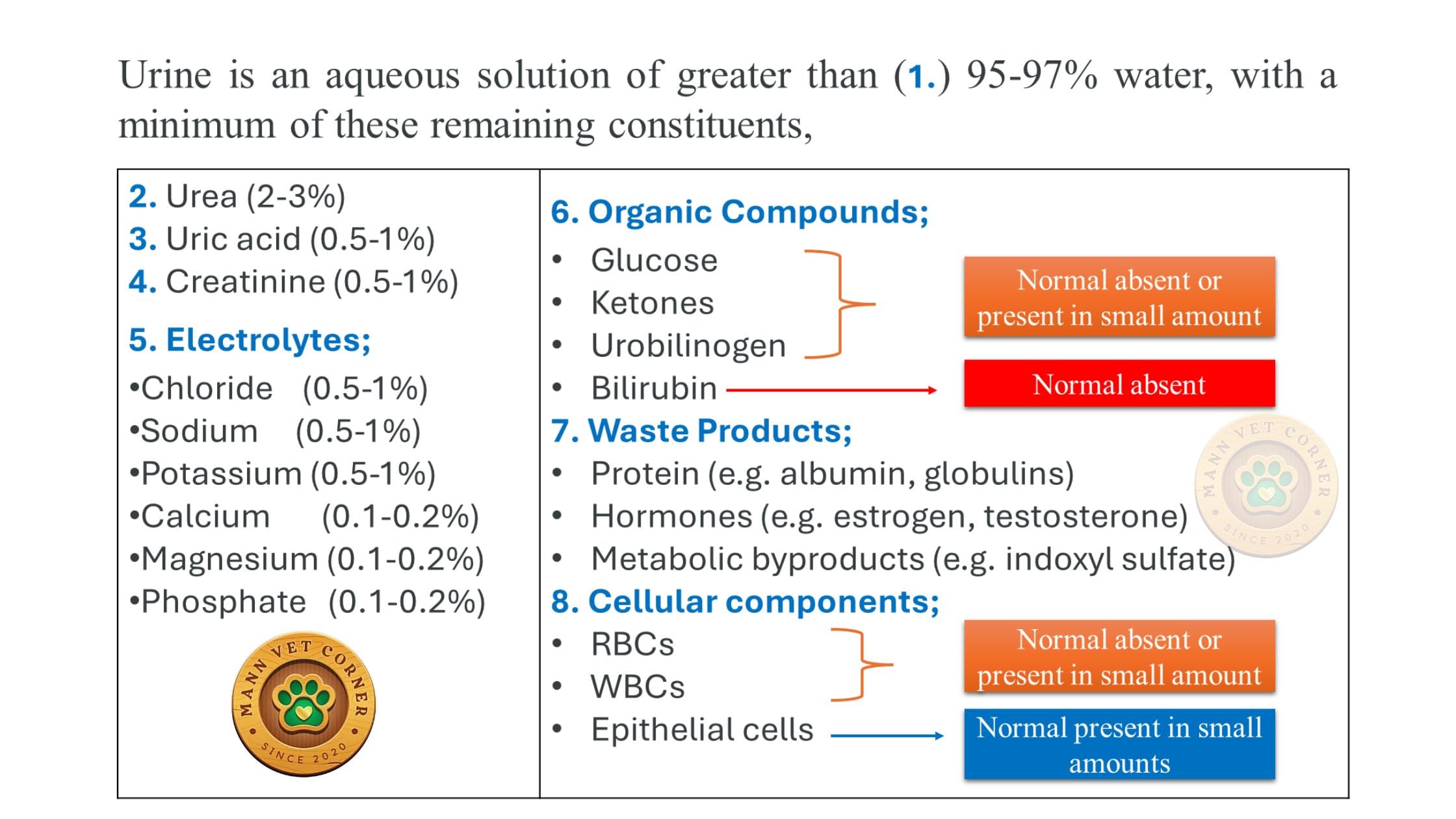
Composition of Animal Urine
Animal urine is a complex biological fluid with compositions that vary significantly between species.
Cattle/Goat/Sheep Urine
Water: 92-94%, Urea: 0.8-1.5%, Total nitrogen: 0.5-1.2%, Potassium: 1.0-2.5%, Phosphorus: 0.001-0.05%
Camel Urine
Water: 93-95% (highly concentrated due to water conservation), Urea: 2.0-3.5% (higher concentration), Total solids: 5-7%, Salt content: 0.9-1.5% (higher due to desert adaptation)
Birds and Reptiles
Water: 70-85% (less than mammals due to uric acid excretion) Uric acid: 10-25% (primary nitrogenous waste) Urea: 0.1-2% (minimal amounts) Electrolytes: 2-8% Other organic compounds: 2-5%
Freshwater Fish
Water: 96-99% (very dilute) Urea: 0.01-0.1% Ammonia: 0.05-0.2% (primary nitrogenous waste) Electrolytes: 0.1-0.5%
Desert-Adapted Mammals (e.g., Kangaroo Rat)
Water: 88-92% (highly concentrated) Urea: 5-8% (extremely high concentration) Electrolytes: 2-4% Other organics: 0.5-1%
Key Differences Between Animal Groups
Mammals vs Birds
- Mammals excrete primarily urea (highly soluble)
- Birds excrete primarily uric acid (less soluble, water-conserving)
- Bird urine is more concentrated and contains less water
Desert-Adapted Animals (Camels)
- Higher concentration of all solutes
- More efficient water retention
- Higher urea concentrations
Ruminants (Cattle, Sheep, Goats)
- Higher potassium content
- Variable nitrogen content based on diet
- Seasonal variations in composition
Agricultural Significance in Animal Urine
Fertilizer Value (NPK equivalent)
- Cattle urine: N(0.5-1.2%), P(0.001-0.05%), K(1.0-2.5%)
- Camel urine: N(1.0-2.0%), P(0.01-0.1%), K(1.2-2.0%)
- Poultry waste: N(1.5-3.0%), P(1.0-2.5%), K(0.8-1.5%)
Sample Collection Methods
Accurate urinalysis begins with proper sample collection. The method depends on the animal’s species, temperament, and the test’s purpose. Below are the primary techniques used in veterinary practice. The method of collection is the first critical step, as it directly impacts the validity of the results. Ideal urine sample is fresh and analysed within 30-60 minutes of collection to prevent deterioration of cells and multiplication of bacteria. If a delay is unavoidable, the sample should be refrigerated for a maximum of 2 hours.
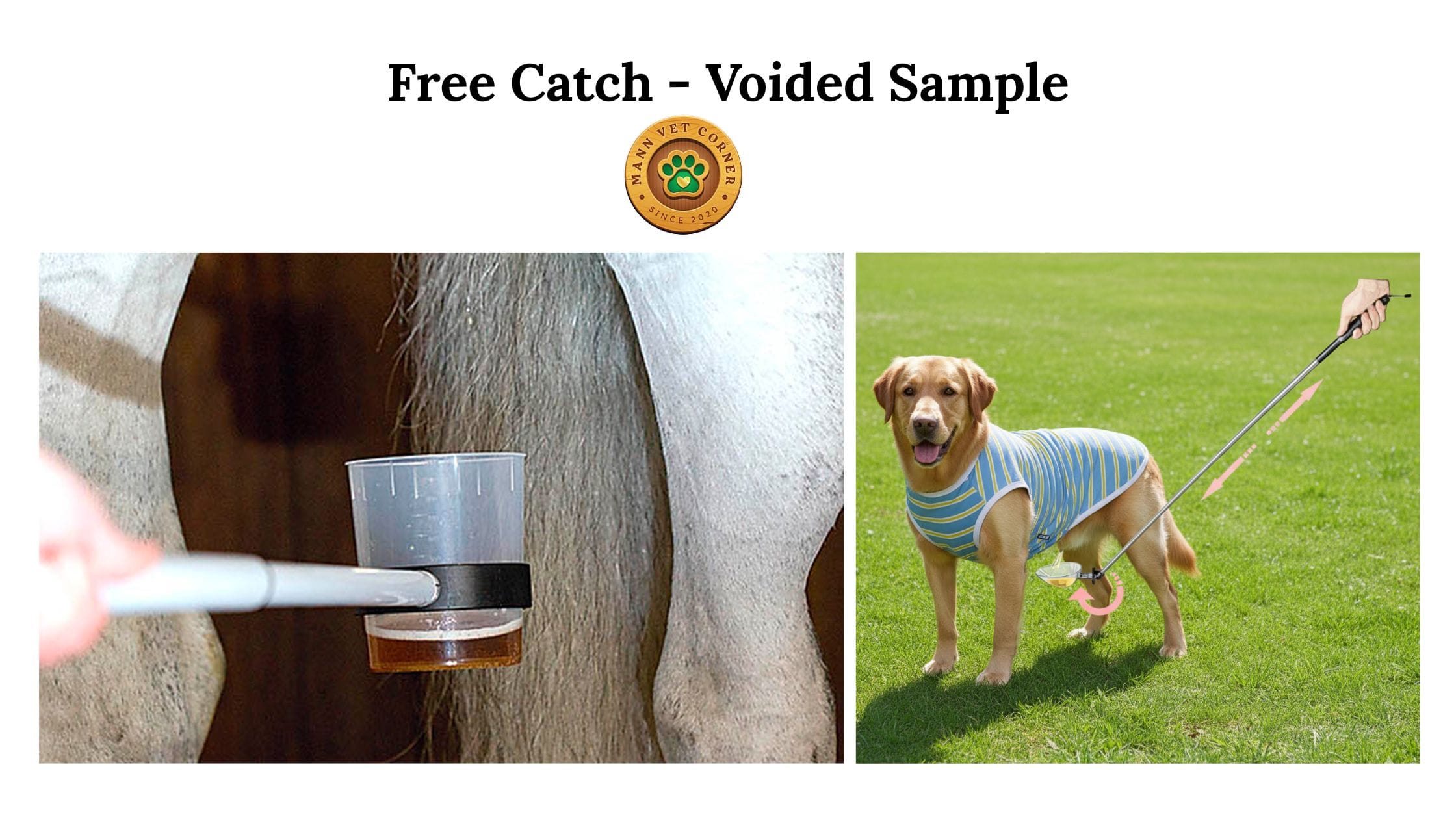
Free-Catch Collection
Free-catch urine collection remains the most common method for routine urinalysis in dogs and cats and can be used in large animals like horses and cattle.

Procedure: Use a clean container or cup to catch urine midstream. For cats, non-absorbent litter or collection kits work. The free-catch method is a non-invasive technique that involves collecting naturally voided urine during normal elimination behaviour.Pros: Non-invasive, easy for owners to perform.
Cons: Highly susceptible to contamination from the skin, fur, and genital tract. Not ideal for culture but can be useful for basic screening.
Best for: Dogs, cats, horses, cattleCatheterization
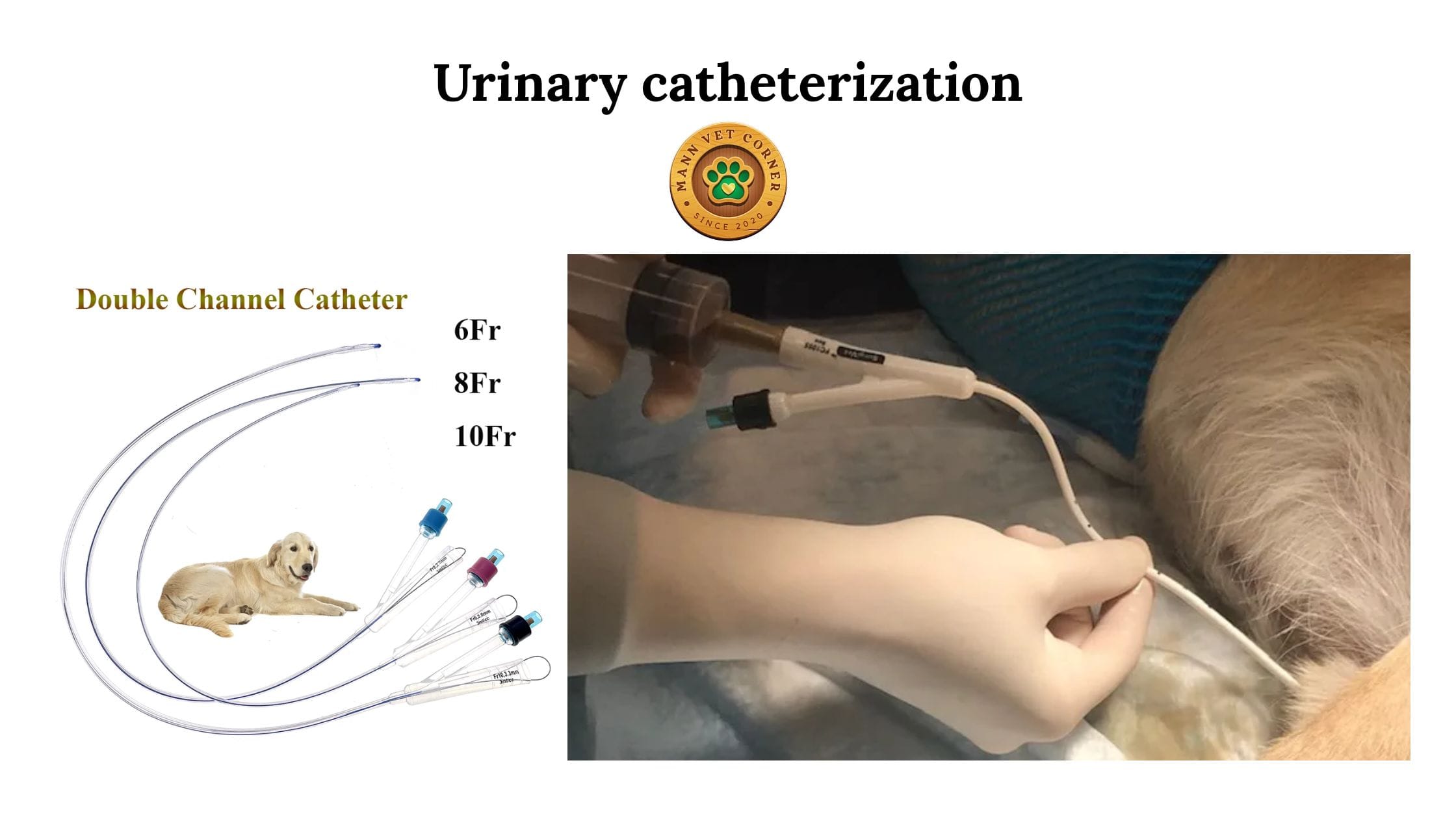
Urinary catheterization provides sterile urine samples when bacterial culture is required or when free-catch collection fails.
Procedure: Performed under sedation or local anesthesia for comfort. Common in male dogs and horses.
When performing urinary catheterization in small animals, it is essential to select an appropriate catheter size, typically 8–10 French (Fr) for dogs and 5 Fr for cats, to ensure both efficacy and patient comfort. The procedure must be conducted under strict aseptic conditions to minimize the risk of induction of infection. Once the catheter is gently moved into the bladder, the initial few milliliters of urine should be collected for diagnostic purposes. To reduce trauma and contamination, the catheter should be carefully removed after sample collection.Pros: Can empty a patient’s bladder completely; useful for collection in larger male animals or obstructed animals (Ram/Buck)
Cons: Can introduce urethral bacteria; potential for trauma to the urinary tract lining.
Best for: Dogs, horses, some wild mammals.Cystocentesis
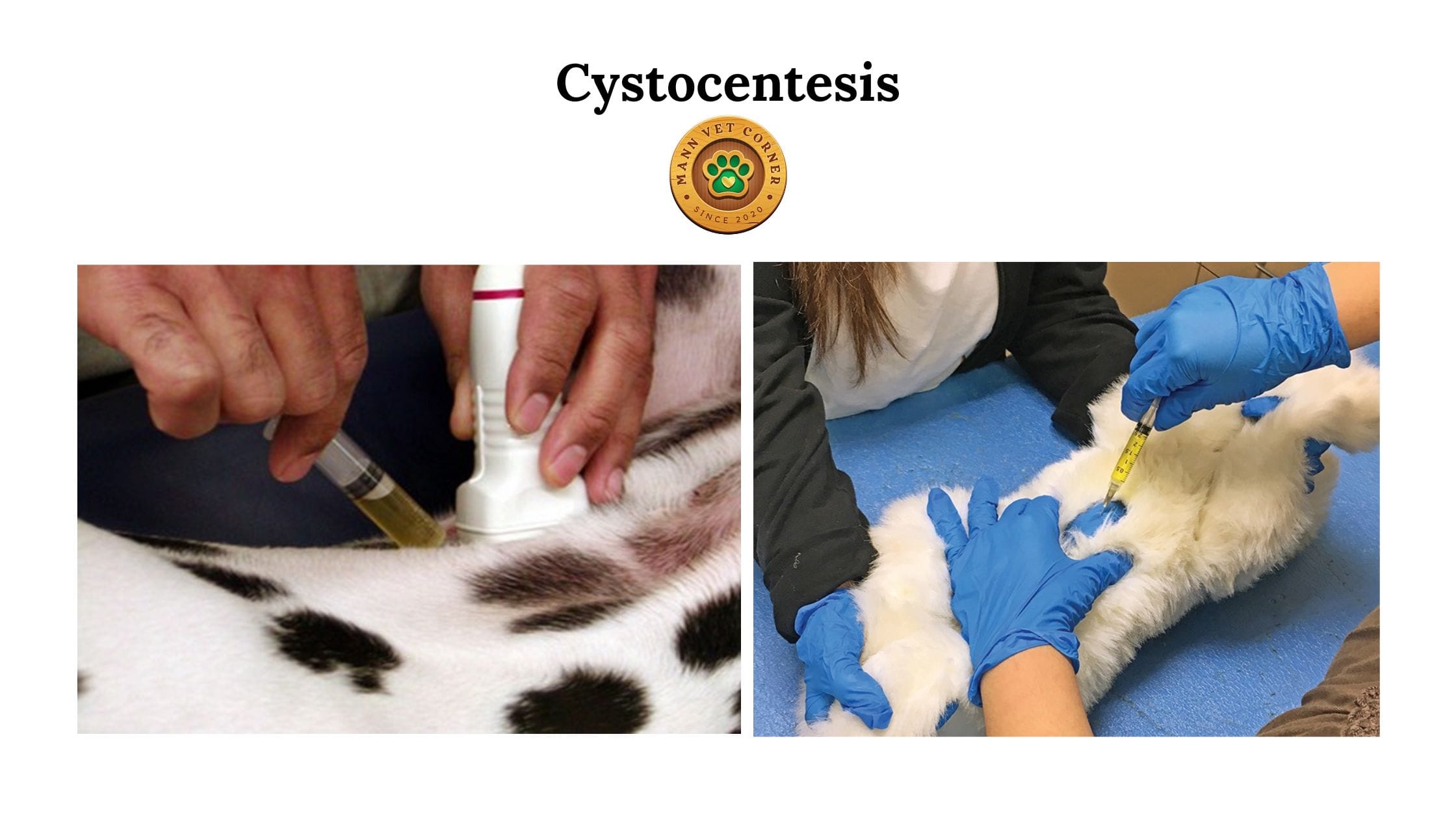
Cystocentesis represents the gold standard for sterile urine collection, particularly valuable for urinalysis in cats due to their concentrated urine and frequent bacterial infections.
Procedure: Cystocentesis involves inserting a needle (22-25 gauge needle) through the abdominal wall into the bladder to collect urine. Performed under ultrasound guidance or palpation, typically with mild sedation.
Pros: Provides a sterile sample, ideal for bacterial culture.
Cons: Invasive, requires expertise, not suitable for all species.
Best for: Dogs, cats, small mammals.
Species-Specific Considerations
Cats: In cats, veterinarians often prefer cystocentesis because the bladder is typically easy to palpate, making the procedure straightforward and minimally invasive.
Dogs:Veterinarians commonly collect urine from dogs using the free-catch method, but they recommend cystocentesis when precise diagnostic results are needed.
Horses & Livestock: practitioners frequently use catheterization in males due to anatomical considerations, whereas free-catch methods are more suitable for females.
- Birds: Droppings contain both urine (the liquid portion) and feces. Potential fecal contamination complicates the analysis and requires rapid separation to preserve sample integrity. Cloacal wash may be necessary for a purer sample.

 Dr. Bano Talpur
I actually wanted to post a small note so as to appreciate you for those lovely advice you are writing at this website. My extended internet lookup has at the end of the day been honored with pleasant suggestions to exchange with my neighbours. I would admit that many of us readers actually are really endowed to exist in a really good network with very many lovely people with very beneficial tactics. I feel rather blessed to have come across the web pages and look forward to many more excellent moments reading here. Thanks once more for a lot of things.