
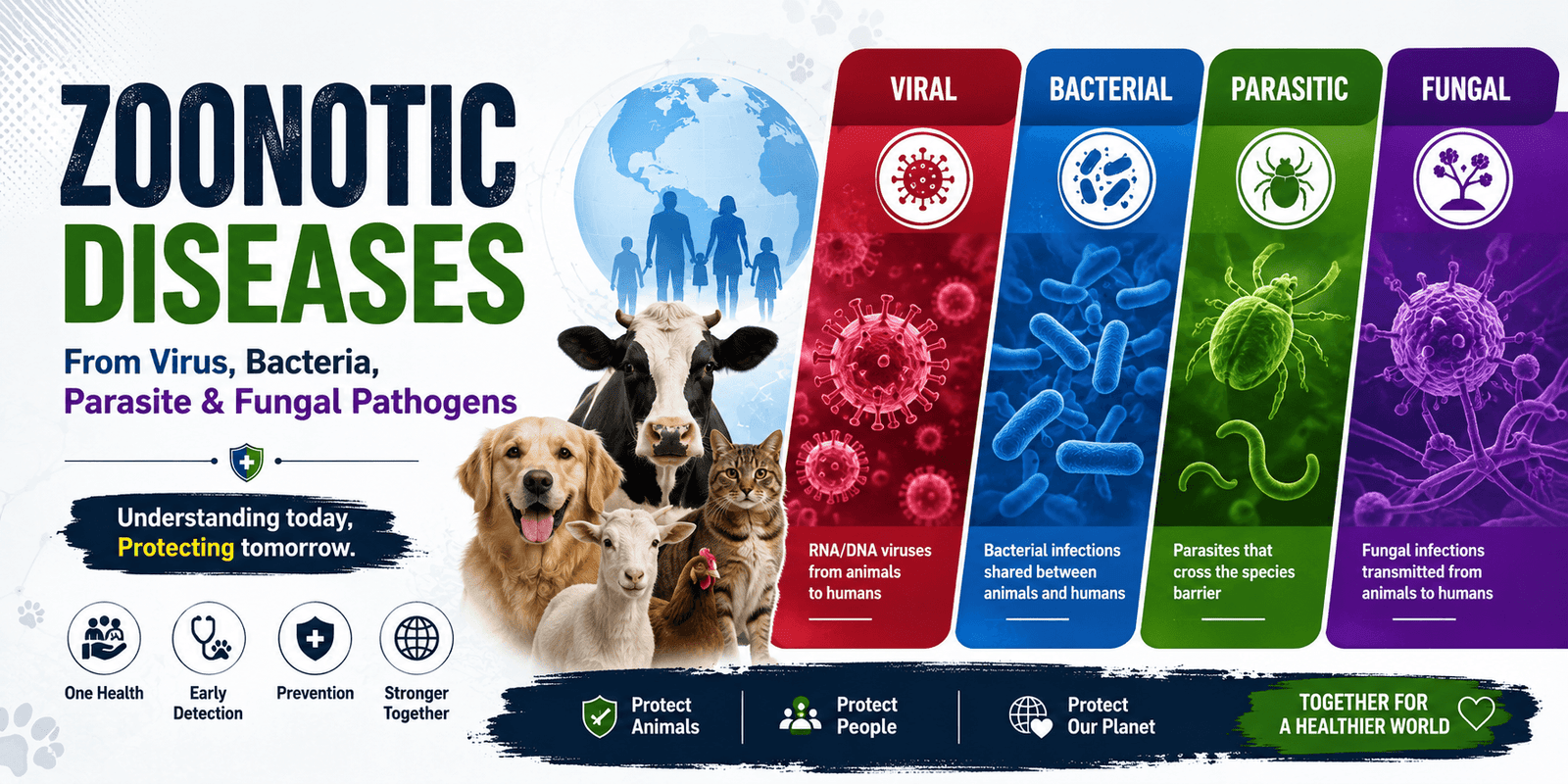
Throughout history, humanity’s connection with animals has provided food, companionship, labor, and economic security. However, this close interaction also carries a significant biological consequence: zoonotic diseases (zoonoses). Zoonotic diseases list: viral, bacterial, parasitic, and fungal threats to human health.
Pathogens ranging from viruses and bacteria to parasites and prions that jump from animals to humans represent one of the single largest threats to global health security.
Understanding what zoonoses are, why they dominate public health priorities, and the sheer scale of their global burden is essential for safeguarding our collective future.
What Are Zoonotic Diseases?
A zoonotic disease is an infectious illness transmitted between non-human animals (both domestic livestock and wild animals) and humans. Transmission can occur through multiple pathways:
Direct Contact: Handling infected tissues, blood, saliva, or body secretions.
Indirect Contact: Exposure to environments, soil, or surfaces contaminated by animal waste.
Vector-Borne: Transmission via blood-feeding vectors such as mosquitoes, ticks, fleas, and sandflies.
Foodborne & Waterborne: Ingestion of unpasteurized milk, raw or undercooked meat, or water contaminated with animal waste.
Why Are Zoonoses Critical to Public Health?
Public health agencies—including the World Health Organization (WHO) and the Centers for Disease Control and Prevention (CDC)—prioritize zoonotic pathogens for four fundamental reasons:
1. High Burden of Emerging Infectious Diseases
Animals serve as the primary reservoir for most novel human pathogens.
60% of all known human infectious diseases are zoonotic in origin.
75% of new or emerging infectious diseases (EIDs) in humans originate in animals.
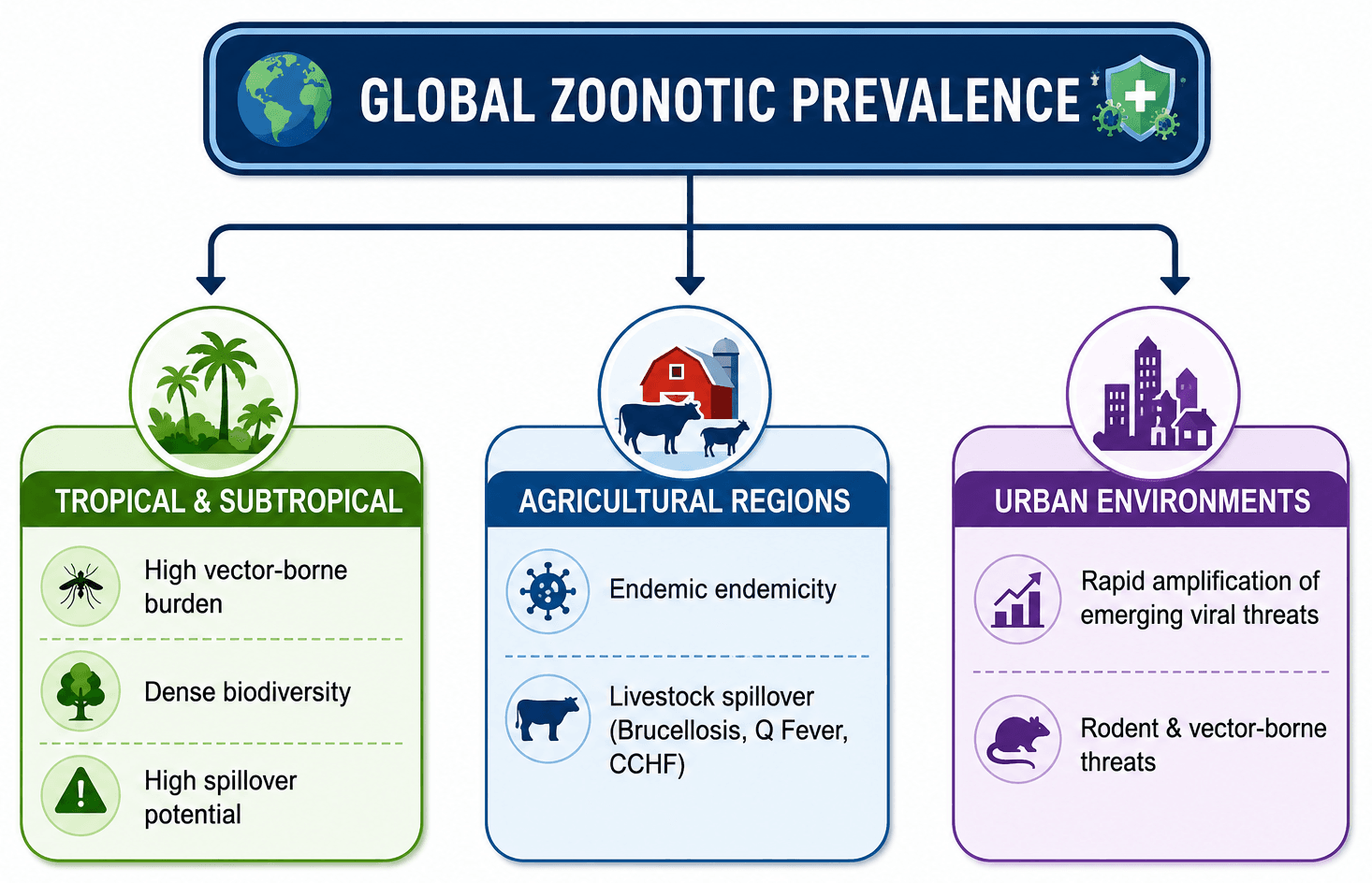
2. Pandemic Risk and Global Disruption
When a zoonotic pathogen mutates or adapts to sustain efficient human-to-human transmission (such as severe acute respiratory coronaviruses or pandemic influenza strains), it can cause rapid global spread, overwhelming healthcare systems and causing severe socioeconomic disruption.
3. Environmental and Anthropogenic Pressures
Deforestation, agricultural expansion, livestock intensification, rapid urbanization, and climate change bring humans into closer contact with wildlife habitats, dramatically increasing the frequency of spillover events.
4. The “One Health” Imperative
Zoonoses demonstrate that human health cannot be isolated from animal health or environmental stability. Controlling these diseases requires a collaborative One Health approach, uniting human medicine, veterinary pathology, ecology, and environmental science.
Global Impact: Annual Incidence and Mortality
The annual impact of zoonotic infections on human lives is profound:
| Metric | Estimated Global Annual Impact |
| Total Annual Illnesses | ~2.5 billion cases of human illness worldwide. |
| Total Annual Deaths | ~2.7 million human deaths globally. |
| Vector-Borne Share | Over 700,000 deaths annually from vector-borne pathogens (e.g., malaria, dengue, CCHF). |
| Foodborne Burden | Millions of foodborne illnesses traced directly to animal products (Salmonella, Campylobacter, E. coli). |
Annual Burden Highlights of Select Zoonotic Pathogens
Rabies: Causes approximately 59,000 human deaths every year, nearly 99% of which stem from dog bites in low- and middle-income regions.
Seasonal & Zoonotic Influenza: Causes an estimated 1 billion infections and 290,000 to 650,000 respiratory deaths annually.
Vector-Borne Parasites & Viruses: Malaria alone accounts for >240 million cases and >600,000 deaths yearly, while dengue infects tens of millions annually across endemic regions.
This comprehensive guide explores 30 prominent zoonotic diseases across viral, bacterial, parasitic, and fungal categories, providing actionable prevention strategies and expert insights to protect you and your family.
Viral Zoonoses: Deadly Infections from Animals to Humans
Viral zoonotic diseases account for some of the most severe and rapidly spreading infections. These pathogens jump from animal reservoirs to human populations through various transmission routes.
Key Viral Zoonoses:
A viral zoonotic disease is an infection caused by a virus that spreads from animals to humans, with key examples including rabies, COVID-19, and Ebola. These illnesses jump across species through contact with body fluids, animal bites, or insect vectors.
1. Viral Zoonoses (Top 10)
| Disease / Pathogen | Key Animal Reservoirs | Primary Transmission Route |
| Crimean-Congo Hemorrhagic Fever (CCHF) | Hard ticks (Hyalomma spp.), livestock, wild mammals | Tick bites; direct contact with infectious blood/tissues during slaughter. |
| Avian Influenza (e.g., H5N1, H7N9) | Wild waterfowl, domestic poultry | Direct bird contact, respiratory aerosols, or contaminated feces. |
| Rabies (Lyssavirus) | Canids (dogs, foxes), bats, raccoons | Direct inoculation via bites or saliva on broken skin. |
| Mpox (Monkeypox virus) | Rodents, non-human primates | Direct contact with skin lesions, body fluids, or mucosal droplets. |
| Nipah Virus | Fruit bats (Pteropus spp.), swine | Date palm sap contamination; direct contact with infected pigs. |
| MERS-CoV | Dromedary camels (Camelidae) | Direct contact with camels, respiratory droplets, or unpasteurized camel milk. |
| Hantavirus (HPS / HFRS) | Rodents (deer mice, cotton rats) | Inhalation of aerosolized viral particles from dried rodent urine/feces. |
| Rift Valley Fever Virus | Livestock (cattle, sheep, goats) | Mosquito vectors (Aedes, Culex); handling tissues/blood of infected livestock. |
| West Nile Virus | Birds (amplifying hosts), mosquitoes (Culex) | Vector-borne transmission via mosquito bites. |
| Ebola Virus | Fruit bats (Pteropodidae), non-human primates | Direct contact with blood, secretions, or organs of infected animals/humans. |
Bacterial Zoonoses: Infections from Livestock and Wildlife
Bacterial zoonotic diseases affect millions globally and it is an infection that spreads naturally between animals and humans caused by bacteria, with key examples including Anthrax, Brucellosis, and Salmonella. These illnesses pass from livestock, pets, or wildlife to people through direct contact, insect bites, or contaminated food and water
2. Bacterial Zoonoses (Top 10)
| Disease / Pathogen | Key Animal Reservoirs | Primary Transmission Route |
| Brucellosis (Brucella spp.) | Cattle (B. abortus), sheep/goats (B. melitensis), swine (B. suis) | Unpasteurized dairy products; direct contact with birth fluids/tissues. |
| Anthrax (Bacillus anthracis) | Ruminants (cattle, sheep, goats) | Contact with bacterial spores via skin abrasions, inhalation, or undercooked meat. |
| Leptospirosis (Leptospira interrogans) | Rodents, dogs, livestock | Mucosal/skin exposure to water or soil contaminated with infected urine. |
| Q Fever (Coxiella burnetii) | Cattle, sheep, goats | Inhalation of dust/aerosols contaminated with amniotic fluid, placenta, or milk. |
| Plague (Yersinia pestis) | Rodents, wild lagomorphs | Flea bites (Xenopsylla cheopis); handling infected animal tissues. |
| Lyme Disease (Borrelia burgdorferi) | Small rodents, deer (vector host) | Vector-borne transmission via infected Ixodes ticks. |
| Salmonellosis (Salmonella spp.) | Poultry, reptiles, cattle, swine | Fecal-oral route; consuming contaminated meat/eggs/produce. |
| Psittacosis (Chlamydia psittaci) | Psittacine birds (parrots, cockatoos), pigeons | Inhalation of dried bird droppings or respiratory secretions. |
| Campylobacteriosis (Campylobacter spp.) | Poultry, cattle, domestic pets | Ingestion of undercooked poultry, unpasteurized milk, or contaminated water. |
| Tularemia (Francisella tularensis) | Lagomorphs (rabbits, hares), rodents | Tick/deer fly bites; direct handling of infected carcasses; aerosol inhalation. |
Parasitic Zoonoses: Invisible Threats from Food and Environment
Parasitic zoonotic infections affect over 2 billion people annually, particularly in tropical and subtropical regions. However, improved international travel means these diseases can occur anywhere. It is an infection passed from animals to humans by single-celled protozoa, multi-celled worms (helminths), or external parasites. Common examples include toxoplasmosis, giardiasis, and trichinosis.
3. Parasitic Zoonoses (Top 10)
| Disease / Pathogen | Key Animal Reservoirs | Primary Transmission Route |
| Toxoplasmosis (Toxoplasma gondii) | Felids (definitive), mammals/birds (intermediate) | Ingestion of tissue cysts in raw/undercooked meat or oocysts from cat feces. |
| Hydatid Disease (Echinococcus granulosus) | Canids (definitive), livestock (intermediate) | Ingestion of eggs shed in dog feces via contaminated food, water, or soil. |
| Leishmaniasis (Leishmania spp.) | Dogs, rodents | Vector-borne transmission via female phlebotomine sandflies. |
| Cryptosporidiosis (Cryptosporidium spp.) | Livestock (especially neonate calves), pets | Ingestion of oocysts from contaminated water supplies or direct animal contact. |
| Trichinellosis (Trichinella spiralis) | Swine, wild carnivores (boars, bears) | Ingestion of raw or undercooked meat containing encysted larvae. |
| Taeniasis / Cysticercosis (Taenia solium) | Swine (intermediate), humans (definitive) | Ingestion of cysticerci in undercooked pork or accidental ingestion of eggs. |
| Giardiasis (Giardia lamblia) | Beavers, cattle, domestic pets | Ingestion of cysts from contaminated surface water or fecal-oral contact. |
| Fascioliasis (Fasciola hepatica) | Ruminants (sheep, cattle), freshwater snails | Ingestion of metacercariae encysted on aquatic plants (e.g., watercress). |
| Chagas Disease (Trypanosoma cruzi) | Small mammals, dogs, opossums | Vector-borne via triatomine bugs (“kissing bugs”) rubbing infective feces into bites. |
| Screwworm Infestation (Cochliomyia hominivorax) | Livestock, wildlife, pets | Female flies deposit eggs in open wounds; larvae feed on living tissue. |
4. Primary Direct Zoonotic Mycoses
| Disease | Pathogen(s) | Primary Animal Host / Reservoir | Transmission & Public Health Impact |
| Dermatophytosis (Ringworm) | Microsporum canis
Trichophyton verrucosum
Trichophyton mentagrophytes
Nannizzia gypseum | Cats, dogs, cattle, rodents, horses | Direct contact with infected animal skin/hair, or fomites. Causes scaling, circular cutaneous lesions, and alopecia. Most prevalent fungal zoonosis worldwide. |
| Sporotrichosis (Rose Gardener’s Disease) | Sporothrix brasiliensis
Sporothrix schenckii | Felines (especially intact/roaming cats), armadillos | Inoculation via scratches, bites, or contact with draining lesions. S. brasiliensis is a major emerging epidemic zoonosis spreading from cats to humans. |
| Zoonotic Candidiasis | Candida albicans
Candida spp. | Birds (poultry, pets), livestock, dogs, cats | Direct contact with active cutaneous or mucosal lesions. Opportunistic secondary infection in immunocompromised hosts. |
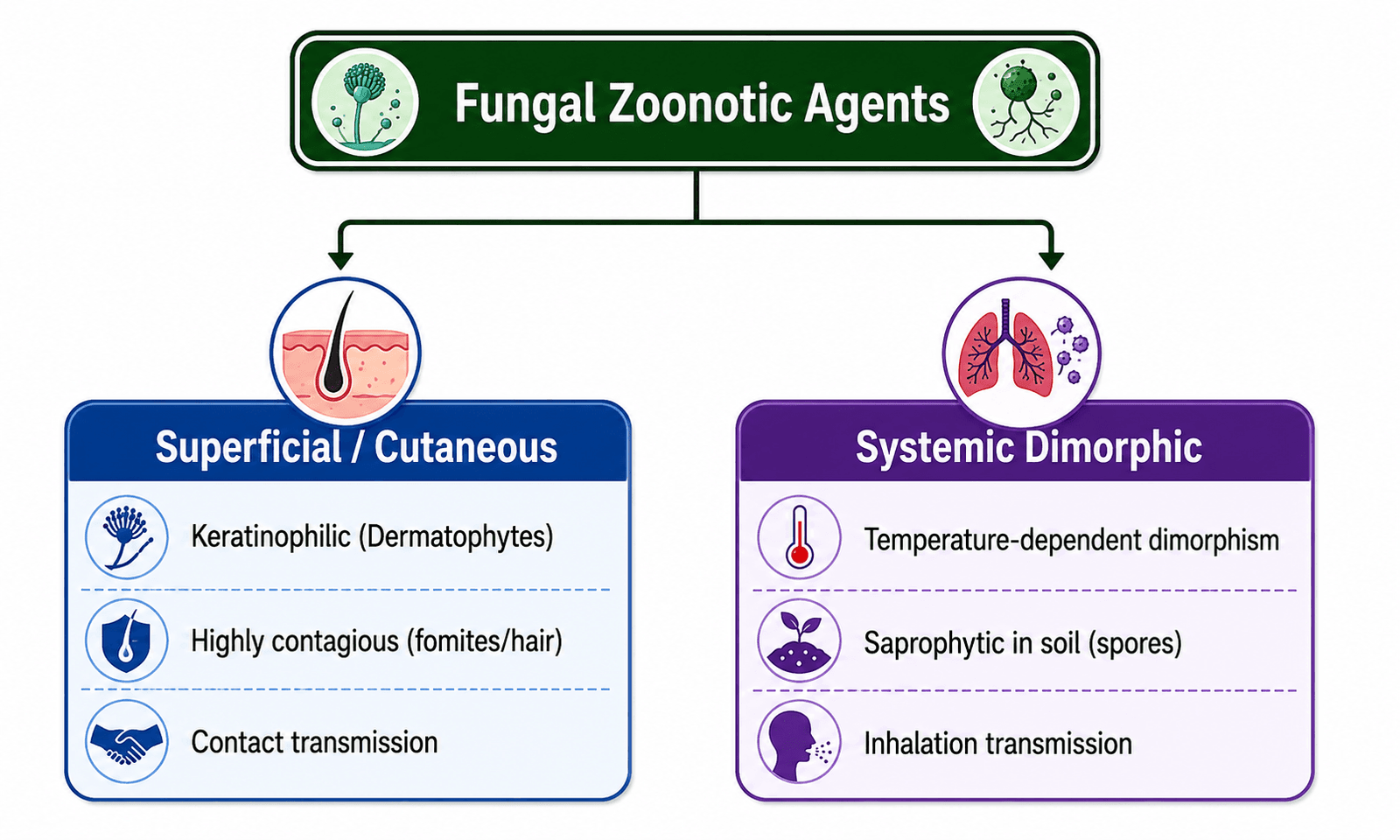
- Thermotolerance & Dimorphism: Many systemic zoonotic fungi (e.g., Histoplasma, Blastomyces, Sporothrix) exist as mold/hyphae at environmental temperatures (25∘ C) and convert to tissue-invasive yeast forms at body temperature (37∘C).
- Antifungal Resistance Risks: Increasing agricultural fungicide usage (e.g., azole compounds in crop protection) has contributed to cross-resistance in human/animal opportunistic pathogens like Aspergillus and emerging dermatophytes (Trichophyton indotineae).
- One Health Control Measures: Effective management requires personal protective equipment (PPE) during poultry/bat shelter cleanouts, hygiene protocol enforcement in veterinary clinics, and prompt isolation and treatment of infected companion animals.
5. Environmental & Opportunistic Zoonotic Hazards (Geo-Zoonoses)
These pathogens persist in environmental niches enriched by animal waste or organic debris; both animals and humans contract the infection from the shared reservoir.
| Disease | Pathogen | Environmental / Animal Vector Reservoir | Transmission Mechanism |
| Histoplasmosis | Histoplasma capsulatum | Bats, poultry, wild bird roosts (soils enriched with guano) | Inhalation of microconidia aerosolized from disturbed bird/bat dropping-enriched soil. |
| Cryptococcosis | Cryptococcus neoformans
Cryptococcus gattii | Pigeons, birds (avian droppings), decaying tree hollows | Inhalation of desiccated yeast cells or basidiospores from pigeon roosts/guano. |
| Blastomycosis | Blastomyces dermatitidis | Canines, moist soil near waterways, rotting vegetation | Inhalation of aerosolized conidia. Dogs often serve as “sentinel species” for human exposure risk. |
| Coccidioidomycosis (Valley Fever) | Coccidioides immitis
Coccidioides posadasii | Wild rodents, desert soil in endemic regions | Inhalation of airborne arthroconidia following dust storms, soil disruption, or digging. |
| Aspergillosis | Aspergillus fumigatus
Aspergillus spp. | Poultry, wild birds, livestock, spoiled feed/grains | Inhalation of airborne conidia from contaminated bedding, forage, or bird housing. |
| Rhinosporidiosis | Rhinosporidium seeberi | Livestock, wild mammals, stagnant aquatic environments | Mucosal contact with contaminated natural water sources shared with animals. |
Universal Prevention Strategies for Zoonotic Diseases
While each zoonotic disease requires specific preventive measures, several universal strategies protect against multiple infections:
Food Safety Fundamentals
Cook meat to safe internal temperatures (165°F/74°C for poultry; 160°F/71°C for ground meat) Consume only pasteurized dairy products Wash fruits and vegetables thoroughly under running water Use separate cutting boards for raw meat and produce Practice proper food storage and refrigeration
Personal Hygiene Practices
Wash hands thoroughly after animal contact Use DEET-based insect repellent (20-30% concentration) in high-risk areas Wear protective equipment (gloves, masks, eye protection) when handling animals or their products Maintain clean wounds and seek medical attention promptly Practice respiratory etiquette in healthcare settings
Environmental and Occupational Measures
Eliminate standing water to reduce mosquito breeding sites Seal rodent entry points in homes and storage areas Maintain proper ventilation in work environments Implement farm biosecurity measures Use tick repellent and perform regular tick checks during outdoor activities
Take Action: Protect Yourself Against Zoonotic Diseases
Zoonotic diseases represent a persistent global health challenge, but awareness and preventive action significantly reduce transmission risk. By understanding animal reservoirs, transmission mechanisms, and implementing evidence-based prevention strategies, you can protect yourself, your family, and your community.
Key Takeaways:
75% of emerging infectious diseases are zoonotic—vigilance is essential. Practice strict food safety, personal hygiene, and proper wound care. Seek immediate medical attention after potential exposure to high-risk pathogens. Consult public health authorities for region-specific guidance and vaccination recommendations. Report suspected cases to local health departments for surveillance and control.
